As Sudan’s future hangs in the balance amid ongoing negotiations between key stakeholders, the country remains mired in a devastating war now entering its third year. The conflict has claimed thousands of lives, forced millions into displacement and exile, shattered dreams, destroyed infrastructure, and brought life to a standstill.
In the midst of this crisis, various initiatives have emerged from different groups—including the Sudanese Armed Forces, the “Ta’sees” group, and earlier, “Taqaddum,” and now “Sommoud.” Numerous negotiation platforms have also attempted to broker peace—Jeddah, Manama, Geneva, and Cairo—but none have succeeded. Notably absent from these efforts has been any organized youth movement, despite the fact that young people have been the most active force in both the revolutionary movement and the war, with the majority of casualties coming from this demographic.
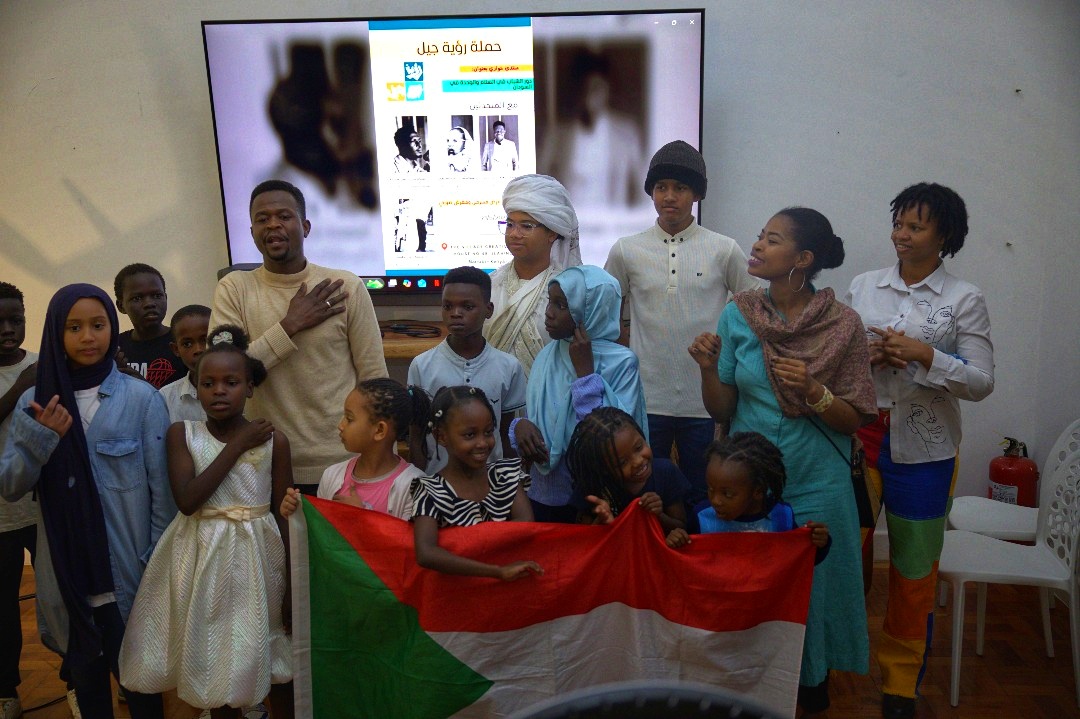
Last week, a new initiative was launched in Kampala, Uganda, followed by activities in Cairo. On Wednesday, May 21st, the Youth Network officially kicked off its activities in Nairobi, Kenya, with a seminar featuring initiative member Najm Al-Din Dawood and academic Dr. Azza Mustafa. Dr. Mustafa offered a critical reading of the Youth Document titled “A Generation’s Vision.” On Thursday, the network held an online launch event in Sudan’s River Nile State after being previously barred by security forces in Atbara in September.
Coordination and Consultations
Najm Al-Din Dawood, a member of the network’s coordination team, stated that consultations began in November last year and reached around 2,500 young men and women from all cities across Sudan—including areas controlled by both the army and the Rapid Support Forces. These consultations included supporters from both sides and even youth from Islamic groups, aiming to establish a shared vision for Sudan’s future and prevent national fragmentation. The effort also sought to unify youth voices calling for peace and shared responsibility among Sudanese parties.
Dawood identified a key challenge: the lack of trust among various Sudanese actors—civilian to civilian, military to military, and civilian to military. He emphasized that the network’s position is to apply pressure on all parties through advocacy campaigns pushing the youth’s agenda. While many are searching for alliances, the network aims to unify visions and build partnerships among those directly invested in ending the war. This comes amid sharp political and social divisions and the widespread dissemination of hate speech.
He added that the network operates under the principles of a unified Sudan, advocating for inclusive dialogue and pushing the international community for urgent humanitarian aid and for ensuring that such aid is not politicized.
Dawood concluded with a message to the youth: to hold on to hope, refuse to surrender, and raise their voices for peace. “There is nothing to fear,” he said, “when you’re calling for peace.” He stressed that young people are capable of confronting hate speech just as they’ve responded to the humanitarian crisis through emergency initiatives.
A Glimmer of Hope
Dr. Azza Mustafa questioned what mechanisms could be used to implement the Youth Agenda Document introduced by the network, especially given that some topics—like security and military reform—are sensitive and resisted by certain factions. She urged youth to begin by discussing guarantees, making concessions, and negotiating to reach a consensus. She emphasized that all the initiatives call for Sudanese-led dialogue, and youth should be proactive in shaping that space.
Azza sees this youth-led initiative as a beacon of hope—provided its leaders remain engaged and do not stop here. She believes engaging with Sudan’s current crisis could lead to real change. The document, in her view, opens the door to critical questions and broadens the scope of thinking.
Idris Babiker, a participant in the event, said that arrogance and elitism were major causes of the conflict, emphasizing the need for societal reform as a prerequisite for peaceful coexistence. Meanwhile, Dr. Siham Taha Al-Mujammal argued that ever since the violent dispersal of the sit-in at the military headquarters, there has been an attempt to derail the December revolution. She described the current crisis as a project led by a colonial elite.
She added that the revolution aimed to establish a grassroots democracy, but that effort has been heavily distorted. She called on youth to re-engage in foundational democratic work, warning that the visions laid out in the Youth Document would be hard to implement without halting the war—something only those holding weapons can do. She concluded by stressing that if the war ends and no groundwork has been laid, progress will be impossible. “The current generation,” she said, “is walking in the footsteps of the past one.”
During the discussion, a young member of the Umma Party criticized the Youth Network for including members who support the war.
Sudanese Migration
At the River Nile State office’s online seminar, researcher Khalid Siraj presented a paper on Sudanese migration to neighboring countries dating back to colonial times. He highlighted the cultural legacy carried by migrants, particularly the Nubians who migrated to Kenya a century ago. Despite the passage of time, they still preserve Sudanese cuisine and traditions, reflecting the enduring ties among Sudanese people—even in diaspora.
He shared his experience in France, noting that Sudanese abroad often bond more closely. However, due to the war, many have shifted from being “ambassadors of peace” to “ambassadors of conflict.” He called on peace advocates to confront such voices and reject ethnocentric nostalgia that leads people to retreat into tribal identities in their search for belonging.
The events also featured a recorded poem by poet Othman Bushra, sent from his dialysis center, titled “A Prayer to God on the Edge of Ruin.” It begins with the line:
“We were worthy of life.”
What Comes Next?
Many questions remain: Can this youth movement break through Sudan’s entrenched crisis? What practical steps will be taken to implement the Youth Document, the result of consultations with 2,500 young people across the country? What impact will it have on the wider youth population? Only time will tell. Yet the name “A Generation’s Vision” evokes echoes of the historical book “A Generation’s Struggle” by Ahmed Khair, the legal mind behind the Graduates’ Conference proposal. Between struggle and vision, there are many shared aspirations.