Since the outbreak of war between the Sudanese army and the Rapid Support Forces (RSF) in mid-April 2023, the conflict has torn apart Sudanese families, turning them into displaced persons and refugees burdened with countless sorrows. They remain caught between despair and the hope of rebuilding what war has destroyed.
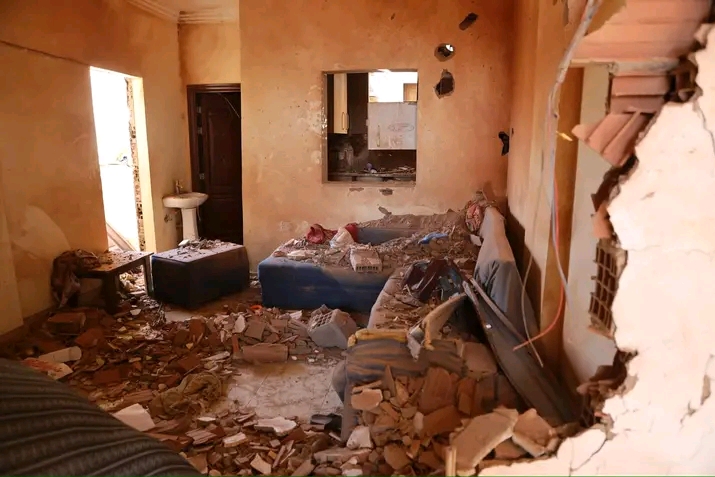
Many of those returning to Khartoum have been shocked to find their homes reduced to mere walls without doors. Armed gangs looted houses of valuables, belongings, and household assets amid the absence of security measures during the war. The plunder extended to removing windows and metal roofs, sold cheaply by thieves oblivious to the sentimental value these items held—the silent witnesses of countless memories, stories, and secrets.
Profound sadness looms over most of the capital’s residents, particularly housewives who had been the guardians of family cohesion. These women now face harsh challenges in the face of depleted savings and lost sources of income.
Police Operations
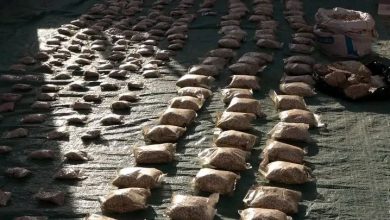
The Khartoum State Police conducted raids targeting markets known for selling stolen goods, especially the Sabreen market in northern Omdurman. According to an official statement, the crackdown extended to other illicit markets and resulted in the seizure of large quantities of household utensils, electronics, furniture, scrap metal, and even women’s and children’s clothing.
The statement added that suspects carrying weapons were arrested for terrorizing residents and openly looting homes and shops in broad daylight.
Major General Abdul Karim Hamdo, Director of the Criminal Department in Khartoum State Police, stated that over 90 percent of police stations have resumed operations. He emphasized that the responsibility for maintaining security in the capital now lies with the police, which have set up checkpoints throughout the main streets of the capital’s three cities.
Hamdo confirmed that the police have recovered significant amounts of looted household items and private vehicles, urging citizens to visit reopened police stations to identify and reclaim their lost belongings. He also noted a sharp rise in reports of militia violations as more citizens return and inspect their homes.
Sentimental Value
Manal Mahjoub, a housewife from the Al-Fitehab neighborhood in Omdurman, shared her story: “Neighbors who were trapped and later forcibly evicted by RSF members told me that armed gangs broke into my home, which we had abandoned to escape the atrocities, especially those targeting women. After the army regained control of much of our area, a neighbor managed to enter our house and send us photos—it was stripped of everything, and layers of dust and garbage covered its ruins.”
She added, “Strangely, the thieves even ripped the doors off the walls, which deepened my sorrow. I mourn years of effort, not just material loss. These doors and windows held countless memories and secrets. Their value isn’t financial—it’s emotional.”
She continued, “I’m sure my experience mirrors that of many families. Still, we will return and rebuild, despite the damage caused by shells, artillery, and looting. We’ll replace the doors, fix the walls, and try to restore even a fragment of the life stolen from us. It’s expensive, especially since most people lost their savings in displacement, but we must start somewhere.”
She then asked, “When will the gates of hell close? Violations, displacement, and the death of starving children continue. I urge warring parties to end this senseless war and preserve the sanctity of our homes and families. Security remains fragile. Reports from returnees highlight ongoing home invasions by gangs, while RSF patrols still hover above Omdurman.”
Legal Protection
Mahaoud Abdelrahman, who visited his home in the Jabra district of southern Khartoum, said, “The war has inflicted irreparable damage, especially as we lack sources of income. My house, located in an area previously under RSF control, is now nothing but walls—silent witnesses to how armed RSF elements and criminals stormed homes without regard for privacy.”
He added, “My home used to be full of life and high-end furniture. My wife invested her salary in upgrading the household with electrical appliances and fine furnishings. She had a passion for quality, no matter the price.”
He continued, “Fleeing families made it easier for these thefts to happen. The looting was systematic, with thieves using trucks over several phases. RSF elements even provided them with protection, so the thefts happened in broad daylight.”
Abdelrahman stressed the need to rebuild from scratch but emphasized that security forces must address these negative phenomena to protect returning civilians.
Psychological Trauma
Social specialist Ahlam Youssef stated that “the war has torn apart Sudanese family structures and violated the sanctity of homes. Families fled inside and outside Sudan to escape the horrors of war.”
She added, “Families, especially women, suffer deeply as they receive news of their homes being destroyed and looted. Memories—both joyful and sorrowful—along with the laughter of children playing in wide courtyards have been lost. This emotional and material loss leaves long-lasting psychological scars. Recovering even a part of it is almost impossible now.”
She noted with regret that even after Khartoum was reclaimed from RSF control, looting still continues—perpetrated by foreigners and displaced people who now inhabit abandoned homes or live in nearby informal settlements. These groups continue to terrorize returnees who already suffer from compounded psychological, social, and economic hardships.
Reparations and Legal Recourse
Sudanese lawyer Abdulrahman Haroun said that once the war ends and citizens safely return to their areas, the state must begin a reparation process for the losses people have suffered. He added that every citizen has the right to sue any party responsible for their suffering—even military personnel—according to existing legal provisions.
He emphasized, “Citizens have the right to compensation, and I doubt anyone will waive their private legal rights. The scale of destruction has left many people with nothing.”
-
-

-
-