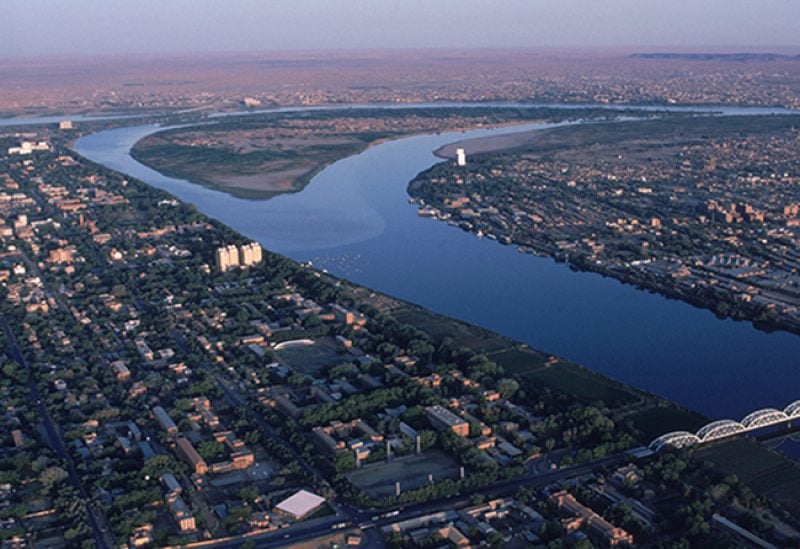
(Sudanile) – Water experts have raised concerns over errors in an international study’s estimates of Sudan’s Nile water consumption, warning that such inaccuracies could lead to a future reduction in Sudan’s water share. Sudanese water researchers, Professor Yasser Abbas and Professor Saif al-Din Hamad—both former ministers of irrigation and water resources—revealed serious gaps in the study’s methodology and data, which they argue could undermine fairness in the allocation of Nile waters among basin countries.
Their concerns were presented in a recently published comment paper in the International Journal of Hydrology, co-authored by Professor Abbas from the IHE Delft Institute for Water Education in the Netherlands and Professor Hamad from Sudan’s Center for Water Security Studies.
The researchers criticized a 2023 study by the Massachusetts Institute of Technology (MIT), which estimated Sudan’s annual water consumption to be between 13.8 and 19.1 billion cubic meters, a variation of more than 30%, which they argue reflects weak methodology and imprecise results. The MIT study, they noted, relied solely on data from the Dongola station without validating it against data from the Merowe Dam, resulting in an unexplained discrepancy of 5 to 6 billion cubic meters—a difference they argue cannot be justified by evaporation or groundwater recharge alone.
Moreover, the study ignored the return flow of irrigation water from major agricultural projects such as Gezira and Rahad, instead assuming that all diverted water was permanently lost, leading to overestimated consumption levels.
The researchers proposed two scenarios to explain the gap between the average Nile flow at Aswan (84 billion m³) and the flow at Dongola (80.5 billion m³).
The first scenario assumes Sudan’s water loss due to conveyance is just 3.5 billion m³, which they deem unrealistic.
The second scenario suggests the loss could be as high as 12 billion m³, raising the estimated natural flow to 92.5 billion m³ annually. This, they argue, questions the fairness of the 1959 Nile Water Agreement and implies that both Sudan and Egypt may have received less than their fair share of the Nile’s actual flow.
The researchers emphasized the need for more accurate methodologies, combining satellite imagery with field verification, to ensure reliable results. They recommended that satellite data be used alongside precise sub-basin methodologies and verified reservoir and operational data, and called for further studies to fill knowledge gaps and support equitable and sustainable water governance.
Experts further noted that the ongoing war in Sudan has already weakened the country’s access to its Nile water share. According to DW, dam expert Dr. Mohamed Hafez said that since April 2023—when the conflict began—Lake Nasser has received about 90% of Sudan’s share, amounting to an additional 25 billion m³, and warned that the lake’s water level would have dropped by 7.5 meters if Sudan had been politically stable.
Hafez warned that if the war in Sudan continues until the end of September 2025, Lake Nasser could gain another 60 billion m³ from Sudan’s unutilized share, effectively compensating for the water stored in the Grand Ethiopian Renaissance Dam (GERD). If Sudan’s instability persists for several more years, Egypt could end up absorbing up to 80% of its projected water deficit due to GERD, significantly improving its water security outlook.
Sudan’s Nile water share originates from the 1959 bilateral agreement with Egypt, which allocated 18.5 billion m³ annually to Sudan out of a total of 84 billion m³ measured at Aswan, while Egypt received 55.5 billion m³. This agreement, based on earlier colonial-era treaties, excluded other Nile Basin countries, making it a frequent source of regional and international controversy—particularly following Ethiopia’s 2011 announcement to build the GERD, with a planned storage capacity of 74 billion m³, without prior consultation with Egypt or Sudan. Egypt considers the project a violation of its historical rights and a threat to its national security.
It is important to note that the MIT study in question was not directly related to the Nile water crisis, but rather part of independent academic research intended to enhance understanding of water resource management in transboundary basins, particularly in regions under stress or conflict.
The Sudanese Media Forum and its member organizations are publishing this report—originally prepared by Sudanile—as part of ongoing efforts to highlight how war has impaired the state’s ability to manage and monitor its most sensitive and strategic files, especially the Nile Water dossier, which requires accurate data, sound research, and strategic oversight.
-
-
-
-