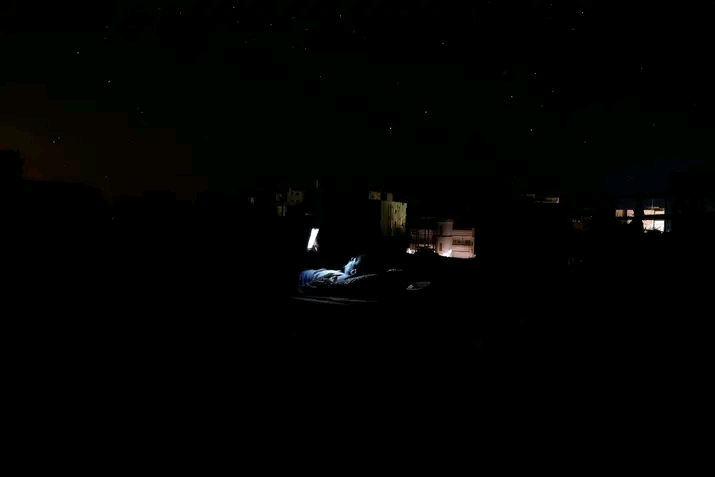
The war in Sudan has created a deep humanitarian crisis, displacing millions of people in search of safety — among them women, girls, and children — many of whom have been subjected to exploitation, sexual violence, abduction, and forced recruitment. These represent some of the gravest tragedies of the ongoing armed conflict.
Many women and girls were forced to flee due to the loss of safety, family members, and access to basic services like electricity, water, food, and fuel. The growing threat of gender-based violence has made it increasingly difficult for women to remain or access the help they urgently need.
A Journey of Danger
Sara Al-Nour told Mashawir platform that she was forced to flee her family home in the Al-Amarat neighborhood of Khartoum after artillery shelling killed members of her family in the early days of the war between the Sudanese army and the Rapid Support Forces (RSF). She sought safety in Omdurman — a journey filled with danger despite the relatively short distance. It took her five days on foot, hiding whenever she saw armed groups patrolling the streets.
Sara shared how she lived in fear of falling into the hands of armed fighters and the physical or sexual violence she might face. During her journey, she witnessed horrifying scenes on the roads. Carrying only a bottle of water, she survived on food scraps left behind by people in Khartoum’s Arab Market area.
She recounted how she only moved after nightfall, hiding during the day. Homeless children in the market helped her reach the Al-Mogran area of Khartoum. From there, she made her way to the banks of the White Nile beneath the Al-Fitehab Bridge into Omdurman.
Entering Omdurman
Sara continued: “Entering Omdurman at night wasn’t easy. After much suffering, I crossed the bridge and reached the neighborhood near Al-Fitehab. I tried knocking on doors, asking for shelter, but no one responded.”
“My clothes were filthy, and I was extremely exhausted, so I took shelter by the wall of a mosque. I don’t know how long I stayed there.”
“I was startled awake by a sound that scared me. I burst into tears and begged the man for help, telling him I had lost my family in the war. Eventually, he led me to his home. His family was preparing to flee the area, but they helped me reach the entrance of Karari locality. I was finally allowed in, despite not having any identification papers.”
“I was completely lost in a city I didn’t know, with no one to turn to. The place was nearly deserted — all I could hear were the sounds of artillery, gunfire, and warplanes.”
“I didn’t even know where the shelters were, nor did anyone direct me. Along the way, I saw girls my age and younger huddled inside a building under construction in western Omdurman. Though we all had different stories, what united us was the war — nothing else.”
Loss of Family and Support
Sara described her days of terror: “The war took everything — my family and anyone who could support me. Over time, I had to figure out how to survive. On the streets, I found strength in others who were suffering just like me. We knocked on doors begging for stale bread and old clothes. Some girls started begging from passersby — some gave, others didn’t.”
“Despite the heavy shelling, we kept moving, driven by fear of death and hunger. At night, we would gather and share what little food families had given us — leftover bread or scraps.”
“We also shared any old clothes we got. To us, they were a treasure. We were truly happy with so little, as movement was dangerous due to armed groups roaming the streets.”
Displacement Again
Despite all she went through, Sara was forced to flee once more after gunfire broke out near the area she and her companions were sheltering in. This time, she headed north and arrived at the Sabreen Market area of Omdurman in the evening. There, she found a group of young people and orphans who had lost their families to death, disappearance, or abduction during the war.
Sara joined this new group, taking shelter in alleyways and under buildings during the day. At night, they gathered around a waste dump, searching for leftover food from restaurants, cafeterias, and vegetable sellers.
Struggle and Resilience
Sara’s story reflects thousands of similar tragedies. Yet, she managed to overcome her harsh reality. While on the streets, she met an elderly woman who had lost her sons in the war. The woman took Sara in and treated her like a daughter.
Sara supported them both by working as a tea seller. But she noted that many girls and boys who were with her remained on the streets, unable to fend for themselves.
She attributed this to psychological trauma and the abuses they endured — sexual and physical violence. Among them were very young girls carrying infants — babies with no fathers, no homes, and an uncertain future.