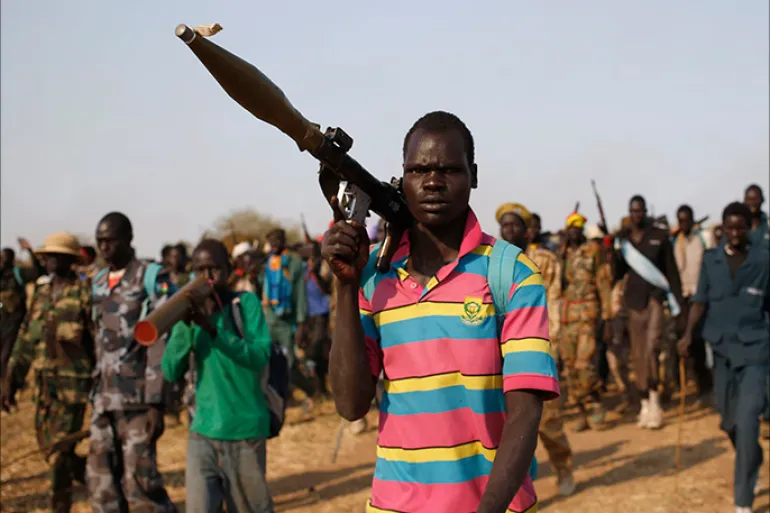
The United Nations has warned that renewed violence in South Sudan threatens to spread across the region as the humanitarian situation in the country continues to deteriorate.
The young nation, which gained independence from Sudan in 2011, witnessed a civil war between supporters of President Salva Kiir and those of his rival, Vice President Riek Machar, from 2013 to 2018. The conflict left around 400,000 people dead and displaced 4 million. A power-sharing agreement between the rival parties brought about a fragile calm.
Machar was suspended in March, raising fears of a new civil war.
Addressing the UN Security Council, Martha Pobee, the UN Assistant Secretary-General for Africa, said:
“There are concerns that the current stance of the army and ongoing operations could spark further violence and exacerbate intercommunal conflicts.”
She added: “If this trend continues, it is likely to trigger a shift in conflict dynamics, which could draw in neighboring countries.”
In late July, an exchange of fire between South Sudanese security forces and Ugandan forces near the border left at least six people dead.
Uganda deployed troops to South Sudan in 2013 to support Salva Kiir before officially withdrawing at the end of 2015. It has since been accused of interfering in the affairs of the world’s newest nation.
The country, mired in political paralysis and rampant corruption, is facing severe food insecurity, with more than half of its population — 7.7 million people — affected.
Last year, authorities announced yet another delay of the country’s first elections, now scheduled for December 2026. However, experts believe that conditions on the ground are still not conducive to ensuring a credible vote.
Pobee added: “Political leaders in South Sudan must act in good faith, refocus on implementing the agreement, and prepare for credible and peaceful elections in December 2026.”
She warned: “Otherwise, the risk of large-scale violence spreading will increase within an already unstable regional context.”