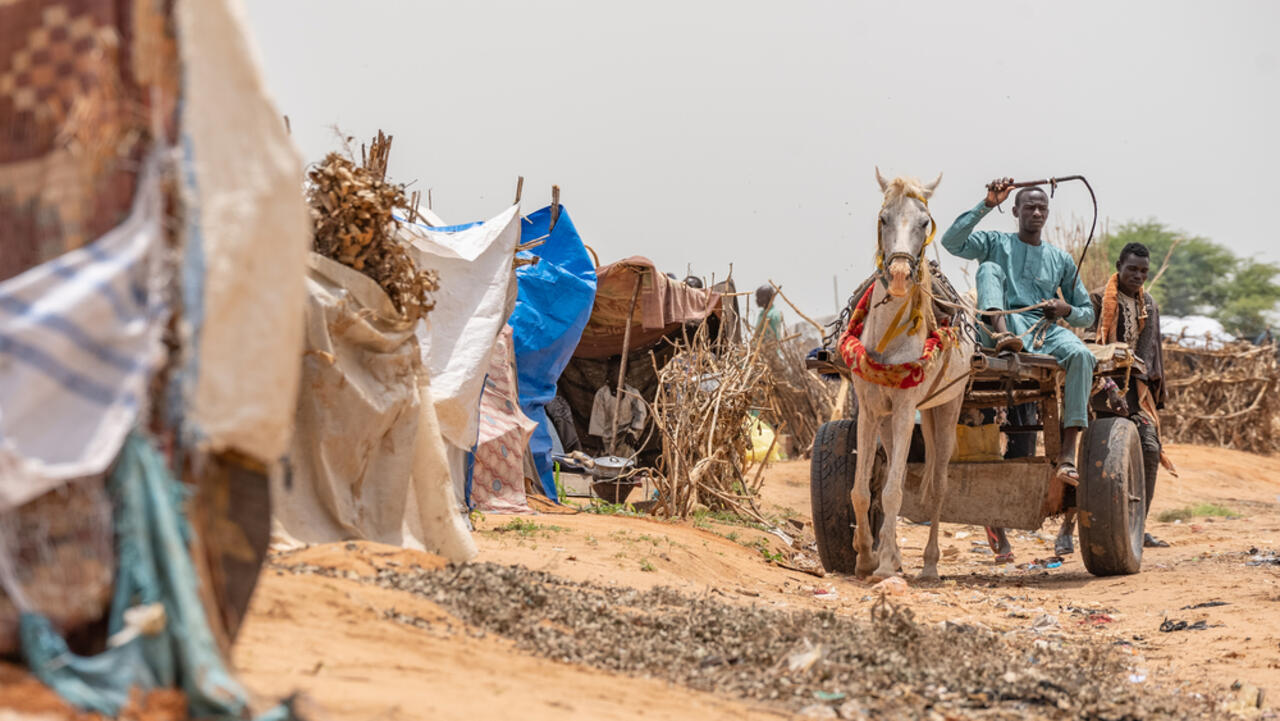
Residents of the besieged Sudanese city of El Fasher are resorting to underground shelters to protect themselves from drone strikes and shelling, as attacks intensify on refuge centers, hospitals, and mosques.
El Fasher, which is facing severe famine, remains the Sudanese army’s last stronghold in the vast Darfur region of western Sudan, where it continues to battle the Rapid Support Forces (RSF) in a civil war that has now lasted for over two and a half years.
The war, which erupted from a power struggle, has led to ethnically targeted killings, drawn in foreign actors, and created a massive humanitarian catastrophe.
While the army has made territorial gains elsewhere, Darfur remains the heartland of the RSF, which seeks to establish it as the base for a parallel government, raising fears of a geographical division of the country.
Mass Displacement
According to United Nations data, more than one million people have fled El Fasher during the 18-month RSF siege, though leaving has become both dangerous and costly. Estimates suggest that 250,000 civilians remain trapped in the city, amid fears of mass reprisals if it falls.
Struggling to Survive Drone Attacks
Many residents who stayed behind have dug makeshift bunkers to shield themselves from repeated attacks on civilians, according to more than ten residents contacted by phone and verified video footage obtained by Reuters.
Locals described how they limit movement and avoid gatherings during the day, and turn off lights after dark to evade drones.
Local journalist Mohiuddin Abdullah said:
> “We can only bury the dead at night or very early in the morning. It has become normal for us.”
Five residents reporte that drones now chase civilians around common gathering places such as hospitals.
At El Fasher South Hospital, director Dr. Ezz Eldin Asu said:
> “When you want to walk outside, you cling to the walls like a lizard so the drone won’t see you.”
At a refuge center in Abu Talib School, at least 18 people were killed in the week beginning September 30 after shelling, a drone strike, and a raid by RSF forces, according to Abdullah, who visited before and after the attacks.
Verified footage showed the school’s damaged roof and walls, with a body lying near a shipping container buried underground and surrounded by sandbags used as a shelter.
Both the Sudanese army and RSF declined Reuters requests for comment on the incidents in Abu Talib School and other parts of El Fasher.
Accusations Against RSF
Residents appearing in the videos accused the RSF of carrying out the attacks, though Reuters could not independently confirm responsibility.
Khadija Musa, director general of the North Darfur State Ministry of Health, told Reuters by phone from El Fasher:
> “They do not distinguish between civilians and soldiers. If you’re a person, they shoot you.”
The RSF and its allies face accusations of ethnically motivated violence across Darfur. The United States concluded last year that RSF forces committed genocide. RSF leaders deny ordering such attacks, blaming rogue soldiers who they claim will face justice.
In a statement on October 12, the RSF claimed El Fasher is free of civilians, and accused the army, its mobilized allies, and former ‘Joint Forces’ rebels of using hospitals and mosques as military bases and rocket launch sites. The RSF denied targeting civilians, while the Sudanese army, which also uses drones, denies killing noncombatants.
Repeated Strikes on Another Shelter
On October 10 and 11, another refuge center at Dar Al-Arqam, located within the university compound and including a mosque, came under repeated attack.
Center director Hashim Bush reported 57 deaths, including 17 children — three of them infants.
Bush said in a voice message describing the first attack:
> “They targeted the mosque — they struck right after Friday prayers.”
He added that a second strike followed, when a drone pursued people running toward another buried shipping container shelter.
He continued that four more shells hit the area during dawn prayers the next morning. Verified videos recorded by local activists confirmed the assaults.
Footage showed ten bodies covered with sheets, one small body covered by a prayer rug, and severely mutilated remains inside the shelter.
Satellite images released by Yale University’s Humanitarian Research Lab on October 16 identified six impact sites consistent with airstrikes on Dar Al-Arqam buildings.
Bodies in the Streets
Yale’s report also indicated that the RSF has expanded its sand barriers, tightening the encirclement of El Fasher since October 4.
Local activists warned last week that even animal fodder, which many starving residents had resorted to eating, has now run out.
Members of El Fasher Resistance Committee, a local grassroots network, said around 30 people die each day due to violence, hunger, or disease.
The Abu Shouk Camp Emergency Room, a volunteer network, reported that large numbers of bodies are scattered across the streets, posing a public health hazard.
Residents told Reuters they fear kidnapping, looting, or killing if they attempt to escape.
One volunteer from Abu Shouk Camp, identifying himself only as Mohamed, said:
> “El Fasher is almost a dead city — but leaving is even more dangerous than staying.”
-
-
-
-