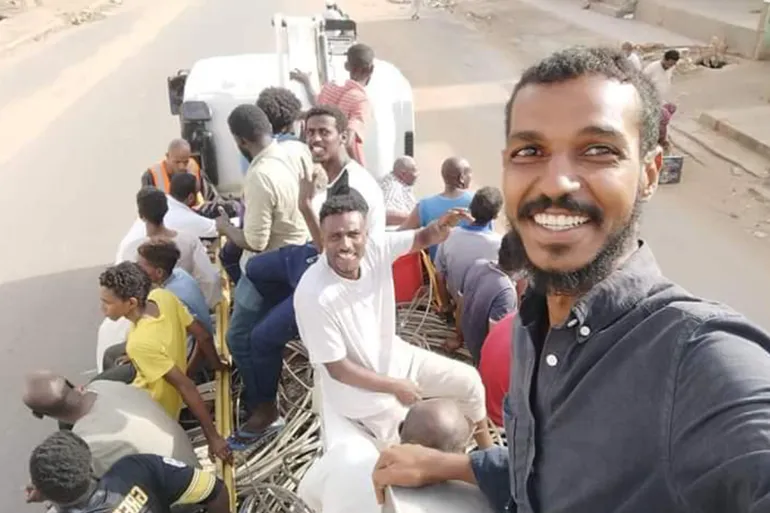
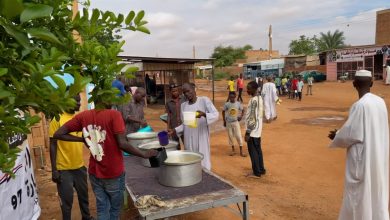
A network of Sudanese volunteers, nominated for the Nobel Peace Prize, is working tirelessly to help the hungry and displaced by distributing food aid, building shelters, and organizing evacuations in a country torn apart by two years of brutal war.
According to AFP correspondent Diaa Al-Din Al-Malik, the “Emergency Room” he works with is composed of “doctors, engineers, students, accountants, and the unemployed,” all contributing to supporting their devastated communities.
Emergency rooms are spread across Sudan, staffed by thousands of volunteers — most of them young.
They operate outside official frameworks, often backed by international organizations that are unable to deploy their own teams due to the harsh wartime conditions, and thus rely on these local groups.
UN humanitarian coordinator in Sudan, Denise Brown, said: “They are individuals and organizations with determination, courage, and knowledge of the realities on the ground. They understand the language and the needs.”
The Beating Heart
Shashwat Saraf, the Norwegian Refugee Council’s director supporting the network, said: “From day one of the war, the emergency rooms and their volunteers have been the beating heart of humanitarian action in Sudan.”
Their efforts include responding to emergencies, managing hospitals, repairing water and electricity networks, treating the wounded, and even rebuilding schools and providing food and psychological support to victims of sexual violence.
Diaa recalls, “At the start of the war, the situation was dire — corpses lay in the streets. In the total absence of any other actors, citizens had to take responsibility.”
On the Frontlines
In April 2023, clashes erupted between Sudan’s army, led by Abdel Fattah al-Burhan, and the Rapid Support Forces (RSF) under his former ally Mohamed Hamdan Daglo (Hemedti). The country quickly descended into a devastating war, pushing volunteers to the frontlines of humanitarian work amid the collapse of state institutions.
The emergency rooms thus continued the mission once carried out by the “Resistance Committees,” formed in 2013 during protests against former president Omar al-Bashir, which played a key role in his downfall.
In 2020, the resistance committees became more prominent during the COVID-19 pandemic, leading awareness campaigns and vaccination drives.
Thousands of Beneficiaries
Siddig Issa, active in the besieged city of Dilling in South Kordofan, said, “Before joining the Emergency Room in Dilling (in May 2024), most members were already working in humanitarian or community-related fields.”
Issa focuses on documentation and monitoring activities as part of a team of 36 volunteers divided across logistics, external relations, training, women’s protection, and security.
Amjad Musa, a 22-year-old resident of Dilling, said, “The Emergency Room volunteers are the only ones who can help us. We don’t know what we would have done without them — we survive because of them. Sometimes they bring us flour and medicine, and sometimes just a kind word.”
Major Impact
The United Nations says more than four million people benefited from the efforts of the emergency rooms in the early months of the war.
In Al-Jazira state, south of Khartoum, over a million displaced people have returned home since the army regained control of the area.
There, local emergency rooms established safe spaces for women and children, centers for distributing essential medicines and providing first aid, as well as psychosocial support for victims of violence, according to local spokesperson Wafaa Hassan.
Mounting Risks
Operating in remote and isolated areas, the emergency rooms also document abuses by both the army and RSF against civilians — their reports serving as valuable sources of information in a country plagued by misinformation and propaganda.
Both warring parties regard the volunteers with suspicion, leaving them vulnerable to arrest, intimidation, and violence.
Diaa said, “The hardest part of our work now is the risk of being detained by security forces, who think the emergency rooms are an extension of the revolution and resistance committees.” Several of his colleagues, he added, have already been arrested.
Last September, the emergency rooms received the Rafto Prize for Human Rights, in recognition of their “creative initiatives in solidarity and community cooperation,” and were also nominated for the Nobel Peace Prize, which ultimately went to Venezuelan opposition leader María Corina Machado.
-

-
-
-