- Dozens of videos circulating across social media platforms have documented scenes of executions, torture, and field killings — atrocities attributed to the Rapid Support Forces (RSF) following their capture of El Fasher, raising urgent questions about the fate of hundreds of thousands of residents amid international silence despite repeated condemnations.
- The Enigma of “Abu Lulu”
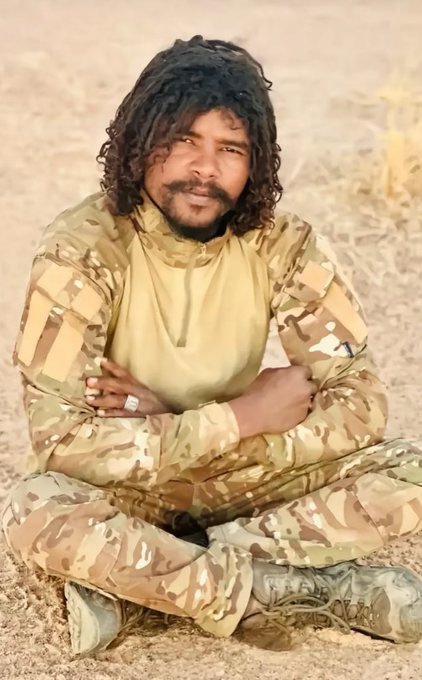
- These scenes revived memories of earlier videos featuring “Abu Lulu”, widely known for carrying out cold-blooded killings that terrorized civilians in El Fasher, earning him nicknames such as “The Butcher of El Fasher” or “The Slaughterer of El Fasher.” He appeared as one of the RSF’s prominent field commanders — though he later denied any formal connection to the group in an audio recording.
- His real identity remains disputed: some sources name him Fateh Abdullah Idris, others simply Abdullah Idris — but all agree on his alias, Abu Lulu.
- Despite RSF promises to ensure safe evacuation routes for El Fasher residents — claiming that the Sudanese army and allied “joint forces” had used civilians as human shields before withdrawing — numerous videos have surfaced showing RSF fighters executing fleeing civilians after the city fell.
- In one particularly disturbing video, Abu Lulu appears during mass executions on the outskirts of El Fasher, declaring: “This is what we came here for — we will show no mercy,” before opening fire with a Kalashnikov rifle on a group of fleeing civilians, killing them on the spot.
- Executions Broadcast Live
- Abu Lulu is considered the prime suspect in the brutal murder of Ahmed Gendoul, a well-known restaurant owner in El Fasher. A viral video showed Abu Lulu shooting Gendoul point-blank after the man identified himself as belonging to the Tama ethnic group of African origin. The footage sparked global outrage and renewed accusations against the RSF of committing ethnic cleansing.
- The RSF responded by announcing the formation of an investigative committee to determine whether the killer belonged to its forces — yet no report or findings have been made public to date.
- Reappearing After Death Rumors
- Despite earlier reports suggesting that Abu Lulu had been killed in clashes in El Fasher, he later reappeared in audio messages and new execution videos following the city’s fall.
- In one of the recordings, he said:
- > “I don’t belong to anyone, and the uniform I wear isn’t RSF’s. I’m like General Jalha, who came from Libya to fight. I came here to fight the army — I’m a rebel with my own group and vehicles. I have my own cause: my family was killed, and I came to fight and die. If anyone, even the UN, wants me — I’m here.”
- He swore in the same recording that he would not stop killing until he reached 2,000 victims, later boasting that he had surpassed that number and planned to “start counting again from zero.”
- Abu Lulu often personally filmed and uploaded videos of his own executions, gloating about killing civilians — many of whom he accused of being army sympathizers. His TikTok page reportedly featured numerous such videos, some showing him conducting summary interrogations before shooting victims with a pistol or Kalashnikov.
- Although he publicly denied RSF membership, he frequently praised RSF leader Mohamed Hamdan Dagalo (Hemedti) and dedicated his “victories” to him.
- A Deranged Killer
- Former Sudanese army officer Mohamed Bashir Hamid described Abu Lulu as “mentally disturbed and obsessed with killing — a deranged man proud of slaughtering thousands, as if competing for a record.” He said Abu Lulu embodied “a moral collapse within the RSF, where such a murderer became celebrated as a hero among his peers.”
- Hamid recalled a video showing Abu Lulu boasting during a barbecue celebration that his victims had reached 900, vowing to hit 1,000 soon — cheered on by RSF fighters.
- He warned that the emergence of “dozens of Abu Lulus” within RSF ranks — adopting the same brutal tactics — poses a grave threat to civilians and severely damages the credibility of the Taasiss Alliance, which claims to protect civilians.
- RSF Denies Connection
- RSF spokesperson Lt. Col. Fateh Qurshi denied knowing of any fighter named Abu Lulu in the force’s records, stating:
- > “We don’t kill prisoners. Investigations are ongoing to identify those appearing in the circulated videos.”
- He added that RSF intelligence is working to determine the identity of perpetrators seen in RSF uniforms, suggesting that other groups might be using RSF attire — widely available in markets — to tarnish the force’s image, implicitly blaming the army and its intelligence units.
- Promise of Investigations
- Meanwhile, Alaa al-Din Awad Naqd, spokesperson for the Taasiss Alliance led by the RSF, said the coalition would form investigative committees to verify the authenticity of the videos and allegations of violations against civilians in El Fasher, Bara, and other “liberated” areas.
- He claimed that many of the circulating videos were “fabricated by Islamist media and mercenaries from the joint forces,” adding that the RSF had evacuated about 800,000 civilians from El Fasher to safe areas — insisting that it was “illogical” for the forces to commit atrocities against them afterward.
- Naqd dismissed attempts by Islamist militias to “turn this war into an ethnic conflict,” saying such efforts “have failed — Sudanese will not fight one another again for racial, religious, or tribal reasons.”
مقالات ذات صلة
-
-
-
-