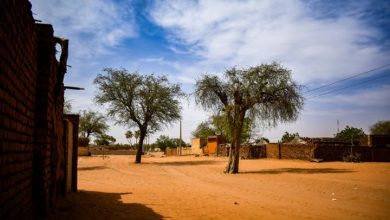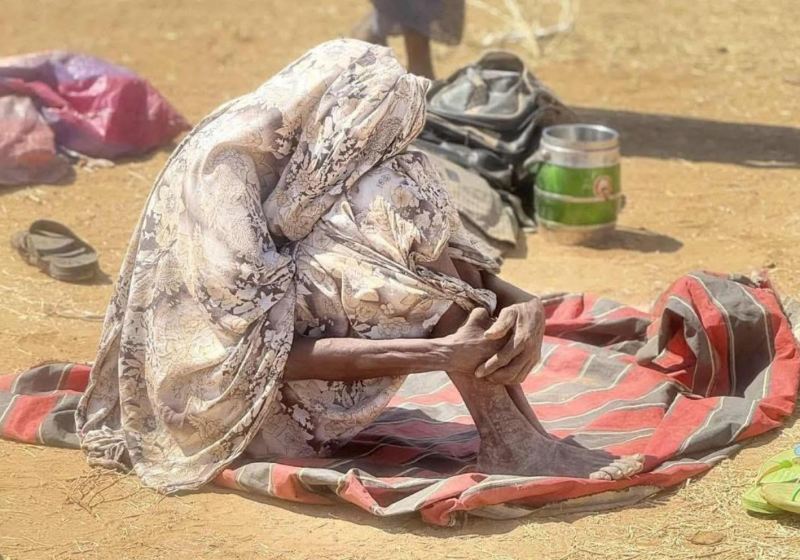
Tawila locality in North Darfur has turned into a refuge for hundreds of thousands of displaced people — estimated at around 1.3 million, including more than 500,000 who fled the horrors of genocide and ethnic cleansing massacres carried out by the Rapid Support Forces (RSF) following their takeover of El Fasher.
Today, Tawila is overwhelmed with displacement camps — most notably Zamzam and Abu Shouk — where people live in catastrophic, extremely harsh, and complex conditions lacking the most basic necessities of life amid a severe shortage of available services and facilities.
Adam Regal, spokesperson for the Darfur General Coordination for Displaced Persons, revealed that the influx of displaced people into Tawila continues day and night, with hundreds arriving daily in a dire state — hungry, sick, and exhausted after a long and grueling journey.
He noted that more than 450 people have been admitted directly to Tawila Hospital, suffering from fatigue, dehydration, and gunshot wounds inflicted by RSF fighters along the way — most of them women, children, and elderly people — in addition to victims of sexual violence.
Regal reported that many of those arriving were subjected to looting and assaults, including around 150 women who were raped during the journey, as well as dozens of unaccompanied children urgently in need of psychological support. Essential services and medical supplies — such as intravenous fluids and life-saving medicines — are in critically short supply.
He appealed to the international community and humanitarian organizations to act immediately to deliver food, medicine, clothing, and clean drinking water to the displaced in Tawila, who are in desperate need of assistance.
The spokesperson also pointed out severe shortages in shelter materials, as the number of displaced people far exceeds the available housing capacity. Limited water sources have forced many to resort to unsafe wadis and streams. Despite the tireless efforts of local emergency committees and aid organizations operating in the area, the escalating humanitarian needs demand greater international support and the reopening of routes to allow the delivery of humanitarian aid and relief supplies.
-
-

-
-