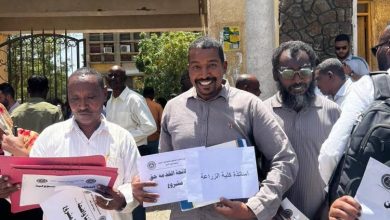
For decades, Sudanese society has been defined by strong family ties and a deeply rooted social fabric, particularly through the model of the extended family in which grandparents, parents, uncles, aunts, and children live under one roof in relationships built on compassion, respect, and mutual support. This model has long served as a pillar of social stability and a foundation for upbringing and emotional security among Sudanese families, giving Sudan a distinctive character compared to its African and Arab surroundings. And despite the social changes brought about in recent years by modernization and shifting generations, traditions, customs, and religious values have remained strong enough to preserve this cohesion.
However, the war that erupted in Sudan has caused an unprecedented social earthquake, striking at the heart of the Sudanese family and shaking its historic cohesion. Political and military divisions have seeped into homes, turning differences in opinion into sharp lines of conflict that split families into “supporters,” “rebels,” “militia,” “neutral,” “Islamist,” and other labels that quickly became part of everyday language. Over time, disagreement ceased to be a simple difference in views and instead became a cause for estrangement, severed family ties, and tension between siblings—even between parents and their children—as the traditional role of elders, who once possessed the wisdom to calm disputes, diminished significantly.
At the same time, new waves of regional and tribal identities emerged, deepening the divide. Labels such as “people of the west,” “people of the river,” “northerners,” “state residents” and “displaced people,” as well as “Arabs” and “Zurga,” began to spread, fueling hate speech, mutual accusations, and weakening the sense of shared citizenship and national unity that once held communities together.
Under mounting fear, hunger, displacement, and economic collapse, tension within households increased, and violence began creeping into homes—an unfamiliar phenomenon in a society long known for tolerance, compassion, and conflict resolution. Recent months have seen shocking family tragedies, including the well-known incident in Bahri, where an entire family of siblings lost their lives at the hands of their nephew over a dispute so trivial it would not normally warrant a heated conversation. Yet, in the tense climate of war, it escalated into an incomprehensible tragedy. Similar incidents have been reported across the country, as psychological and social pressures pushed some young people toward violent reactions, and families lost their ability to regulate behavior or contain anger.
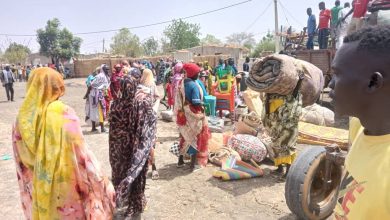
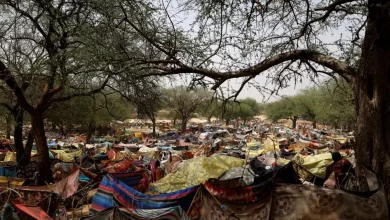
As displacement intensified and Sudanese families scattered across different states and neighboring countries, the extended family—the traditional safety net—began to disintegrate. It became common to find one family split between Egypt, Kenya, Uganda, the Gulf countries, Chad, Ethiopia, and various Sudanese cities. The role of grandparents, once the emotional and moral anchors of the household, diminished sharply; women were burdened with doubled responsibilities in the absence of male providers; and children lost the stable environments essential for healthy psychological development. At the same time, the once-vibrant gatherings of neighbors and relatives around tea and storytelling gradually faded, replaced by a harsher tone shaped by fear, uncertainty, and anxiety about the future.
The war in Sudan has not only destroyed buildings—it has destroyed relationships, values, and the moral foundations that sustained Sudanese society for generations. Without serious steps to rebuild trust, address psychological trauma, promote community reconciliation, and combat hate speech, the wounds left by this conflict may last for generations. Restoring the social fabric today is no less important than achieving a ceasefire; it is a fundamental condition for Sudan’s recovery and for reclaiming the humane spirit that has long defined its people.
-
-

-
-