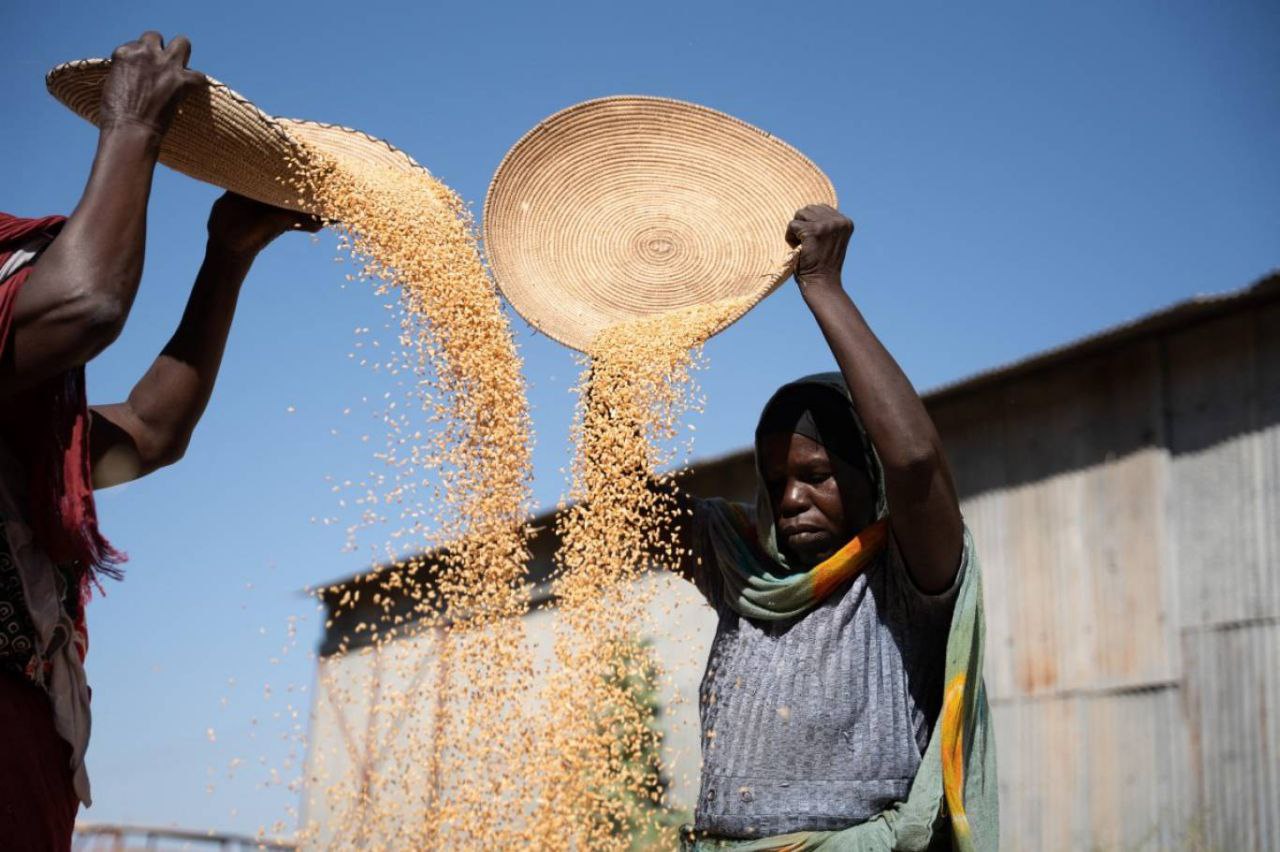
From fertile lands and strategic location to gold and water, Sudan’s abundant natural resources have turned into major drivers of regional interference in the devastating conflict that has been raging for more than two years.
Since April 2023, the Sudanese army, led by Abdel Fattah al-Burhan, has been waging a fierce war against the Rapid Support Forces (RSF) led by Mohamed Hamdan Dagalo. The conflict took a new turn when the RSF seized control of the city of El Fasher in Darfur late last month.
The army is believed to receive support from Egypt, Saudi Arabia, Turkey, and even Iran, while the United Arab Emirates is said to back the RSF, according to regional experts. However, all these countries deny providing direct support to any side.
Food and Ports
Sudan’s vast, fertile lands — the third largest in Africa — have long attracted the Gulf’s desert nations located across the Red Sea, which have always viewed Sudan as a potential “breadbasket.”
Before the outbreak of the latest war, the UAE had invested heavily in Sudan, with Emirati companies managing thousands of hectares of agricultural land. In 2023, oilseeds and fodder were among Sudan’s top exports to the UAE after gold.
Before the 2019 military coup, Saudi Arabia and Qatar had also held talks about major agricultural investments in Sudan.
Additionally, Alya Ibrahim, a researcher at the Atlantic Council, points to Sudan’s Red Sea coastline, which gives it the ability to “influence global maritime navigation, security, and trade through its ports and naval bases.”
This strategic passageway, through which 10–12% of the world’s seaborne goods transit, is closely monitored not only by Gulf countries but also by Russia and Turkey — both of which, along with the UAE, have tried to build naval bases or secure port management rights there. However, negotiations have stalled or been suspended.
The UAE and Its Allies
After the conflict erupted in 2023, Sudan severed diplomatic ties with the UAE, accusing it of supporting the RSF with weapons and foreign fighters from Chad, Libya, Kenya, Ethiopia, and Somalia — accusations denied by Abu Dhabi.
In May, Amnesty International published an investigation citing images and remnants of munitions that indicated the presence of Chinese-made weapons supplied by the UAE to the RSF.
While Chad claims neutrality, UN reports and several experts say that the Um Jaras airport there has become a hub for cargo planes arriving from the UAE and headed to RSF-controlled areas in Darfur.
A researcher from the Global Initiative Against Transnational Organized Crime noted that eastern Libya, controlled by Field Marshal Khalifa Haftar, has become the primary route for UAE supplies to the RSF. He stated that since June, “around 200 military cargo flights have landed in eastern Libya, likely carrying weapons for the RSF.”
A report by the U.S.-based organization “The Sentry” also said that Haftar’s camp is indebted to Abu Dhabi for the support it has received since 2014, and that it serves as a “key supplier of fuel to the RSF,” enabling the forces to sustain their operations in Darfur.
Gold Routes
After South Sudan’s 2011 secession — where most oil reserves were located — gold became Sudan’s main economic resource. Before the war, Sudan’s annual gold production exceeded 80 tons, according to the Central Bank. Part of this production was exported, with revenues reaching nearly USD 1.85 billion in 2021. But since the war began, official gold exports have dwindled, giving way to a booming black market, according to a recent Chatham House study.
The study stated that “economic competition between the army and the RSF over gold extraction and sales is a key driver of the current war.”
Gold often ends up in the UAE — whether exported by the RSF or by the Sudanese army through Egypt.
Last year, the UAE imported double the amount of Sudanese gold it had imported in 2023 (29 tons last year compared to 17 tons in 2023), according to SwissAid.
Alya Ibrahim notes that “gold is not only used to secure fighters’ loyalty or purchase missiles and drones — it also gives the conflict an economic engine that sustains it.”
Drone Warfare
Turkey and Iran have supplied the Sudanese army with drones that played a decisive role in its total control over the capital, according to analyst Imad al-Din Badi. But the impact of these drones diminished in recent months after the RSF upgraded its air-defense systems, which he says contributed to the fall of El Fasher.
In early November, the RSF’s political wing accused an unnamed neighboring country of using drones to strike its forces. According to media outlets close to the RSF, that country is Egypt.
The government in Khartoum, meanwhile, accuses the UAE of supplying the RSF with Chinese-made drones.
Thierry Vircoulon, a researcher at the French Institute of International Relations, says that “since the beginning of the conflict, the RSF has recruited a wide array of foreign mercenaries,” including Syrians, Russians, Colombians, and Africans.
-
-
-
-