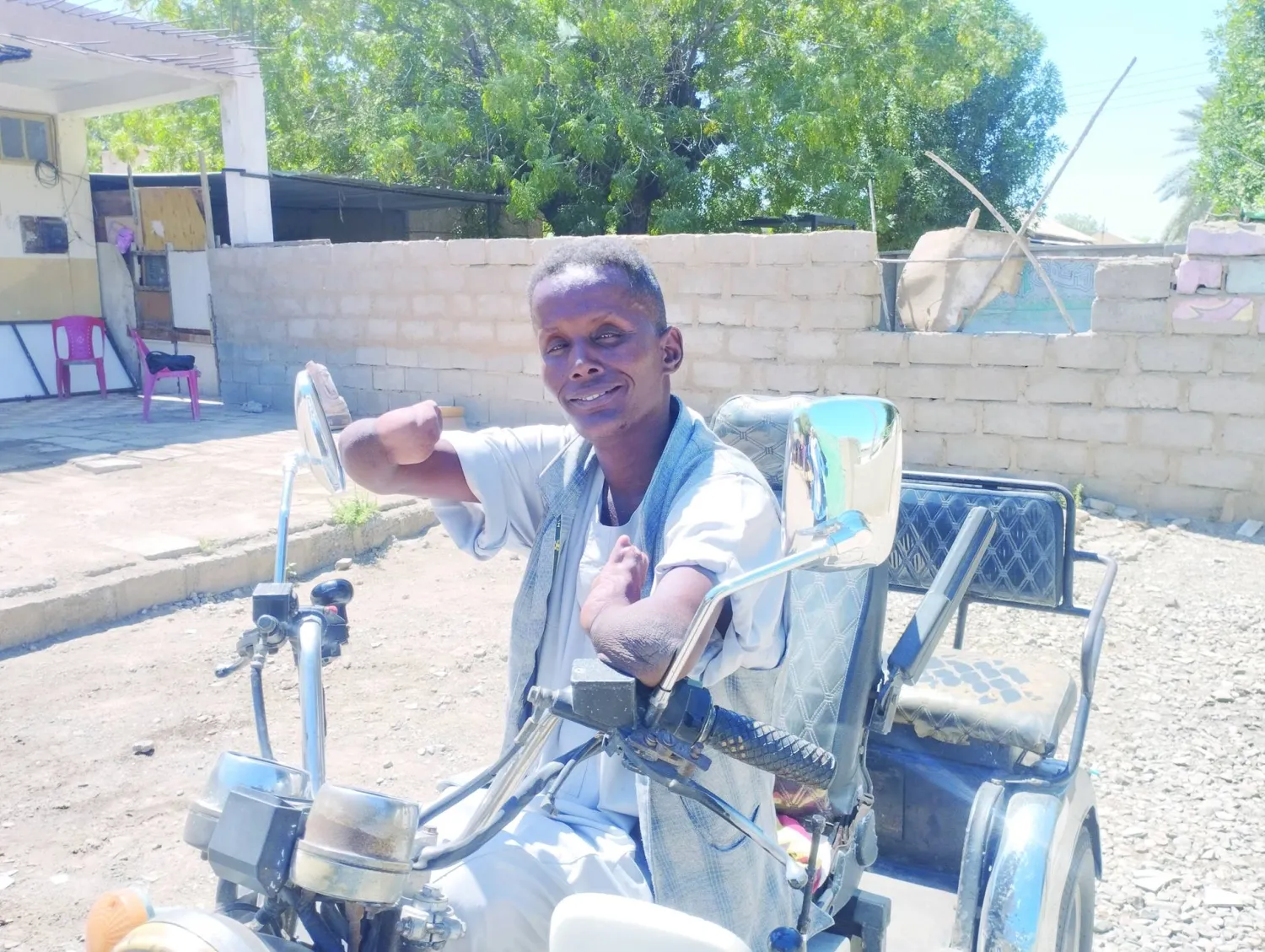
As the conflict between the Sudanese army and the Rapid Support Forces (RSF) expands, the number of people with disabilities in Sudan has doubled. Amputations continue at an alarming rate due to the intensity of the fighting, which claims the limbs of the wounded inside the few remaining hospitals struggling to provide healthcare amid the collapse of the health system. This reality reflects the magnitude of the tragedy faced by people with disabilities—one marked by lost hope and the absence of support.
Under these conditions, the suffering of people with hearing, visual, intellectual, and physical disabilities has worsened catastrophically due to direct injuries. They are considered among the most in need of life’s basic necessities—shelter, food, treatment, and medicine—alongside access to education and rehabilitation centers, safe mobility, psychological and social support, and protection from grave human rights violations. The war has destroyed more than 120 rehabilitation centers in Khartoum and Al-Jazira states alone.
According to statistics, the number of people with disabilities in Sudan is estimated at around 1.4 million. With the prolonged war, especially in Darfur and Kordofan, this group is increasingly becoming marginalized and forgotten due to the overwhelming challenges they face.
Pain and Suffering
Ibtisam, the mother of 15-year-old Sara Saif Al-Din from Omdurman, says:
“My daughter lost both her legs under the rubble of our home, which was destroyed by aerial bombardment in Omdurman. As the fighting intensified, we fled to Atbara and stayed in a displacement camp, which unfortunately lacks even the most basic necessities for a healthy person—let alone a child with a disability.”
She continued:
“In this center, we received no real care or attention. The situation is extremely dire. Displaced people with disabilities, especially those with mobility impairments, share a single wheelchair, while others are transported on pieces of wood. There is no electricity or water, not to mention medicine. Due to prolonged suffering, my daughter’s body now bears the scars of this brutal war. She often complains of pain—she has known nothing in her childhood but early suffering.”
Ibtisam noted that during their stay, the center received dozens of people with disabilities living in conditions that reflect the cruelty of this senseless war and reveal that they are at the very bottom of humanitarian response priorities.
Hostages of Conflict
Ahmed Al-Mutawakkil, who resides in a rehabilitation center in the Red Sea State, said:
“I sustained a severe injury to my right leg due to indiscriminate shelling that hit our home and several areas in East Nile. The injury worsened as hospitals were destroyed and shut down. Eventually, the infection led to the amputation of my legs. After Wad Madani was overrun—where I had been receiving care—I had no choice but to flee to the Red Sea State. Sadly, the reality of the wounded in conflict areas has become far darker than I ever imagined.”
He added:
“The conditions of people with disabilities worsen day by day. Essential services to ease their suffering are unavailable, and there are no responsible authorities checking on them or addressing their needs, turning their suffering from physical into psychological.”
Al-Mutawakkil explained that with the surge in disabilities caused by military operations and the insistence of both sides on escalation—along with the absence of institutions and social discrimination—this group has become hostages to this vicious conflict, amid a severe lack of treatment and rehabilitation services.
The Hardship of Displacement
Mohammed Abdullah (45), from El-Fasher, said:
“We lived through a suffocating siege on El-Fasher for about 18 months, under constant gunfire and artillery and missile bombardment. On one of those difficult days, I was seriously injured by shrapnel in my left leg. Tragically, due to the absence of treatment and the RSF’s targeting of the few remaining hospitals, my injury became a permanent disability. Today, I walk with a cane.”
He continued:
“When the RSF advanced into El-Fasher and people fled on foot in every direction seeking safety—while gunfire targeted those fleeing—I had no choice but to escape despite the intense pain. I could barely move and had to crawl on the ground, sometimes carried by my children, hoping to reach a humanitarian center in Tawila camp to receive treatment.”
Abdullah said his family later decided to continue displacement to camps in Al-Dabba, despite the hardship and cost, considering it the best option to secure continuous medical care and eventually access rehabilitation centers in Northern State.
A Wave of Amputations
Amin Abdel-Qader, a volunteer at Al-Nau Hospital in Omdurman, revealed that since the start of the conflict, the hospital received around six amputation cases daily due to indiscriminate aerial bombardment that spared neither children, women, nor the elderly. “The disaster exposed terrifying figures that have multiplied the number of people with permanent disabilities,” he said.
He added that the tragedy goes beyond physical injuries to include the absence of rehabilitation, exposing newly injured patients to serious complications—especially as Al-Nau Hospital suffered from extreme overcrowding of the wounded.
Abdel-Qader warned that the war in Darfur and Kordofan will inevitably lead to more injuries and displacement in search of healthcare, calling for an end to the indiscriminate targeting of civilians and the protection of lives.
Extreme Vulnerability
Fatima Qasim, representative of the “Safe Corridors” initiative, said:
“The situation of persons with disabilities has become far more complex during the war. They face unsafe displacement, homelessness, and killing, alongside deteriorating health conditions due to the absence of services. They are excluded from humanitarian response plans, including medicine, rehabilitation, and education, and suffer neglect and abuse—making them among the most vulnerable and affected groups.”
She explained that the initiative emerged from within these vulnerable communities to support them since the outbreak of the conflict, especially those injured during military operations, amid the absence of an official response.
Qasim added that people with disabilities—particularly those with mobility impairments—cannot survive on their own due to the lack of means. Many were unable to flee and some were accused of cooperating with the army, deemed a burden on society, and executed, posing an even greater threat to their lives.
She noted ongoing coordination among initiatives in safer states to provide treatment and rehabilitation for people with disabilities, despite the failure to implement agreements guaranteeing their rights and protection during armed conflict—even in relatively safe areas.
Violated Rights
Human rights activist Mohammed Al-Fadil stressed the need for official authorities to pay serious attention to the rights of people with disabilities, particularly by reactivating rehabilitation centers during periods of relative calm and supporting the return of citizens—including people with disabilities—to areas formerly affected by conflict.
He pointed out that casualties from shelling continue to rise across nearly 70% of the country, often exceeding official figures due to the lack of accurate data. The current reality demands comprehensive plans to ensure access to basic services, as shortages in healthcare and medicine have led to deaths among the injured.
Al-Fadil added that displacement shelters are ill-equipped and fail to meet the specific health and humanitarian needs of people with disabilities, exacerbating their suffering and requiring urgent intervention by the state and international organizations.
Initiatives and Mechanisms
In Darfur—where war has persisted since 2003 and worsened under the current conflict—rates of injury and permanent disability among civilians have increased sharply. Most of those affected live neglected in displacement camps without care.
Adam Rijal, spokesperson for the Coordination of Displaced Persons and Refugees, said:
“Injuries caused by military operations continue to rise due to the brutality of the war in Darfur. Today, the injured live in camps without care, enduring extreme hardship, medical complications, social stigma, and discrimination, resulting in severe and chronic psychological problems. They have become a neglected group, despite being war victims.”
He emphasized the urgent need for initiatives and new mechanisms to halt the severe deterioration facing persons with disabilities in Darfur and to seriously work toward their integration into society.
مقالات ذات صلة
-

-

-
-