As the war in Sudan continues for more than 32 months, political forces supporting an end to the armed conflict, along with civil actors, are intensifying their efforts through multiple tracks, including active civil dialogue.
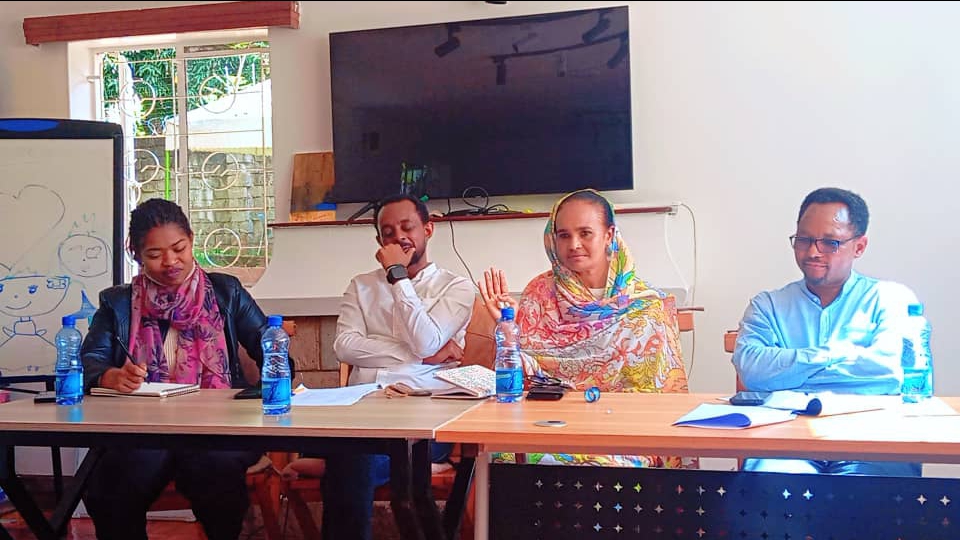
In this context, the “Sudan Café” forum was convened as part of the Sustainable Dialogue Program, organized by Wai Organization in partnership with the Institute for Peace and Life, as an open platform for collective thinking about the roles of civil actors in the post-war period and rebuilding the public sphere on new foundations.
Post-war Experiences
The forum opened with Abdullah Al-Safi Hilla recalling the experiences of countries that emerged from devastating wars, citing China and Singapore as examples.
He noted that both countries suffered massive destruction and heavy human losses, yet the presence of national will and the clarity of the state’s vision and development project enabled them to overcome the effects of war and transform into influential economic powers globally.
Hilla argued that the lesson from these experiences lies not in comparing contexts, but in recognizing that recovery begins with possessing a unifying national project—something that remains absent in the Sudanese case.
The Civil Role
Based on this diagnosis, Hilla posed a central question that framed much of the discussion: What is expected of civil actors after the war in rebuilding the public sphere? He stressed that answering this question constitutes the real entry point for any serious discussion about national recovery.
In this regard, he offered a direct critique of the post–December Revolution experience, noting that incorporating civil society into positions of power weakened the revolutionary government and deprived civil actors of one of their core roles—namely oversight, accountability, and the moral and political scrutiny of authority.
Clear Intersections
He warned against conflating partisan political work with civil action, explaining that the entry of political parties into the civil society space as direct actors undermined its independence and restricted its ability to perform its watchdog role.
He emphasized that if political parties wish to operate within this space, they should do so by establishing organizations that support their programs, as is common in many European and Western countries, where such entities function in the civil sphere without blurring the line between politics and community work.
Active Women
For her part, Tahani Abbas, Secretary-General of the organization “No to the Oppression of Women”, addressed the growing role of women-led initiatives during the war, affirming that women have not been merely victims of the conflict but key actors in mitigating its impacts.
She explained that women’s initiatives have played significant roles in relief efforts, psychosocial support, and protecting the social fabric, particularly in areas of displacement and refuge.
She stressed that this role should not end with the cessation of war, but must extend into the post-war phase by contributing to countering hate speech and violence, promoting peace values, and participating in rebuilding the public sphere—while ensuring recognition, support, and inclusion of these initiatives in decision-making processes.
Exclusionary Discourse
Similarly, former Secretary-General of the National Council for Press and Publications, Hossam El-Din Haidar, stated that one of the deepest impacts of the war lies in the distortion of collective consciousness.
He noted that the conflict has not only destroyed physical infrastructure, but has also contributed to the reproduction of exclusionary and polarizing discourses.
He emphasized that one of the most important roles of civil actors is to dismantle these narratives and build alternative ones based on mutual recognition, respect for diversity, and the rebuilding of trust among the components of society.
Haidar considered dialogue forums such as Sudan Café to be a practical model for transforming dialogue from an elite-driven activity into a broader societal practice.
Fruitful Discussion
The forum witnessed interventions from attendees reflecting the importance of public debate, raising fundamental questions about the role of civil society and the effectiveness of dialogue platforms in the context of ongoing war.
Participants agreed that such forums help dismantle conceptual ambiguities, redefine roles, and open a realistic horizon for dialogue as a necessary entry point to ending the war—rather than a luxury detached from reality.
مقالات ذات صلة
-
-
-
-