The Sudanese pound is no longer merely a banknote exchanged by hand; it has become a stark reflection of a deep economic collapse imposed by war. Since the outbreak of fighting between the Sudanese army and the Rapid Support Forces (RSF) in mid-April 2023, the national currency has entered a rapidly declining trajectory, losing a large portion of its value and unleashing unprecedented inflation that has eroded household incomes and turned the simplest necessities of life into a heavy daily burden.
The continuous rise in food, fuel, and medicine prices is no longer confined to economic reports—it has become a lived reality that has forced millions of Sudanese to redefine their basic needs and abandon lifestyles once considered normal before the war.
Amid the absence of monetary stability and the diminishing role of official institutions, ordinary citizens now face a volatile market dominated by a collapsing currency and an expanding shadow economy.
Major Imbalances
Economic analyst Haitham Fathi stated that “the dollar exchange rate stood at around 570 Sudanese pounds at the outbreak of the war, under monetary policies aimed at maintaining currency stability. However, the continuation of the conflict weakened these policies, leading to a gradual deterioration of the pound and a sharp decline starting in late May 2024, when the dollar jumped to about 2,500 pounds, then rose further to nearly 3,500 pounds during the current year.”
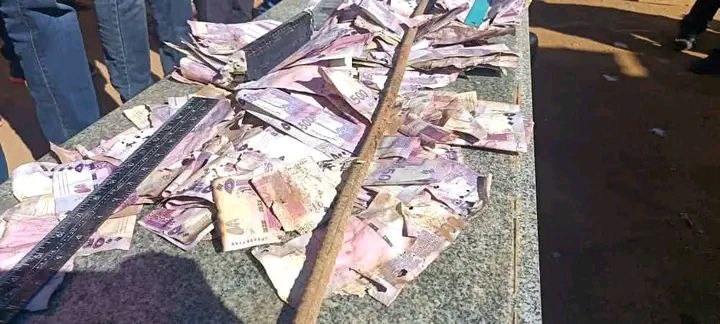
Fathi explained that “this collapse has exhausted the economy due to the redirection of resources toward the war effort, weak revenues, and the government’s slow response in implementing decisive measures to curb inflation—most notably the incomplete currency replacement process following widespread bank looting. Expectations had leaned toward adopting electronic transactions and depositing cash to push looted money out of circulation, but this step was not fully implemented, particularly in Khartoum, Al-Jazira, and White Nile states, which represents a major flaw.”
He added that “the continued circulation of looted cash has intensified inflation, eroded citizens’ purchasing power, and driven up poverty and unemployment rates, alongside sharp increases in goods and service prices. Exchange rate changes were the main driver of inflation, but the lack of market control placed a heavier burden on low-income groups and widened the poverty gap.”
Fathi further noted that “the absence of local production, declining exports, rising import costs and taxes have trapped the economy in a vicious cycle of high inflation, continuous currency depreciation, shrinking real incomes, destruction of infrastructure, near-halt of agricultural and industrial production, and expansion of the shadow economy.”
Regarding solutions, he stressed the need to “redirect the economy toward agricultural and industrial production, control money supply, and halt deficit financing through unbacked currency printing, while implementing fiscal austerity policies that include tax system reform, expanding the tax base, and reducing unnecessary public spending—while protecting the poor.”
He also called for supporting farmers with lower-cost inputs, encouraging contract farming, restructuring and supporting industries and small- and medium-sized enterprises to reduce unemployment, increase supply of goods, and improve basic services such as health, education, and water to ensure a minimum standard of living.
Erosion of Livelihoods
Banking researcher Loay Abdelmonem described Sudan as “living through one of its most complex economic phases due to prolonged war, which has triggered successive inflationary waves, a sharp collapse in the exchange rate, and deep production contraction—leading to the disintegration of the economic system and unprecedented erosion of citizens’ purchasing power.”
He added that “according to data from the Central Bureau of Statistics, annual inflation reached 83.47% in September before slightly declining to 77.40% in October—a marginal improvement reflecting limited impact of announced reforms, despite collapsing demand and weak purchasing power.”
This coincided with sharp exchange-rate jumps, with the dollar in the parallel market reaching about 3,665 pounds for buying and 3,750 for selling—around 30% higher than official rates—highlighting the ongoing monetary crisis and the disconnect between official and market prices.
Abdelmonem attributed current inflation to four main factors: “monetary expansion to finance the deficit amid declining revenues, sharp exchange-rate depreciation, reduced production and disrupted supply chains, and loss of confidence in the pound—pushing individuals and traders to hedge with dollars and gold, thereby fueling the inflation spiral.”
He estimated that “Sudanese citizens have lost between 70% and 90% of their purchasing power over two years due to inflation exceeding 80% in most months, a dollar increase of more than 500%, and stagnant wages in both public and private sectors. Salaries—especially in government—now cover only a few days of basic expenses.”
He noted that “wages have lost their economic function, with livelihoods now depending on remittances, family support, and informal work, alongside drastic consumption cuts. The most affected sectors are education, food commodities, health services, housing and energy, and transportation, due to heavy reliance on imports and rising operating costs.”
Abdelmonem warned that inflationary pressures are likely to continue in coming months unless genuine reforms are implemented, adding that international funding received in 2025—while vital for basic services—will not directly affect exchange rates or inflation in the short term, as it does not enter foreign-currency reserves.
He emphasized that Sudan is currently experiencing severe stagflation, meaning curbing inflation requires either direct monetary intervention to boost reserves and exports or political and security improvements allowing production to resume.
The banking researcher also proposed introducing a gold-backed savings pound as a qualitative solution to break the dollar-speculation cycle, by offering a gold-covered savings instrument within the banking system, reducing dollar demand without injecting new cash.
Shadow Economy
Investigative economic journalist Alaa Mohamed observed that “the parallel currency market is no longer a marginal activity; during the war it has evolved into a full-fledged parallel economy that effectively sets the exchange rate, far removed from official oversight.”
She explained that “the collapse of the banking system and shutdown of many banks pushed individuals and traders to rely on informal transfer networks operating inside and outside Sudan. These networks function through brokers and currency traders who communicate directly with external markets and determine prices based on parallel-market dollars rather than official rates, rendering the latter economically meaningless.”
She added that “most importers now price their goods according to black-market rates, directly driving up prices and living costs.”
According to Mohamed, the war economy has fueled this expansion, with increased gold trading and smuggling and the flow of revenues outside the banking system, amid weak regulatory tools and divided monetary authority. This has concentrated wealth in the hands of a small group while expanding poverty, leaving ordinary citizens as the weakest link, bearing the cost of currency collapse and rising prices without protection.
She stressed that the continuation of the parallel market in its current form obstructs any attempt to stabilize the pound or curb inflation unless confidence in the banking system is restored and informal-economy channels are closed.
Psychological Impacts
Social specialist Sara Osama noted that “the collapse of the pound and rising prices have not only altered consumption patterns but reshaped daily life entirely. Families no longer plan by the month, but by the day—and sometimes by the next meal.”
She explained that “many households have eliminated basic items once considered necessities, such as meat, dairy products, certain medications, and educational tutoring, relying instead on lower-quality alternatives or complete abandonment. Education and health have become among the hardest-hit sectors, as their costs are no longer affordable for large segments of the population.”
Osama added that “most citizens report that salaries—if available—last only a few days, forcing reliance on remittances from abroad, family assistance, or informal work such as temporary selling, daily labor, or direct barter. This sustained economic pressure has produced deep psychological and social effects, including chronic anxiety, frustration, family disintegration, and changing household roles, with women and children sometimes entering precarious labor markets.”
She concluded that “amid this reality, forms of community adaptation have emerged, such as neighborly solidarity, collective purchasing, shared kitchens, and local support initiatives. However, these remain temporary solutions that do not address the roots of the crisis. There is broad consensus that Sudanese citizens are now living a true survival economy driven by adaptability rather than stability. Continued currency collapse and inflation will place even greater strain on the social fabric unless comprehensive economic and political solutions restore a minimum level of livelihood security.”
مقالات ذات صلة
-

-
-
-