Amid rising fears that essential goods are being weaponized, a dangerous tit-for-tat blockade has emerged between the Rapid Support Forces (RSF) in Darfur and the Sudan Armed Forces (SAF) controlled states in the North, Center, and Kordofan. This mutual embargo on the movement of commodities threatens to sever the historical trade arteries between Sudan’s North and West, effectively carving the nation into isolated economic islands and deepening the specter of political and geographical disintegration.
The pivotal question now haunting the Sudanese landscape is whether this “commodity war” will become the ultimate economic weapon that shatters the country’s unity amidst an already raging military conflict.
Control and ban
Following its consolidation of power over the five Darfur state capitals, most recently El Fasher, the RSF-led Advisory Council for the Darfur Region issued a decree banning the transport of 12 strategic commodities produced in its territories to Army-held zones in the Center, North, and North Kordofan.
The ban covers a wide spectrum of vital exports and staples: all types of Gum Arabic, peanuts, edible oils, tobacco, livestock (cattle, goats, camels, and sheep), dried okra, sesame, millet, animal feed, corn, and hibiscus, in addition to gold and other minerals. To enforce this, the RSF has implemented stringent measures, including the immediate seizure and confiscation of trucks, livestock herds, and any goods caught being smuggled toward SAF controlled lines.
Retaliatory Measures
The response from the government side was swift. Following the escalation of battles in Kordofan and the fall of El Fasher, the Governor of Khartoum issued a decree at the end of 2025 prohibiting the movement of all goods and property across the state’s western borders toward RSF-controlled areas.
The Northern State preceded Khartoum with similar restrictions, imposing harsh penalties for violators, including five years in prison, a fine of 10 million Sudanese pounds (approx. $17,000), and the confiscation of both the goods and the vehicle used. Similarly, North Kordofan authorities banned the exit of supplies from the state capital, El Obeid, to RSF pockets within the state or toward Darfur.
Fears and Alternatives
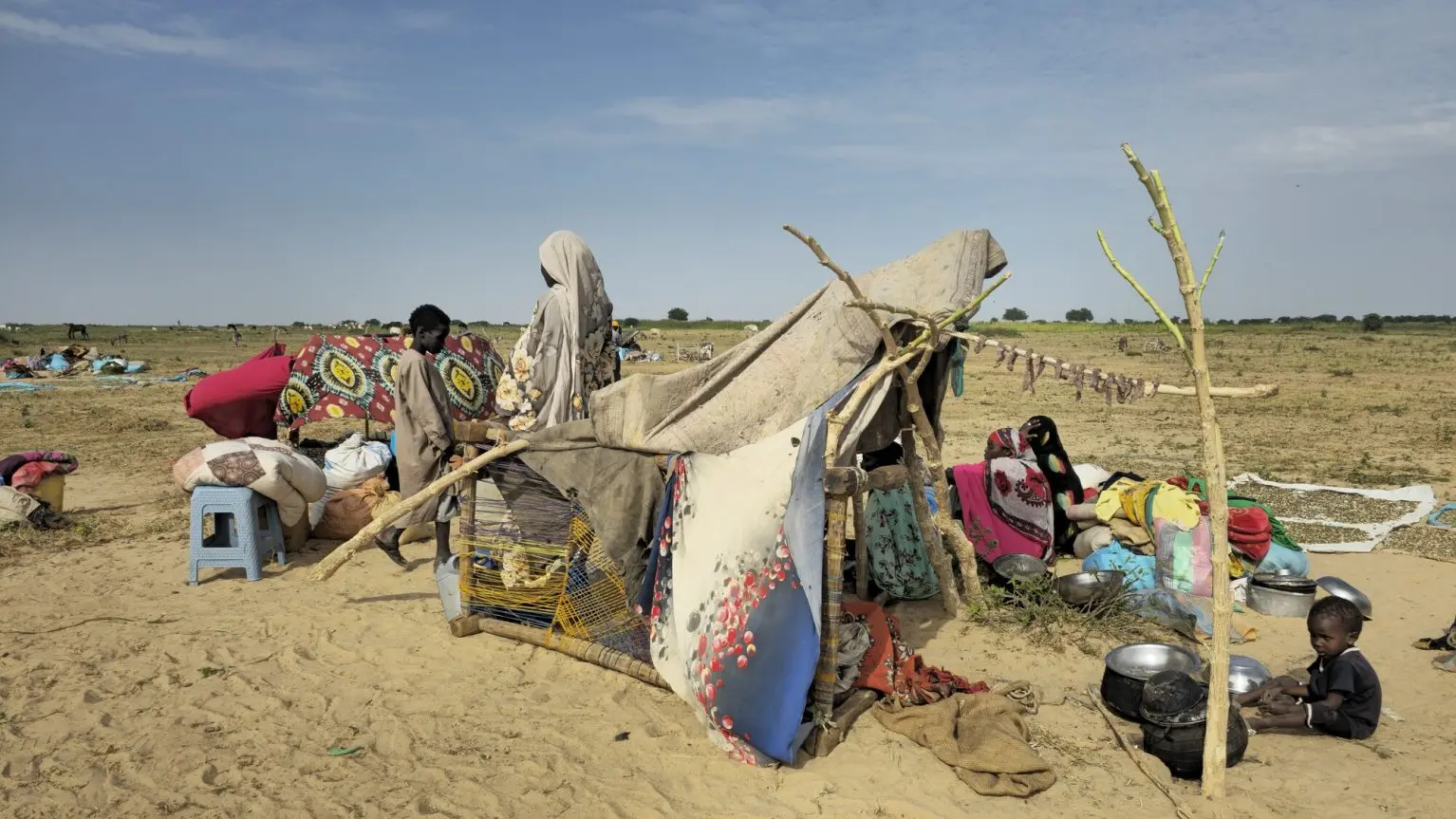
Public opinion is sharply divided. Many fear a humanitarian catastrophe and surging hunger in Darfur, which relies heavily on goods traditionally brought in from the North and Center. Conversely, some argue Darfur could bypass the blockade by opening up to neighboring South Sudan, Chad, the Central African Republic, and Libya as alternative supply hubs.
However, observers note a climate of fear among traders and farmers. Vulnerable groups, particularly stevedores and market laborers, have seen their livelihoods vanish as freight traffic grinds to a halt.
Price Collapse and Market Shock
The impact on trade within Darfur’s cities has been devastating. The closure of roads by the RSF has caused a collapse in local crop prices, particularly grains, hitting farmers and producers hard.
In SAF controlled areas, the absence of Darfuri products has sent the prices of meat and animal feed skyrocketing, especially in Northern Sudan. Meanwhile, Darfur faces a severe shortage of manufactured supplies from the Center, leading to massive losses for traders whose local produce is rotting in warehouses, unable to reach its traditional markets.
The Weaponization of Food
Economic activist Zuhair Abdel-Rahman warns that the immediate victims are civilians. Darfur depends on the North for flour, wheat, sugar, and fuel. “This ban will trigger acute food insecurity in displacement hubs like Nyala and Genaina,” he says. “Furthermore, the inclusion of medicine in these restrictions threatens the total collapse of the few remaining health services.”
Abdel-Rahman highlights a deeper concern: the shift of Darfur’s economic gravity toward neighboring countries could lead to a permanent economic divorce from Khartoum. He holds the RSF responsible for initiating this “destructive decision” without regard for its humanitarian fallout.
The National Umma Party condemned the move, labeling the use of food as a weapon a “war crime” and a violation of international humanitarian law.
Landlock and Isolation
Economist Abdelazim Al-Mahal points out that while the Army-controlled regions remain connected to international markets through the Red Sea ports—exporting over 70 tons of gold in 2025—RSF territories have become effectively landlocked.
“The RSF-controlled areas are now a besieged pocket,” Al-Mahal explains. “This makes the viability of any ‘state-like’ entity there nearly impossible. Revenues have plummeted, and 80% of transport assets have fled to government-held zones or abroad due to rampant looting.”
A Fragile Integration
Academic and economic analyst Mohammad Al-Nayer emphasizes that Sudan remains a single state under an internationally recognized government. He views the current restrictions as an “exceptional temporary status” that nonetheless cripples an economy built on regional integration.
“Each state in Sudan has a comparative advantage,” Al-Nayer says. “Darfur produces the bulk of our exports, but those exports must flow through the Red Sea. The war has severed this synergy.”
Historically, the relationship between Darfur and Northern Sudan was defined by the legendary trans-Saharan trade caravans. Long before colonial rule, the Sultanate of Darfur was a powerful commercial hub linking West Africa to the Nile Valley. Today, that history of exchange is being replaced by a legacy of economic marginalization and a “war of commodities” that threatens to make the current internal borders permanent.
مقالات ذات صلة