Thirty-two months into the conflict, Sudan’s capital is beginning to stir beneath the ashes of war. Arts and culture centers are emerging as key indicators of recovery, as the “Theatre Reconstruction Group” begins rehabilitating venues in collaboration with the Ministry of Culture, Information, and Tourism.
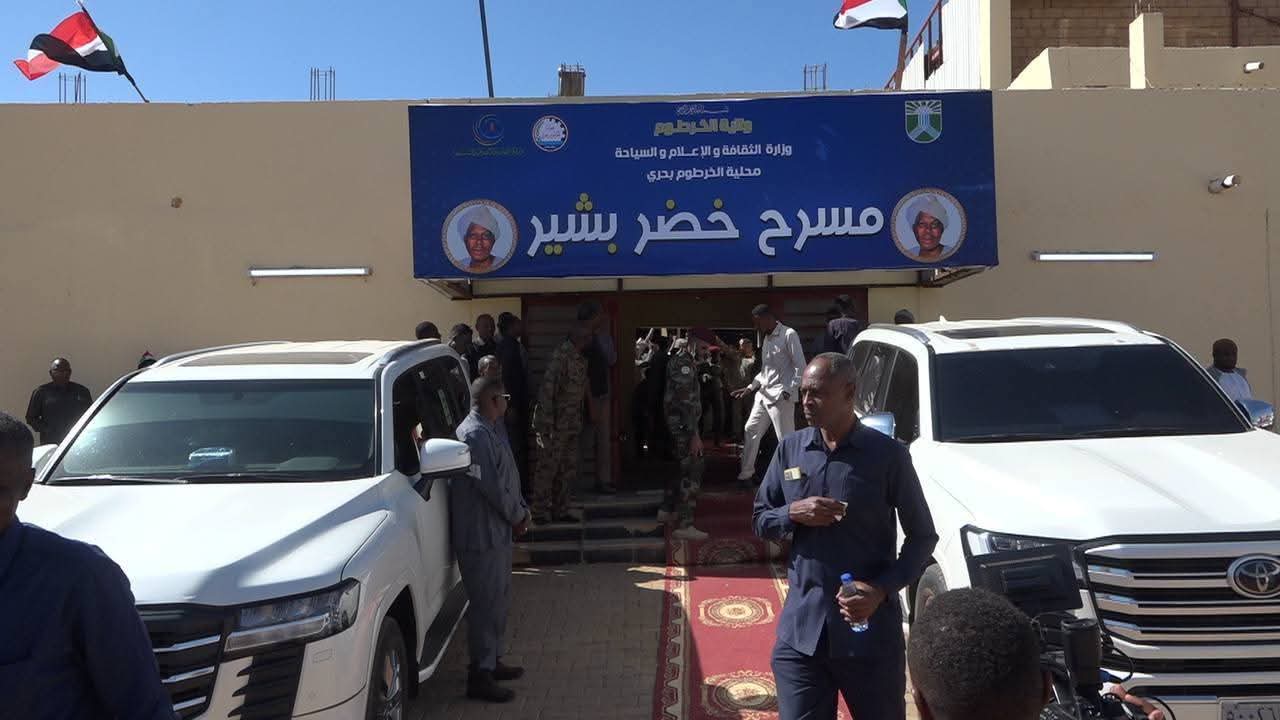
Sudanese dramatists have launched an initiative to revive Khartoum’s severely damaged theaters. Reconstruction at the National Theatre in Omdurman is nearly 70% complete. Meanwhile, efforts are underway to rehabilitate the Omdurman Youth Center, the Friendship Hall and Khader Bashir theaters, the Officers’ Club, Al-Muqran Gardens, Beit al-Oud, the Sajjana Youth Center, and the Abboud Park Theatre in Khartoum North (Bahri).
Artistic Messages
Tariq Al-Bahr, head of the Theatre Reconstruction Group, stated that the goal is to restore the arts as a fundamental pillar for rebuilding Sudanese society and national identity. He noted that the capital is becoming safer and that the return of cultural activity serves as a message of hope to Sudanese citizens both at home and abroad.
Graham Abdel-Qader, Undersecretary of the Ministry of Culture, Information, and Tourism, anticipates that theater will soon resume its role in addressing social issues. He emphasized using modern methods and short messaging to combat hate speech and strengthen the social fabric as citizens return to the city.
Collective Action
The renowned Sudanese musical group “Igdet Al-Jalad” has joined the “Free Arts Lab” initiative to help rebuild the National Theatre. Group manager Nasreddine Haider announced that the band will perform concerts to fund the rehabilitation of theaters, cultural centers, radio stations, and museums.
Similarly, a mobile troupe of actors and performers has begun visiting sites across Omdurman, Bahri, and Khartoum. Actor and director Al-Tijani Darij described art as the “ideal antidote” to the racism and hatred fueled by the war, noting that these activities are finally breaking the long cultural stagnation caused by the security crisis.
Government Support
Minister of Culture and Information Khalid Ali Al-Aisar has pledged full support for the National Theatre project. He emphasized the need for cultural institutions to address the social scars of war and promote national pride.
The Minister’s plans include: Establishing workshops for specialists across all creative fields. Providing moral and financial support to artists remaining in Omdurman. Developing public libraries and cultural clubs. And restoring museums and tracking looted antiquities through internal and international coordination.
Music and Memory
The Sudanese Musicians’ Association has also resumed activities after a long hiatus. Artists recently gathered for a formal rehearsal at the association’s headquarters in Omdurman, a move described by musician Ashraf Al-Bulayk as a vital step toward involving artists in the nation’s reconstruction.
The scale of the task is significant. Since the war began in April 2023, Khartoum’s cultural infrastructure has suffered systematic destruction and looting. Losses include:
* Musical instruments worth thousands of dollars.
* Rare archives, including photos of Umm Kulthum in a Sudanese thobe and historical American jazz tours.
* Original film reels and international festival recordings.
* The destruction of Sudan’s only Traditional Music Center (founded in 1997), which housed a unique museum of folk instruments, heritage costumes, and decades of ethnomusicological research.
مقالات ذات صلة
-
-

-
-