In a somber scene in Omdurman, a city struggling to cling to life amidst the darkness of a raging war between the Sudanese Army and the Rapid Support Forces (RSF) for over two years 17-year-old Al-Din was waiting in line at a bakery in the Bant suburb. Moments after his arrival, the crowd was shocked to see him collapse motionless. It was later revealed that a stray bullet, fired by someone celebrating a wedding nearby, had struck him in the head, ending his life instantly.
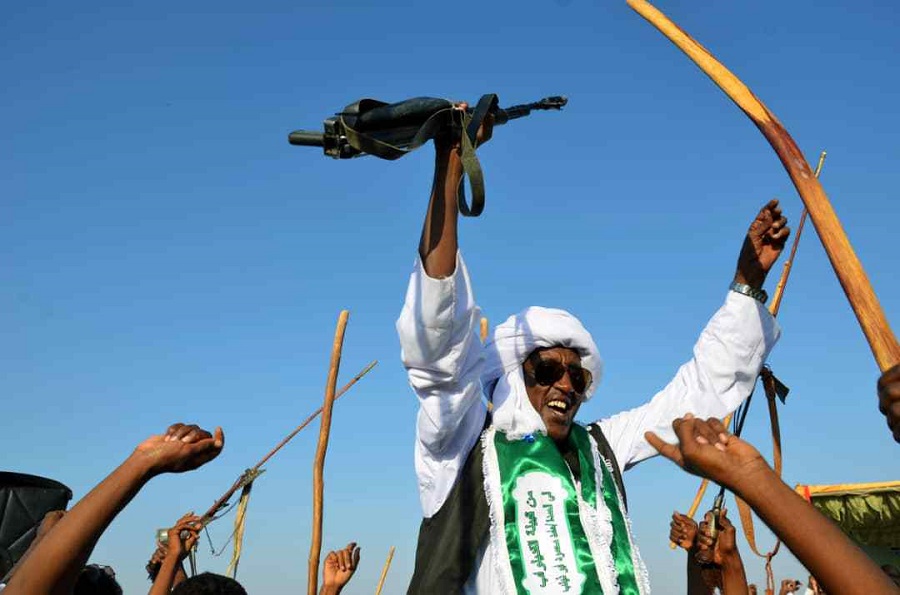
In a similar incident in the Al-Dabba area of the Northern State, a groom named Mohammed was being carried on his friends’ shoulders—a common wedding tradition in Sudan. As he danced in celebration of his marriage, an unexpected bullet fired by a guest joining in the festivities lodged in his chest. The sounds of celebratory ululations instantly turned into wailing, and the joyful songs became cries of mourning.
The city of El Obeid, capital of North Kordofan, also witnessed a tragic incident on the second day of Eid al-Adha, where a child fell victim to gunfire during a marriage contract ceremony. Simultaneously, the city’s emergency hospital received five other cases due to random gunfire. Similar tragedies have shocked local communities in River Nile, Kassala, White Nile, Sennar, and Al Jazirah states recently.
These heartbreaking incidents occur despite periodic warnings from authorities prohibiting the random firing of live ammunition during social occasions. However, the increasing frequency of these events has reignited the debate over the proliferation of weapons and their reckless use, which threatens public safety. Social media is teeming with videos and photos captured by activists showing the moments victims fall, with many emphasizing that these tragedies will continue as long as there is legal impunity and a lack of deterrent punishment.
Strict Decisions
The Governor of Khartoum and governors of other states plagued by weapon proliferation have issued strict decrees banning celebratory gunfire. Penalties for violators include up to two years in prison, a fine of one million Sudanese pounds (approx. $400), and the confiscation of the weapon.
These decrees are not the first of their kind; several similar measures have been issued previously. However, they were often poorly enforced. Perpetrators frequently escape justice due to tribal mediation and social pardons. The phenomenon remains tethered to deep-rooted customs, where shooting is viewed as an expression of “chivalry” and “courage.”
Amidst the current war, which has seen a chaotic spread of weapons following the Army Chief Abdel Fattah al-Burhan’s call for popular mobilization to counter the RSF, as well as citizens celebrating the army’s recapture of certain areas, gun use has taken on darker dimensions, including crime and the settling of personal scores. To what extent can this phenomenon, which now poses a grave threat to Sudanese society, be curtailed?
Mediation and Pardons
Human rights activist Amira Osman states: “In my view, the widespread possession of weapons among civilians, whether licensed or illegal, is a deeply concerning issue. This chaos has claimed the lives of innocent victims at public events, especially weddings. Several states have seen tragic court cases and hospital records full of injuries.”
She adds: “Owning a weapon should not mean using it to express joy. It is customary in some cultures to fire shots after a marriage contract to announce the union, but often, these bullets pierce the body of a celebrant. Sometimes the groom himself is the victim, turning a wedding into a funeral. These are often classified as ‘accidental’ crimes, and the perpetrator escapes punishment through mediations that end in a pardon, while the judiciary settles for merely confiscating the weapon.”
Osman emphasized that celebratory gunfire is a negative phenomenon causing anxiety in safe states, cities, and rural areas alike. She stressed the need to activate the law firmly to protect citizens and social stability. She noted that the ongoing war and the formation of “popular resistance” groups have exacerbated the spread of arms, alongside the emergence of snipers on high-rise buildings.
Social Culture
Sociologist Ahlam Youssef explained: “It is well known that weddings in Sudan are accompanied by specific social cultures linked to tradition and chivalry. Unfortunately, these have negative repercussions, yet abandoning them has proven difficult despite the tragedies they cause.”
She added: “The growth of this phenomenon has made citizens fear for their safety; a stray bullet can hit someone even inside their own home. It is even more distressing when weapons are used for crimes or settling accounts with impunity.” Youssef stressed the importance of restricting weapons to active conflict zones and ensuring that gunfire is never viewed as a means of expressing joy.
Heritage and Customs
Heritage researcher Ayoub Abdul Latif believes that Sudanese communities have long clung to tribal heritage. “The belief that firing shots during celebrations is linked to bravery and knightly spirit remains strong. The women’s ululations and enthusiastic songs stir the men’s emotions, prompting them to fire more rounds into the air.”
He warned that while many participants flee the scene out of fear as soon as shots are fired, the change in mindset is slow. This requires a collective effort from state institutions and civil society to uproot these deeply ingrained habits.
Terror and Sorrow
Dr. Ahmed Abdullah, a physician at an Omdurman hospital, says: “Celebratory gunfire has ended the lives of many. Emergency rooms across the capital and provinces constantly receive victims of stray bullets, including innocent children.”
The doctor stressed the need to prosecute those who spread terror and sorrow among families, insisting that legal decisions must be decisive actions, not just the “familiar threats” heard in the past.
مقالات ذات صلة