Darfur’s Displaced Face Famine Risk as Communal Kitchens Shut Down
Mashaweer- Agencies
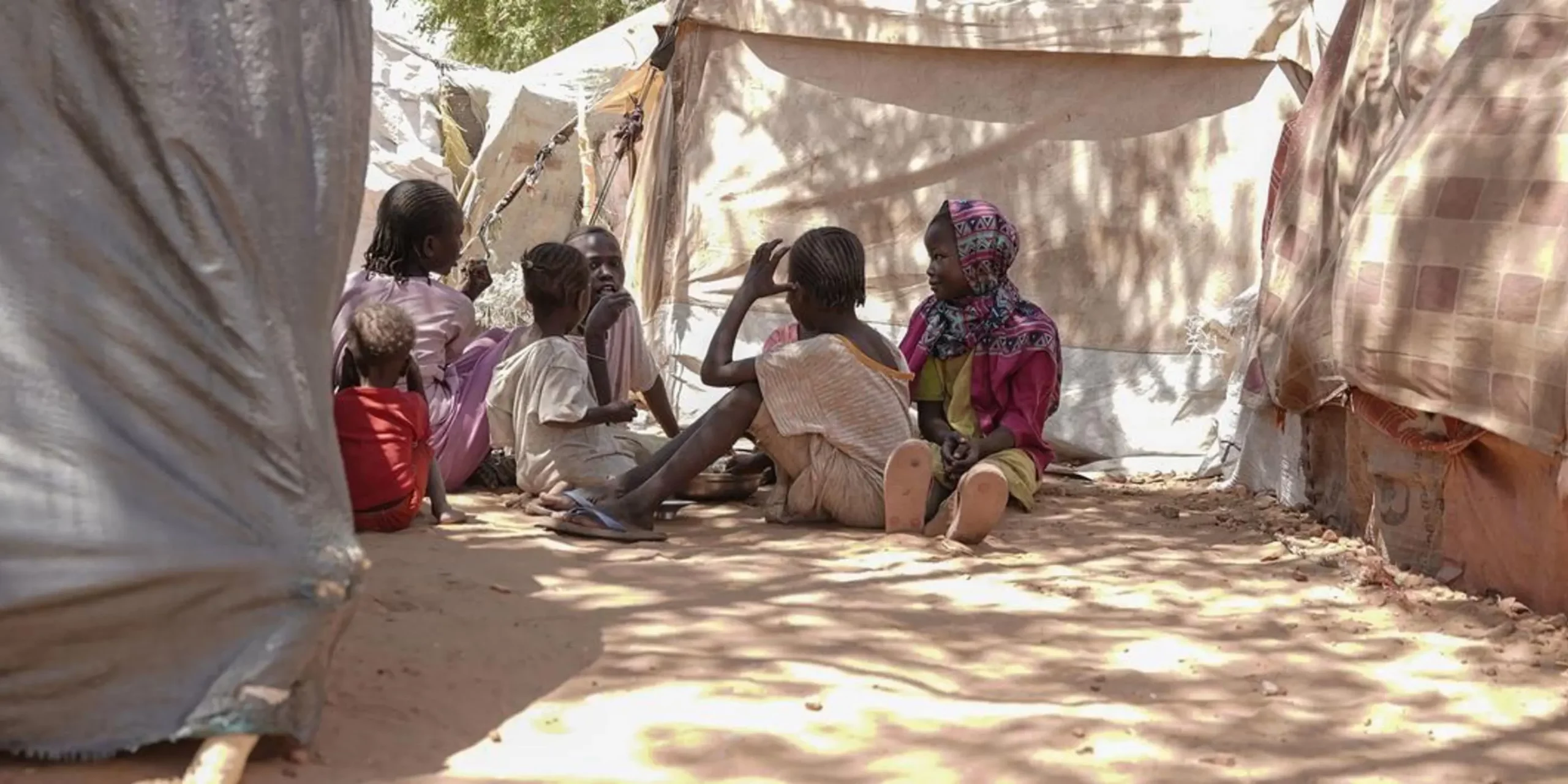
Since the early morning, Salma Jibril headed to the “Takaya” square the free community kitchens in the Sabreen area of East Darfur State. When she arrived, she found no one at the meal distribution site. Anxiety and tension took hold of her, especially after seeing the cooking pots empty and clean; no firewood was lit, and there were no signs that meals had even been prepared or finished.
Jibril asked the supervisors if there had been a “change in the food distribution mechanism.” A volunteer informed her: “There is no food today in the free kitchens due to the cutoff of financial support, donations, and funding, as well as the exhaustion of food supplies.”
Suffering and Hardships
Salma says she fled El Fasher and lives with her father, who suffers from kidney failure, and her younger siblings. She bears the responsibility of providing for her family, especially after her mother was killed on the road out of the North Darfur capital.
“My family is waiting for their daily meals, and my father needs life-saving medicine,” she added. “I don’t know how I will manage these needs given the shutdown of the Takaya and free kitchens, as well as the depletion of medical supplies that volunteers used to provide for free in the shelters.”
She explained that while some kitchens still distribute one meal a day, reaching them requires leaving at dawn and traveling long distances, an exhausting and difficult task.
The Shutdown of Community Kitchens
Thousands of displaced Sudanese in the areas of Tawila, Jebel Marra, Mellit, Kutum, and Karnoi, along with residents of shelter camps, rely on these free kitchens for their daily sustenance. They cover the needs of thousands of families by providing meals of lentils, beans, and balila. Families depend on them entirely for their minimum daily caloric intake. However, the suspension of funding and the lack of cash to purchase supplies have caused more than half of these kitchens to stop working entirely, while others are teetering on the edge.
Yahya Abu Assal, Project Coordinator for the Ed Daein Emergency Room, stated that approximately 45,000 people in shelters and displacement camps in East Darfur are in desperate need of urgent food and water. He noted that the number of people in need has surged following the arrival of more displaced persons in the Sabreen, Gereida, Al-Manara, and Lagawa camps, placing “overwhelming pressure on the scarce resources of the Takaya, leading to their inability to function and the depletion of all stocks.”
Hunger Deaths
Ammar Ramadan, a displaced person in the Mellit area, reported that people have been left exposed to “terrifying waves of rampant hunger.” He noted that weakened immunity and malnutrition have already claimed the lives of children and the elderly. He revealed that displacement camps in North Darfur are recording an average of 20 to 25 deaths per day, particularly among children, pregnant women, and the elderly, due to acute malnutrition and the lack of medicine.
Reducing Meal Portions
In the Jebel Marra region, supervisor Ezzeldin Bishara explained that while some kitchens remain open, they have been forced to reduce daily portions. This has resulted in long queues and heavy crowding as people scramble to secure just one meal.
Bishara noted that 12 charitable kitchens are working around the clock to ensure at least one meal is provided, but they are in desperate need of in-kind donations, such as lentils, flour, and beans from donors and expatriates to keep up with the massive numbers of hungry people.
Tragic Conditions
The General Coordination for Displaced Persons and Refugees warned that the humanitarian situation in Darfur has reached a critical and tragic stage. Spokesperson Adam Regal stated that malnutrition among children and pregnant women has reached dangerous levels, compounded by outbreaks of cholera and dengue fever amid a collapsed health sector.
The Risk of Famine
The Integrated Food Security Phase Classification (IPC) confirmed that Tawila, Mellit, and Al-Twaisha, destinations for those fleeing El Fasher are at high risk of famine. Fighting has stripped people of their livelihoods and sent prices skyrocketing.
Sylvain Perron, a coordinator for Doctors Without Borders (MSF), noted that almost all children arriving in Tawila after fleeing El Fasher were malnourished, while adults arrived in a state of emaciation. UNICEF further revealed that roughly 13 children die every day in North Darfur’s displacement camps, and those with acute malnutrition could face the same fate within weeks without treatment.