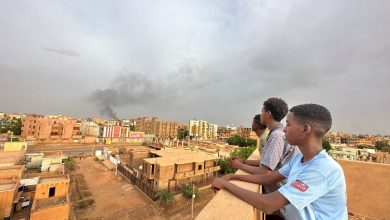
Near the banks of the Nile, a forest of untrimmed weeds has overgrown the courtyard of the Ministry of Finance, adjacent to the Republican Palace in the Sudanese capital. Life is gradually returning to the city as government agencies prepare to relocate back after three years of war.
The site is still littered with abandoned cars, shattered glass, and broken furniture. A security officer warns that “the ground has not yet been cleared of landmines.” The United Nations Mine Action Service has classified this classical-style government complex as a “red zone” due to high mine density.
Rebuilding the Capital
On January 11, Kamil Idris, the head of the army-aligned government, announced the return of his administration to Khartoum from Port Sudan. The government had relocated to the Red Sea city following the outbreak of war between the army and the Rapid Support Forces (RSF) in April 2023.
While conflict continues in the cities of Kordofan and Darfur in southern and western Sudan, main roads in Khartoum have been reopened, and construction cranes can be seen across the city. By March 2025, the army regained control of the entire capital, pushing the RSF, which had seized the city at the start of the war, toward the west. Since then, officials have been inspecting reconstruction sites daily, promising a swift return to normalcy.
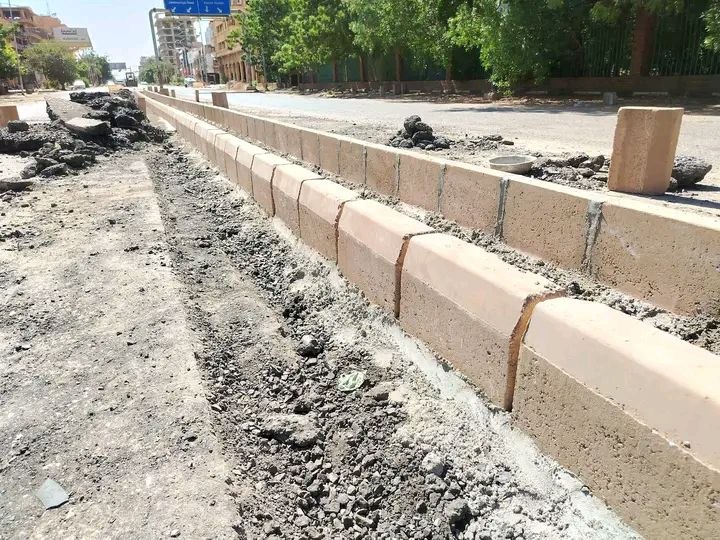
In recent months, several government headquarters have been renovated, including the Prime Minister’s office. However, many buildings remain abandoned, their facades still scarred by bullet holes. Across from the Republican Palace, the Central Bank is a charred shell with shattered windows. Nevertheless, the bank’s governor, Amna Mirghani Hassan, announced last Tuesday that operations have resumed from within Khartoum State, calling it evidence that the country has entered a phase of recovery and reconstruction.
A Slow Pulse
Near the government complex, 52-year-old tea seller Halima Ishaq sits at a crossroads surrounded by destruction. Halima fled south when the war broke out and returned two weeks ago. “Business is not great, and the market hasn’t returned to what it was,” she told AFP. “There is movement, but it is slow.” A mother of five, she earns between 4,000 and 5,000 Sudanese pounds a day (about $2), which is roughly a third of her pre-war income.
During the war, 4 million people, about half the population, fled Khartoum. One million have returned since the army took control of the city last year. The UN estimates the cost of infrastructure reconstruction at no less than $350 million.
Shattered Dreams
Khartoum International Airport was rehabilitated but remains closed following an RSF drone strike in September 2025, just weeks before its scheduled reopening. Nearby, workers clear rubble from a destroyed bank. “Everything must be finished within four months,” says the site manager.
The “Grand Hotel,” which once hosted Queen Elizabeth II, hopes to resume receiving guests by mid-February. While its chandelier-lit lobby survived, much of the rear of the building is destroyed. Meanwhile, the Nile Petroleum Company tower, opened when Khartoum aspired to be the “Dubai of Africa”, stands empty and charred, a monument to shattered dreams.
Dark Streets
In Omdurman, across the Nile, life is returning faster. Traffic jams clog the main streets, which now rival Khartoum’s Al-Hurriya Street, where only a few looted shops have reopened. “Many shop owners won’t come back,” says Osman Nader, a home appliance seller. “Suppliers are demanding compensation for goods destroyed during the fighting.”
For residents, the return of water and electricity is the most urgent issue. “I used to go out with friends in the evening… now the streets are dark and deserted at night,” says Tagreed Awad Saeed, a 26-year-old trainee doctor.
Near the Nile, volunteers are restoring the National Theater, which once hosted legends like Umm Kulthum. A few kilometers away, workers clear fallen trees from the red and yellow stands of Al-Merrikh Stadium, known as “The Red Castle.” Burned cars still line the road outside the stadium, which hosted its last match a week before the war began; the Al-Merrikh club has since been competing in the Rwandan league.
مقالات ذات صلة