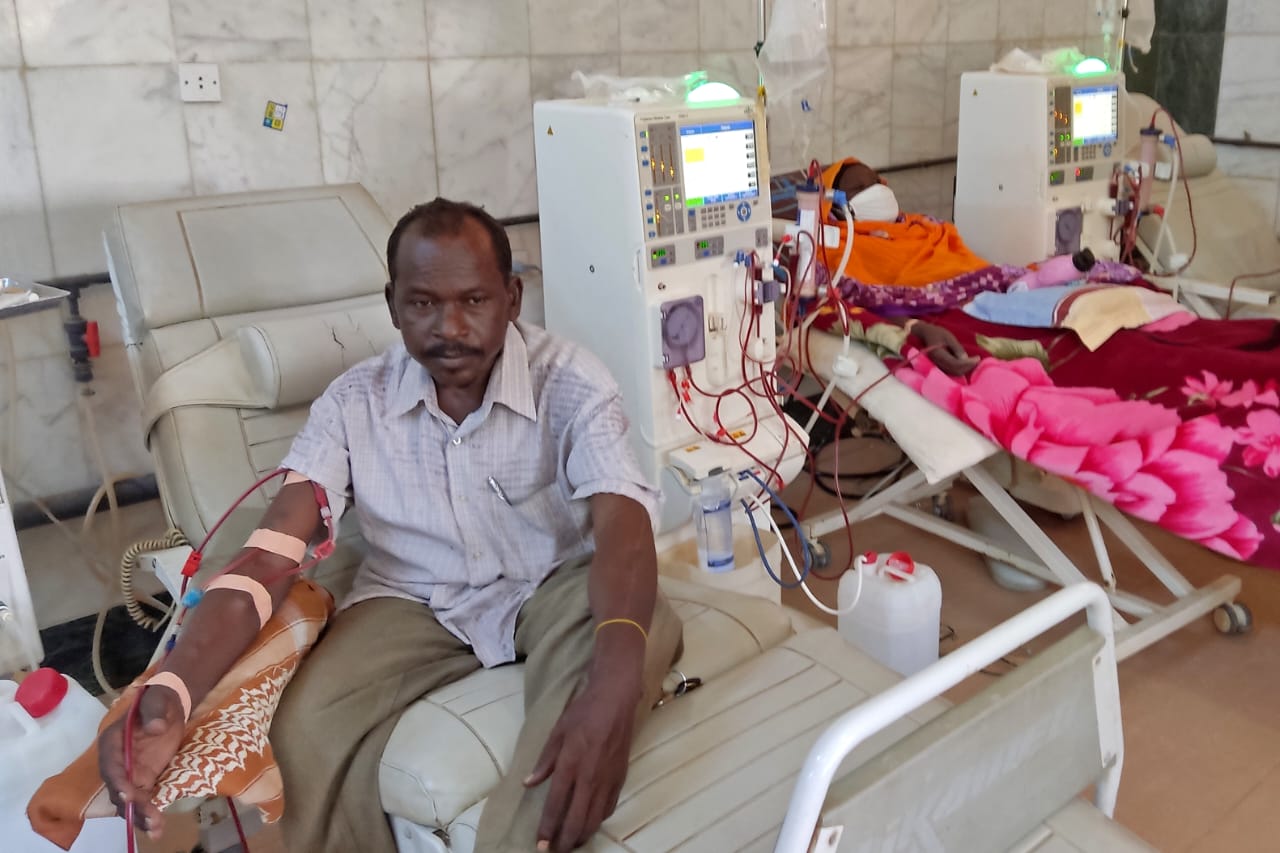
Amid the ongoing war, kidney failure patients in Sudan are living through a painful reality and a state of deep anxiety over their health. This is a direct result of dialysis machines breaking down, the cut-off of medication supplies, skyrocketing hospital bills, and the inability of thousands to pay for treatment, all of which has led to a rising death toll among patients.
The collapse of the health sector, combined with a lack of medicine and therapeutic equipment in hospitals, has led to the closure of dialysis centers and the cessation of routine maintenance in several cities. Furthermore, centers in Omdurman, Port Sudan, Atbara, and Kassala are overwhelmed by large numbers of displaced persons and citizens arriving from conflict zones seeking treatment and medical examinations.
Rising Death Toll
The National Center for Kidney Surgery in Sudan stated that “3,800 dialysis patients died during the first year of the war, a rate of nearly 50%, due to the interruption of treatment, lack of medication, the spread of epidemics, and displacement.”
Nazar Mohammed Osman Zalfo, the Director of the Center, explained that “the mortality rate among kidney transplant recipients reached 13%. Additionally, a large number of patients were lost due to violations committed by the Rapid Support Forces (RSF) during the war.”
Zalfo acknowledged a crisis regarding transplant medications in Khartoum and Red Sea states due to weak oversight, leading to the leaking and trafficking of drugs. He noted that some patients are forced to obtain medicine from the black market, adding: “The problem lies in the lack of a role for the National Center for Kidney Surgery in directing the budget for medicine procurement. This causes delays because Medical Supplies [the procurement authority] is preoccupied with other operations.”
He continued: “The number of kidney patients in Sudan has reached 6,000, distributed across 76 centers. The Ministry of Health provides the budget for consumables in cooperation with the Ministry of Finance.”
Crises and Hardship
In this context, Suleiman Hassan, who is receiving treatment in Omdurman, says: “The center is crowded with a large number of patients who do not receive enough dialysis sessions due to the high number of cases compared to the limited number of machines, alongside a scarcity of essential medical supplies.”
Speaking to the Mashaweer, he noted that “most centers have reduced the duration of a dialysis session to just two hours instead of the previous four. Furthermore, sessions have been cut from twice a week to once a week, leading to potassium imbalances and a subsequent deterioration in patient health.”
Hassan warned that delays in providing dialysis supplies endanger lives, especially since thousands are at the mercy of these supplies which the Ministry of Health is struggling to provide. Medications have run out completely; even those available in pharmacies are scarce and priced at astronomical levels due to the collapse of the Sudanese Pound against foreign currencies.
Overcrowded Facilities
Al-Fadil Hamid, a resident of El Obeid in North Kordofan suffering from kidney failure, noted that while he used to receive his two weekly sessions normally, centers have now become severely overcrowded. Conditions worsened significantly after most hospitals in South and West Kordofan stopped operating, forcing thousands of displaced citizens to flee to North Kordofan.
He told Mashaweer that the surge in cases has prevented patients from getting adequate sessions, as hundreds are assigned to a limited number of machines amid a total lack of necessary medical supplies. Hamid highlighted that the health of hundreds of patients has deteriorated to the brink of death, warning that the current situation poses a grave threat to thousands of lives.
Ministry of Health Efforts
On a related note, Sudanese Health Minister Haitham Mohammed Ibrahim announced that they have “received 80 new dialysis machines supported by the State of Qatar.” He described this grant as the largest of its kind, aimed at filling the massive gap in dialysis services across all Sudanese states.
He explained that there is coordination between the National Center for Kidney Surgery and the Qatari Red Crescent to ensure the machines are distributed according to the needs of the country’s states. Ibrahim pointed out that the National Center has continued its services despite the challenges, restoring 76 out of 105 centers thanks to partner support. Currently, approximately 6,000 patients are benefiting from dialysis services across these 76 centers.
مقالات ذات صلة
-
-
-
-