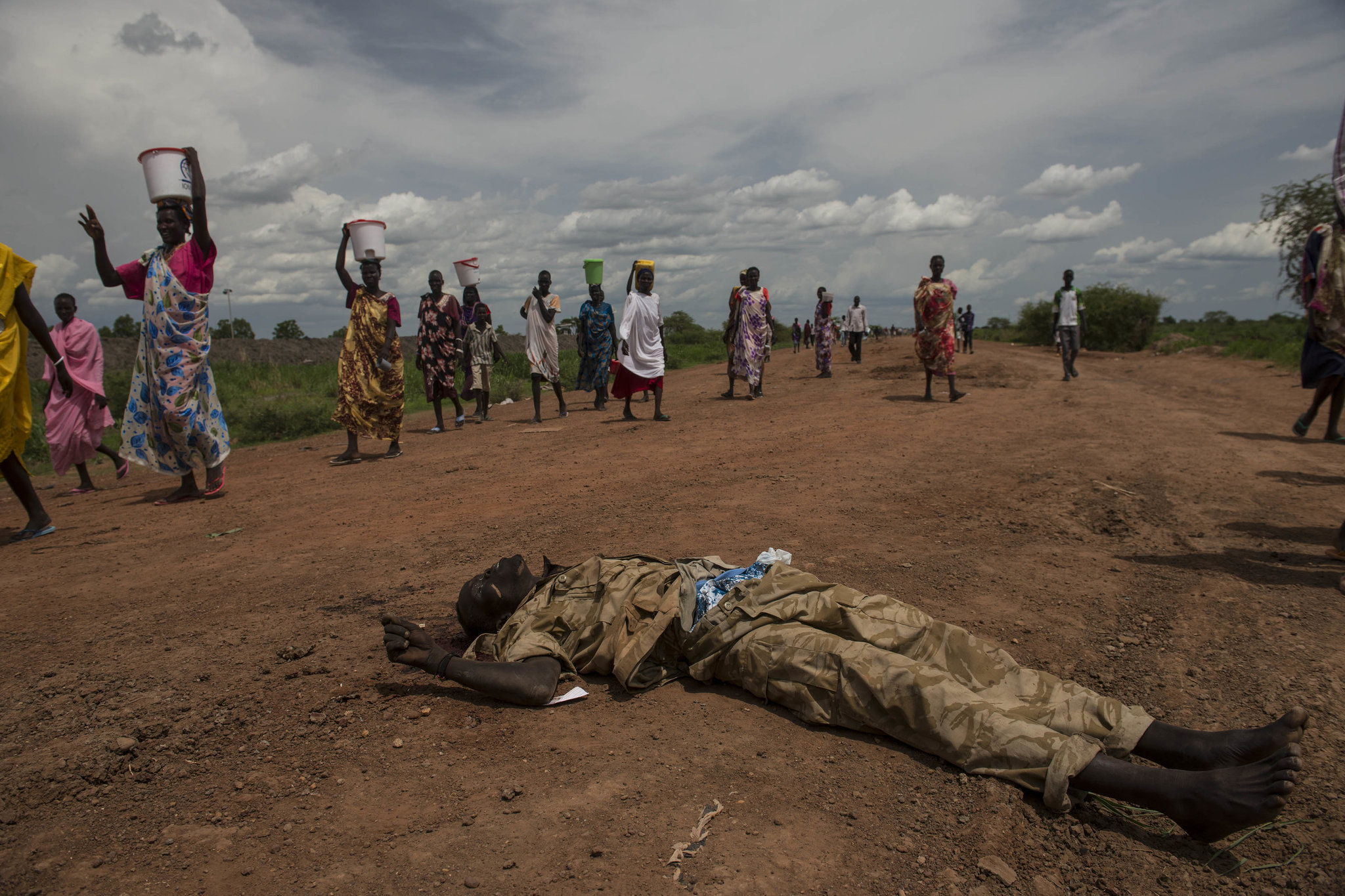
Renewed fighting in South Sudan has displaced more than 180,000 people, with eyewitnesses reporting the indiscriminate use of barrel bombs and civilians fleeing into swamplands as the country’s peace process collapses.
The world’s youngest nation has suffered from war, poverty, and systemic corruption since its secession from Sudan in 2011. Currently, the escalating violence is centered in Jonglei State, located north of the capital, Juba.
“I am stuck, and if things get worse, the only safe place I can go is the swamps,” Daniel Deng (35), one of thousands displaced by the fighting in Jonglei, told AFP via telephone.
He spoke of heavy fighting that took place last week in Duk County, where he lives, after opposition forces seized the area before being forced to withdraw by government troops.
“Many have been killed,” Deng added, estimating the number at around 300 fighters, a figure AFP was unable to independently verify.
The power-sharing agreement between the two main factions has effectively ended after President Salva Kiir moved against his long-time rival and deputy, Riek Machar. Machar was arrested last March and is currently on trial for “crimes against humanity.”
Forces from both sides have fought several battles over the past year, but the longest-running clashes began in late December 2025 in Jonglei.
The United Nations Office for the Coordination of Humanitarian Affairs (OCHA) stated this week that South Sudanese authorities estimate the number of displaced persons at over 180,000 across four counties in Jonglei.
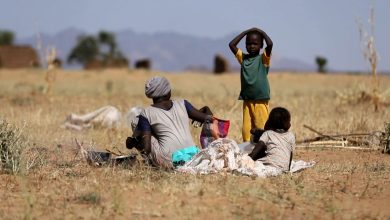
Deng confirmed that “most people are settling under trees. Their homes and health facilities have been looted or burned, and hunger is widespread.”
Indiscriminate Attacks
Kiir and Machar fought a five-year war shortly after independence from Sudan, which claimed 400,000 lives. A power-sharing deal struck in 2018 established years of peace, but its provisions regarding elections and the integration of forces remained “ink on paper.”
An NGO source in Juba, speaking on condition of anonymity, explained that the fighting in Jonglei began in December in an area called Yeri. The source added that the government responded with “indiscriminate” airstrikes, including the use of barrel bombs against civilians perceived as “hostile,” ordering them to leave opposition-controlled areas.
Another NGO source confirmed that barrel bombs landed near health facilities. “Various types of threats have been issued by both sides,” the source said.
This has driven many to flee to Bor, the capital of Jonglei State.
“A large part of Jonglei has been classified as ‘red zones,’ meaning no humanitarian access or flights,” local civil society official Paul Deng Paul said by phone. “People continue to flee, and their numbers in Bor are increasing day and night.” He added, “We are seeing a mobilization of military forces from both sides, which indicates that an escalation is imminent.”
He noted that estimating the death toll is impossible because many residents are still hiding “in the bush.”
OCHA stated in a situation report: “The looting and seizure of humanitarian assets, reportedly by both sides, has led to the suspension of basic health services for thousands of people.”
“Children Will Die”
South Sudan possesses significant oil reserves, but rampant corruption has made it one of the world’s poorest countries. Approximately 7.7 million of its 12 million citizens suffer from hunger, according to figures released by the World Food Programme (WFP) last April.
Gul Badshah, operations director for Médecins Sans Frontières (MSF), speaking from the Kenyan capital, Nairobi, said they faced difficulties supplying teams on the ground in Jonglei, leading to a “catastrophic” shortage of supplies. He warned: “We do not have the supplies… children will die, it is that simple.”
Clashes have also been reported in Upper Nile and Central Equatoria states in recent months.
Meanwhile, prominent opposition figure Wesley Welebe Samsona called on Monday for a march in Juba to “remove the anti-peace regime.”
Barney Afako, a member of the UN Commission on Human Rights in South Sudan, said in a statement: “What we are witnessing in Jonglei is not an isolated security incident; it is a dangerous escalation manifesting in other parts of the country as well.” He warned that “the events in Jonglei could push the country into another dangerous spiral of violence.”
مقالات ذات صلة
-
-
-
-