The circumstances of war and harsh economic conditions have not prevented Sudanese filmmakers from presenting new productions, excelling artistically at international festivals, and reaching non-Sudanese audiences with high-quality films. These works are presented by a new generation of producers and directors seeking to redefine the local cinematic landscape through modern artistic standards and bold narrative visions.
Sudanese filmmakers have managed to break the ongoing stagnation by producing distinctive works that have garnered significant international acclaim. They have won awards in European theaters and participated in international festivals for the first time, including Berlin, Malmö, New Orleans, and Sundance.
Successes and Coronations
In this context, Sudanese producer and filmmaker Yasser Fayez says, “Cinematic production that does not rely on Sudan for funding is now able to continue. Non-Sudanese funding partnerships have contributed to the production of a large number of films, including shorts, features, and documentaries. Furthermore, most Sudanese producers and directors were either already living abroad or moved to neighboring countries due to the war.”
The producer added, “Many young people were able to produce a group of short films inside Sudan despite the ongoing armed conflict and the halting of production institutions.”
Fayez explained that “during the war period, Sudan achieved several successes in the field through its presence at international festivals and by winning a large collection of awards, in addition to leaving important marks on Arab, African, and international cinema.”
The filmmaker hopes that this openness toward neighboring regions will provide a deeper understanding of the Sudanese person, as there are cultural extensions of Sudan that were not sufficiently visible. He also noted that this creates interaction between Sudanese cinema and its regional counterparts in terms of production and distribution, as well as developing the skills of cinema workers, especially since Sudan lacked cinematic academies.
Determination and Encouragement
For her part, Sudanese actress and singer Iman Yousif, star of the film Goodbye Julia, believes that “the cinematic situation has become encouraging. This has given young creators a strong push to continue producing their films, especially since it is an appropriate time to express ourselves freely and away from the oppression and injustice we live through.”
The Sudanese artist noted that “this period is one where artists can express themselves and address ‘taboo’ issues, in addition to the importance of producing the works themselves.”
Yousif added, “Wars and crises exhaust us psychologically, but they give us a degree of determination to pursue our dreams and highlight ideas. There is no other solution but to continue bringing ideas to light,” pointing out that “this is the period in which ideas should be created by Sudanese youth who previously felt restricted.”
Remarkable Development
In a related vein, Sudanese film director Mubarak El-Fateh explained that “despite the cessation of production and activities within Sudan due to the armed conflict, cinema found the war to be a suitable environment for development and prosperity. The features of a youth-led cinema have succeeded, led by producers and directors who provided both quantitative and qualitative output, achieving remarkable success in Arab and international festivals.”
The Sudanese director noted that “there are positive indicators from Arab and international audiences, as well as critics, toward Sudanese short and feature films, as well as documentaries, especially those produced and screened during the war.”
El-Fateh continued, “The rate of cinematic production two years after the outbreak of the conflict has become much better, particularly in terms of quantity and quality, in addition to the increasing demand for Sudanese films at international film festivals.”
External Presence
Similarly, Sudanese director Suzannah Mirghani indicated that her feature film Cotton Queen participated in three German festivals (Hamburg, Stuttgart, and Chemnitz) and is also participating in the Chicago Festival in the US, following its participation in the last edition of the Venice Film Festival.
She noted that “the film is about Sudanese women and the land. The protagonist wakes up to an awareness of herself and her ability to challenge her society’s policies, whether it be FGM, early marriage, or exploitation in all its forms.”
Mirghani described the film’s participation in Venice as a “dream,” especially since Sudanese cinema had only one previous participation in this prestigious festival. She noted that a new generation of female Sudanese directors and writers is coming on strong in the coming years.
The speaker added, “I was happy to see an audience watching a Sudanese film for the first time; they said they were seeing another face of Sudan other than war—a Sudan of beauty and poetry. Therefore, we try to pave our way despite all obstacles because cinema carries our voices to the world.”
Booms and Achievements
The movement of Sudanese cinema and its launch into international festivals began in 2019, when the film Talking About Trees by director Suhaib Gasmelbari participated in several international festivals, including the 69th Berlin International Film Festival.
Sudanese director and producer Amjad Abu Alala achieved a rare victory with his film You Will Die at Twenty, participating in the Venice Film Festival and winning the “Lion of the Future” award, becoming the first Sudanese film to receive it. His project had previously won grants from the Berlin Film Festival and the Norwegian SØRFOND, as well as the “Black Iris” award for Best Arab Feature Film at the Amman International Film Festival and an award from the El Gouna Film Festival.
The film Khartoum Offside, directed by Marwa Zein, competed in the Berlin, Cairo International, and Carthage festivals, winning a special prize from France 5. It was also screened at the Malmö Arab Film Festival in Sweden and won the Jury Prize.
Director Nasser Yousif won the “International Film” award at the Gilgamesh Film Festival for his film Needle and Thread, which discussed the issue of child marriage and the psychological and physical suffering of young girls. The film participated in several festivals, including the Osara International Film Festival in Rwanda, the Jerusalem Film Festival, and the Lebanon Film Festival in Tripoli.
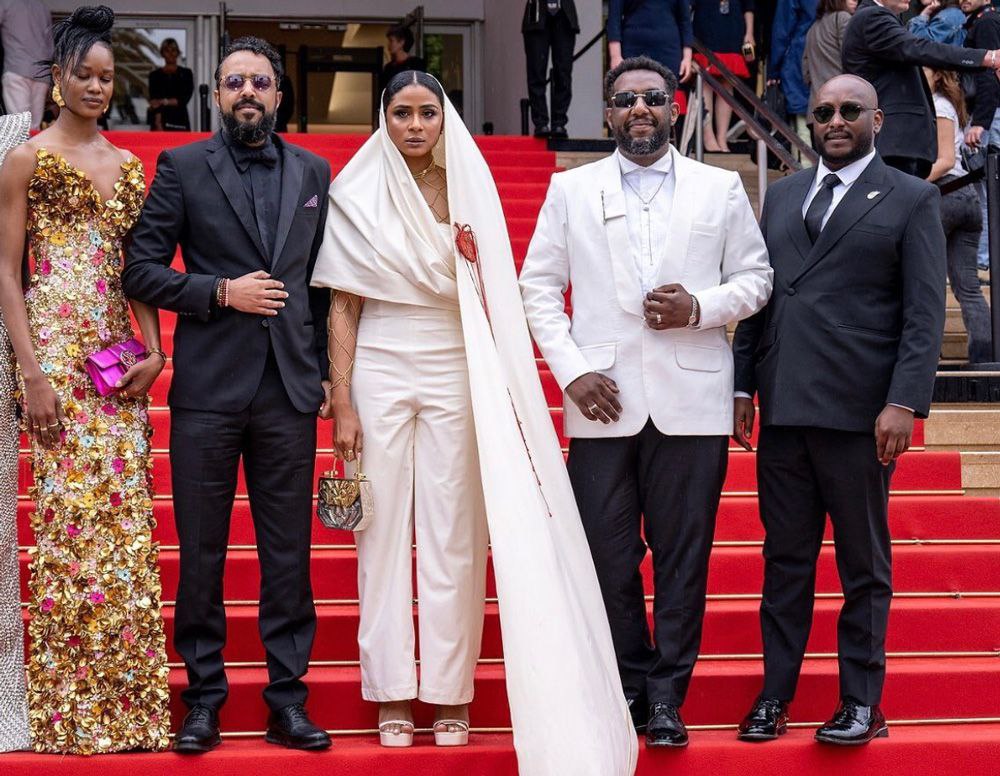
Sudanese cinema continued its brilliance as the film Goodbye Julia by director Mohamed Kordofani became the first Sudanese feature film to compete at the Cannes Film Festival in the “Un Certain Regard” section, winning the “Freedom Prize.” Goodbye Julia had previously won the Swedish Film Institute’s cash prize at the Malmö Arab Film Festival, and the project won awards at other festivals as well.
Women’s Issues
The film Al-Sit won the Best Short Film award at the 32nd New Orleans International Film Festival, Best Female Director at the Beirut International Women’s Film Festival, and the Jury Prize at the Ismailia International Documentary and Short Film Festival. Director Suzannah Mirghani also won the Best Emerging Filmmaker award from the Arab Film Festival in Toronto and the Canal+ Cinema award at the Clermont-Ferrand International Short Film Festival.
The Sudanese documentary Heroic Bodies by director Sara Suliman won the Audience Award at the last edition of the Malmö International Festival in Sweden. The film highlights the strength of Sudanese women and their struggle over time against beliefs and traditions that restrict their freedom and success.
Five Sudanese short films participated in the eighth edition of the Aswan International Women Film Festival: Brick for Them by director Razan Mohamed, which highlights women displaced from a refugee camp in 2003 during the Darfur war; Women of War by director Al-Gaddal Hassan, which addresses the issue of women in conflict areas in Blue Nile State; as well as the films Ma’ab’s Tale, Kalous Preut, and Cinnamon Dalia.
مقالات ذات صلة