War Knocks Sudan’s Environmental Laboratory Out of Service
Bahri - Mashaweer
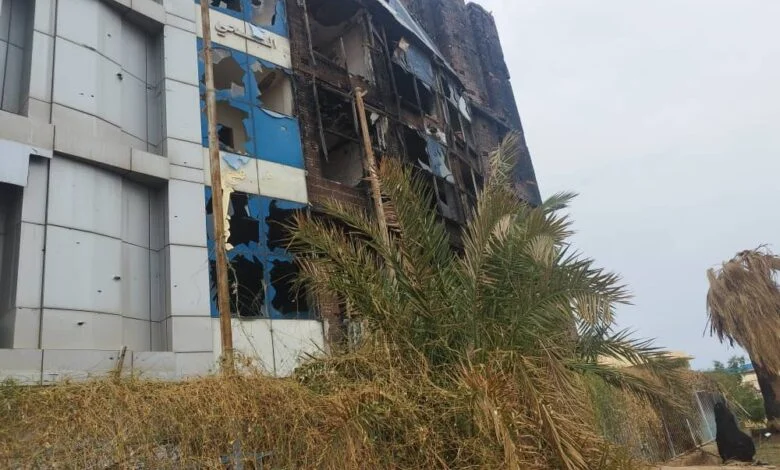
A government official stated that the only environmental laboratory in Khartoum State, responsible for soil and water testing, as well as measuring air pollution and radiation, has been completely put out of service after being targeted by the Rapid Support Forces (RSF). The cost of restoring the facility is estimated at approximately $500,000.
Um Al-Khair Mukhtar Abdullah, Director of the Environmental Laboratory at the Higher Council for Environment and Promotion, reported that the lab, located in Khartoum, suffered extensive destruction with losses totaling at least $412,000.
She explained that the laboratory building was destroyed and burned. Additionally, the facility’s infrastructure, including specialized equipment, glassware, and furniture, was demolished, while the remaining items were looted.
“We need no less than $500,000 to return the laboratory to service,” she added, emphasizing the urgency of its restoration. She noted that the lab holds significant cognitive and technical value, essential for overcoming numerous environmental obstacles and crises.
She further revealed that a comprehensive project plan has been developed to rebuild the laboratory, calling on various entities, particularly civil society organizations, local and international NGOs, and relevant authorities—to assist in its reconstruction.
Before the war, the environmental laboratory served as a primary technical reference for various Sudanese states and mining companies. Its scope included measuring air pollution and radiation, soil and water analysis and various other technical environmental specialties.
Established in 2010 by the Higher Council for Environment and Urban and Rural Promotion in Khartoum State, the facility remained operational until the outbreak of war in mid-April 2023. As the first specialized environmental lab in Sudan, it featured several departments, including a micro-chemistry lab and an air pollution and radiation unit. Several other states had begun modeling their own labs after its success.
In the past, the laboratory provided vital services such as analyzing water from treatment plants, testing treated sewage water, monitoring White Nile water quality, and certifying bottled water produced by factories.