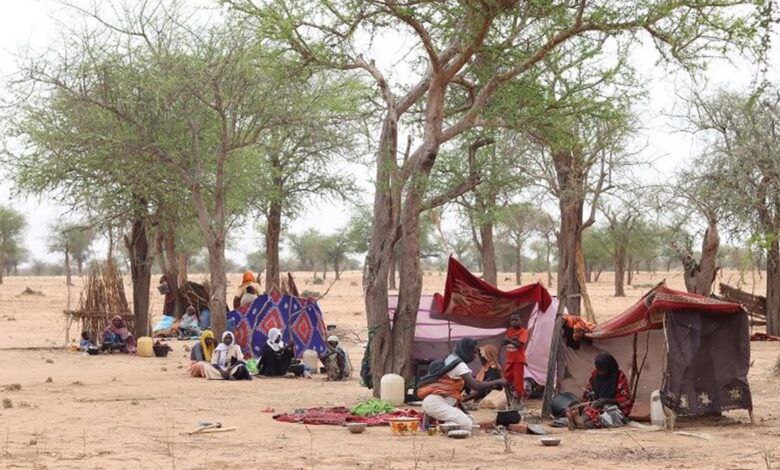
UN-backed experts warned today (Thursday) that the risk of famine is expanding to the towns of Karnoi and Um Baru in North Darfur, western Sudan. This is due to massive waves of displacement following the fall of El Fasher, the state capital, last October.
Experts from the Integrated Food Security Phase Classification (IPC) confirmed that “the famine threshold indicating acute malnutrition has been exceeded in two additional areas in North Darfur: Karnoi and Um Baru,” located near the border with Chad.
The Rapid Support Forces (RSF), who have been at war with the army since April 2023, tightened their control over El Fasher late last year. This brings nearly the entire Darfur region under their grip, with the exception of small areas controlled by neutral local forces.
Since the fall of El Fasher, more than 120,000 people have been displaced, according to the UN. Many have headed to other towns in North Darfur that are already struggling with scarce resources and overcrowding.
In their report on Thursday, experts explained that the displacement from El Fasher has led to the “depletion of local communities’ resources and capacities, increasing food insecurity and acute malnutrition.”
The report noted that Thursday’s warning does not constitute an official declaration of famine in those areas, “but rather directs urgent attention to food security and nutrition crises based on the latest available evidence.”
Verifying data in most areas of western Sudan remains difficult due to road closures and telecommunications blackouts.
The report warned that acute malnutrition continues to worsen in 2026: “Prolonged displacement, conflict, and the erosion of healthcare, water, and food systems are expected to further increase acute malnutrition and food insecurity.”
The war in Sudan, now approaching its third year, has killed tens of thousands and displaced more than 11 million people both internally and abroad. Many live in villages or overcrowded shelters lacking basic necessities, creating what the UN describes as the world’s worst humanitarian crisis.
مقالات ذات صلة
-

-

-
-