Sudan’s Displaced: Suffering and Complex Conditions for Those Stranded at the Borders
Report - Mashaweer
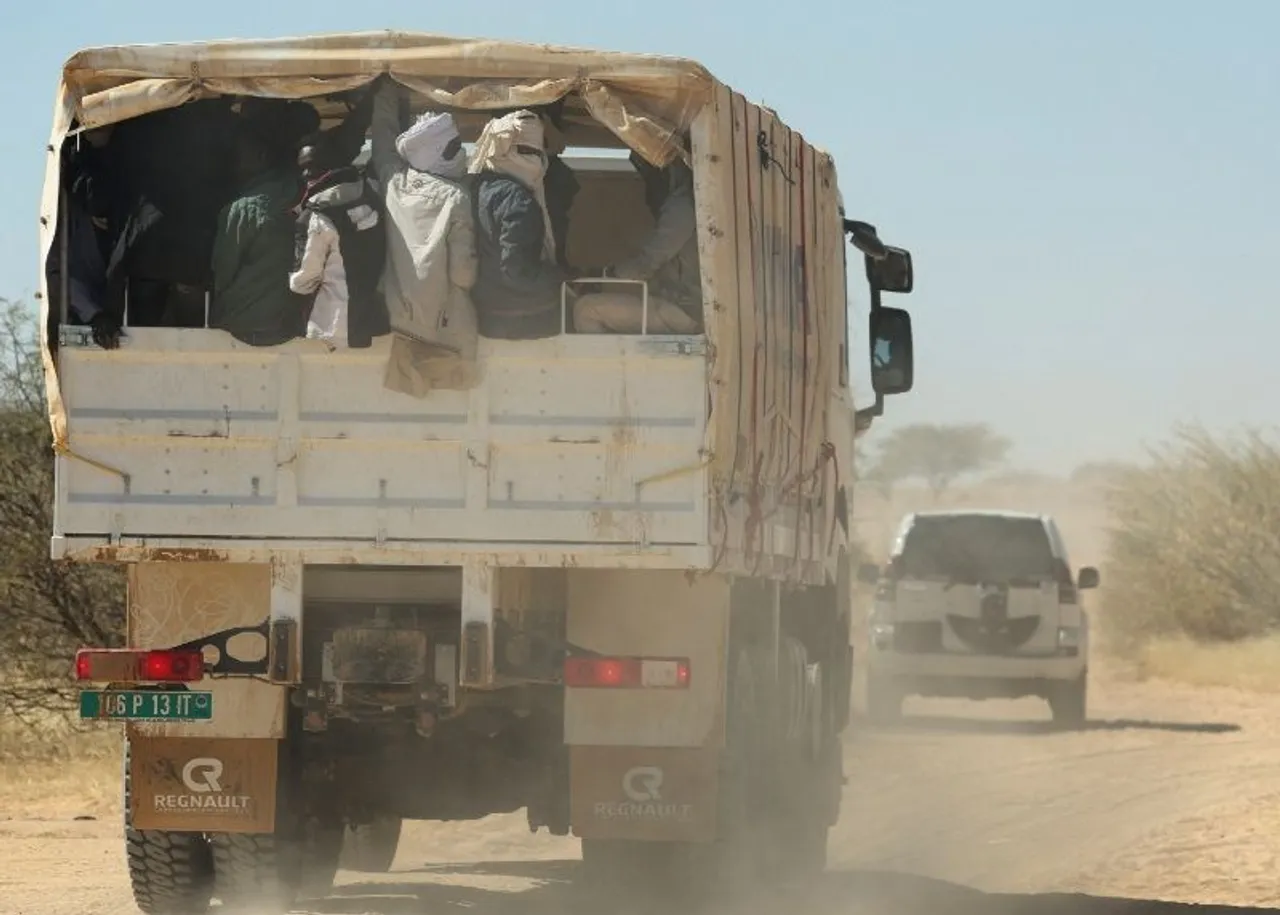
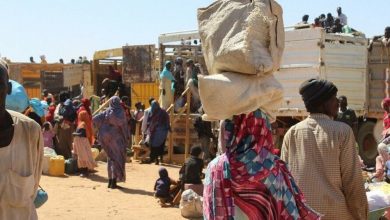
Sudanese displaced persons, the majority of whom are women and children, have reached the borders of neighboring countries in a fragile humanitarian state after grueling journeys on foot and by pack animals. They are currently living in dire humanitarian conditions.
Thousands of displaced Sudanese who fled their homes and reached the borders are facing tragic circumstances due to acute shortages of food, shelter, and drinking water, coupled with an inability to return. Some are living in the open, under trees, or in primitive tents built from local materials and grass, receiving no care or services.
Under the Shade of Trees
In the Tina region near the border with Chad, the last stronghold of the Joint Armed Forces allied with the Sudanese Army, more than a million displaced people have gathered. They fled cities and villages in North Darfur, including Abu Gamra, Ambara, Shartay, and Ad al-Khair, due to military battles between the Joint Forces and the Rapid Support Forces (RSF) between December 24 and January 10. These battles ended with the RSF taking control of areas that are now nearly deserted.
Amidst their suffering from hunger and thirst, some take shelter under trees, according to Abu Bakr Ahmed Imam, a local volunteer.
He added: “The violent attack launched by the Rapid Support Forces using artillery and drones on areas northwest of Kutum resulted in the deaths of dozens of civilians and the displacement of thousands from several areas, including the city of Jargira, Abu Gamra, and dozens of villages near the cities of Ambara and Karnoi.”
Abu Bakr notes that “the number of displaced people increases daily. Some are forced to stay under trees and in tents made of local materials, grass, and branches. They cannot cross the border into Chad and find no care where they are, which increases their suffering.”
He continues: “After the displaced reached Tina, violations were committed against them at a time when the elderly and children suffered from indescribable exhaustion and hunger. No one knows what can be done for them; will they remain here without aid, waiting to see what the coming days bring?”
Hunger and Lack of Shelter
Halima Mohammed (61), who fled from Abu Gamra to Tina, says: “People arrived in Tina without their belongings or personal items. They are currently living under trees without adequate blankets or food. They do not know their fate—whether they will continue their displacement into Chad or remain stranded right here on the border.”
Furthermore, the needs of Sudanese refugees who fled to neighboring Chad are massive. Humanitarian organizations have previously issued warnings regarding this. In a similar situation, thousands of families are living in a state of displacement and instability on the border between Sudan and the Central African Republic (CAR). Most fled Khartoum, Kordofan, and Darfur, reaching the CAR border after great hardship. The CAR itself has not been free from armed violence for over a decade, leaving large areas under the control of the Russian “Wagner” militia, which has mistreated Sudanese people at the border. Some have settled as guests of local communities, while others seek to reach the Borota camp, located about 65 kilometers from the Sudanese border.
One person stranded on the CAR border describes the conditions as “extremely difficult and arduous,” noting that they live as guests of local communities after Wagner groups attacked villages and the border strip between CAR and Sudan.
Continuous Displacement
Another displaced person says: “We reached the border strip last May after a difficult journey from the Kordofan region. Because we lost all our property, we decided to work briefly for local communities in villages near the border before heading to the Borota camp for Sudanese inside CAR.”
He added: “Last September, a Wagner force attacked villages hosting thousands of displaced people on their way to CAR. A number of people were killed, and houses and tents were set on fire.”
A local government official in the city of Um Dafuq says: “The Wagner attacks, which have recurred several times—the most recent in December—cut off the path for displaced people crossing into Africa, as well as those leaving dozens of villages, including Um Maraid, Um Khashima, and Um Kanabu.”
Complex Situations
The official estimates the number of displaced families stranded in Um Dafuq at more than 2,800, with each family consisting of at least five members.
He points out that “the situation for these families will become even more complicated in the coming days. The biggest obstacle they will face, besides the lack of food and healthcare, is the lack of drinking water. They currently rely on rainwater collected in pits and trenches; when these dry up in March, they won’t even be able to get water because the area lacks wells and official water sources.”
Before the war, village residents drank from hand-dug wells ranging from 10 to 15 meters deep, but these are currently insufficient for the needs of thousands of displaced people.