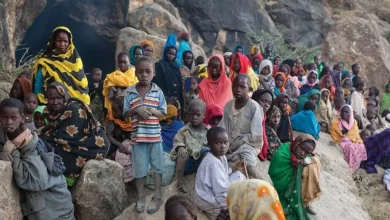
Without ID documents nor tents: Thousands of Sudanese women face the unknown in Kosti camps
Kosti - Report - Mashaweer
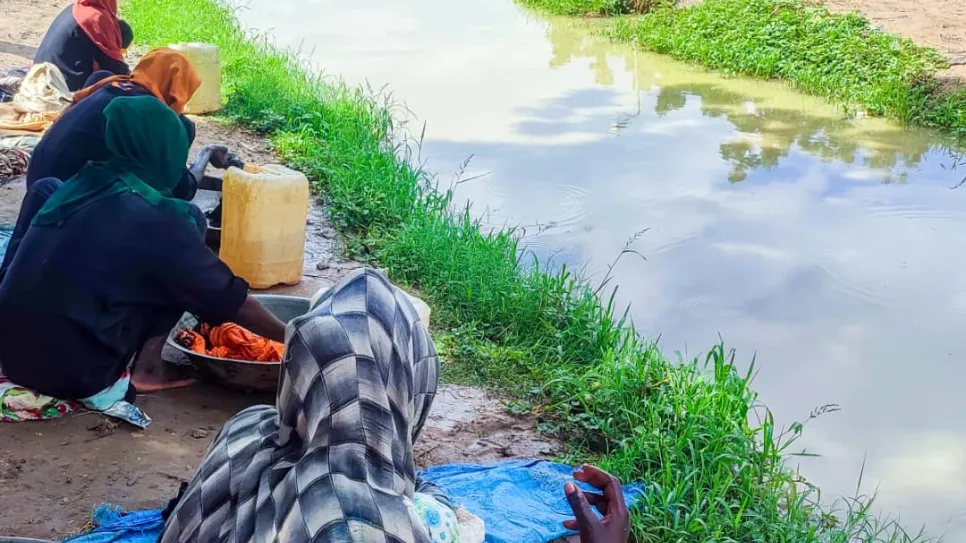
On the outskirts of Kosti in Sudan’s White Nile State, another face of displacement is unfolding. Hundreds of women sleep on the bare ground in “Goz al-Salam” IDP Camp without tents or identification documents, having fled the hell of fighting, leaving behind their homes and memories.
According to Hayat Al-Yamani, a correspondent for Al Jazeera Mubasher from inside the camp, about 500 families out of approximately 4,000 are living in the open, waiting for tents that have not yet been delivered. This occurs amidst incomplete census procedures and harsh weather conditions, with high temperatures during the day and cold at night.
Continuous Suffering
Aisha, who arrived from Jebel al-Dair, has been staying on the roadside inside the camp for a month. She says she arrived with her children to escape the battles and has not yet received a tent, making do with the shade of a straw wall that offers no protection from the midday sun.
The same scene is repeated with other women who came from Dilling, Kadugli, and various areas of South Kordofan. Most confirm they have spent weeks in the open, sleeping on the dirt and sharing meager amounts of water and food.
One elderly woman recounted a 15-day journey with her family, traveling through mountains and rugged roads before finding a vehicle to take her to Kosti. She said the shelling forced them to flee at night without any belongings.
Lack of Security
According to matching testimonies from several displaced women, the road to the camp was not safe. Some spoke of armed groups, locally referred to as “Shafshafa”, who intercepted convoys and looted whatever money and possessions they had left.
Zainab Osman, who arrived 23 days ago from the Morib area, pointed to an empty patch of ground where she sleeps like other women, saying, “This is my home.” She added that she left her husband behind and brought only her children, as she was unable to carry any luggage.
Women emphasized that they were forced to abandon their savings for fear of being killed or assaulted. Some hid money in their clothes but were subjected to searches and held at gunpoint. “Either hand over what you have or face death,” one said.
Absence of Shelter
Mrs. Khamisa lost her 19-year-old son in a shelling in the city of Dilling. She said a tank shell hit and killed him, and she reached Kosti with her four children after a month of suffering, without shelter or a source of income.
Other women describe a daily reality where hunger mixes with thirst. Water must be purchased at a price many cannot afford, and food is limited to simple meals that barely stave off hunger. One displaced woman said, “Sometimes we go to sleep without dinner.”
Amna, who fled after her house was burned down, said gunmen attacked her area, killed family members, and confiscated property. She added that they arrived “with only their souls,” without documents, money, or personal belongings.
A Worsening Crisis
For its part, the camp management acknowledges the scale of the crisis. Abdelazim, a supervisor at the camp, explained that the increasing number of arrivals recently has exceeded its capacity. He noted that the process of counting families is underway in preparation for distributing tents.
He pointed out that a large number of displaced people lost their identification papers during attacks or fires, which complicates registration procedures. He confirmed that tents are available, but their distribution is linked to completing the census in the coming days.
Despite these promises, hundreds of families remain in the camp’s internal streets, where exhausted bodies lie next to meager belongings and worn-out blankets. Scenes show children playing on the same dirt they sleep on at night.
According to UN estimates, the number of displaced people within Sudan has exceeded 14 million since the war broke out, in one of the world’s largest displacement crises. Millions suffer from acute shortages of food, shelter, and basic services.