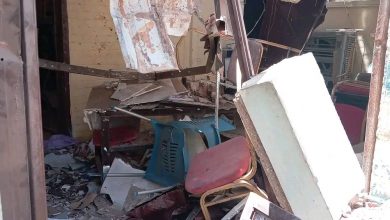
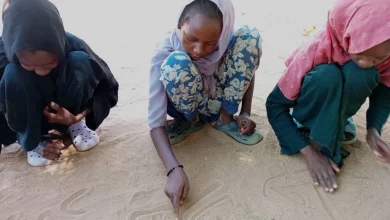
Since the outbreak of armed conflict between the Sudan Armed Forces (SAF) and the Rapid Support Forces (RSF) in mid-April 2023, Sudanese women and girls, who form the backbone of society, have paid a heavy price. They have been subjected to multiple forms of gross violations, facing indiscriminate shelling between the conflicting parties, witnessing destruction, death, looting, and forced displacement, in addition to rape, which has represented the ugly face of this war.
This painful reality within the Sudanese scene has caused psychological trauma and effects for many women, leading to depression, anxiety, fear, despair, insomnia, and even suicide. What is the current status of Sudanese women, and how are they managing their lives under these coercive circumstances?
Siege and Violations
Sudanese citizen Arafa Issa tells the story of her flight from El Fasher, the capital of North Darfur State, for fear of violations. She says, “We remained steadfast in El Fasher since the fighting broke out despite its intensity within residential neighborhoods. We lived with the sound of bullets, but in recent days life became impossible due to the lack of food and medicine caused by the siege, in addition to the targeting of citizens by aerial and artillery bombardment.”
Issa continued, “This miserable situation forced me to displace with my four children in search of safety and food. I was unable to meet basic requirements due to exorbitant prices, especially since we are without a breadwinner after my husband died from a gunshot wound during clashes near our home. Furthermore, obtaining water is difficult except through animal-drawn carts, as the price of a barrel of water reached about 12,000 Sudanese pounds (equivalent to 20 dollars).”
She added, “The displacement journey was long, lasting three days. We walked on foot for long distances and used dilapidated vehicles until we reached El Obeid, the capital of North Kordofan State, 528 kilometers from El Fasher. But the problem is that the horror of the violations, killing, and destruction I witnessed has made my psychological state very bad, and it worsens day by day. My children are now without a provider, and I will face the responsibility of caring for them alone. My children are also in a poor psychological state after seeing their father with blood pouring from his body; I do not know how they can forget this painful and sad scene.”
The displaced woman concluded by saying, “I will try to find work here once we settle, so I can provide for my children’s needs in terms of living, education, and health. But undoubtedly, facing life is not easy, especially when trying to settle in a city you have never visited before.”
Ongoing Consequences
For her part, activist and human rights defender Nemat Koko says that “the war has caused the largest humanitarian crisis in modern history, and its repercussions have increased due to its continuation. Sudanese women and girls have paid a heavy price, facing multiple forms of suffering. Their psyches have been affected by trauma resulting from constant feelings of fear, anxiety, and tension throughout the war, due to acts of sexual violence, abduction, and the use of women’s bodies as a weapon of war. These crises piled up on women—between those injured by artillery shrapnel and the destruction and looting of homes, which created a psychological obsession and a heartbreak that is difficult to overcome, while others carry the burden of providing for their children while displaced toward an unknown fate.”
Koko added, “The war also inflicted a great deal of economic loss on women regarding jobs and loss of income, forcing them to seek relief and aid. However, the greatest loss was in rural areas, as women work in agriculture, grazing, and crafts, playing a major role in food security by contributing about 80 percent of food production. With the continuation of the war, they have become in desperate need of food due to the complete collapse of the agricultural sector, facing the risk of famine.”
She continued, “It is certain that the repercussions of the war will persist as it burns in Darfur and Kordofan, as well as its move to northern cities targeted by RSF suicide drones. Therefore, the violations committed against women in active conflict states could be repeated. Violations have become a criminal tool to humiliate women, especially rape, whose psychological effects last for many years and require treatment for health complications. The painful thing is that this violation has led some women and family members to suicide; some were even killed by the head of the household.”
The activist noted that “what women and girls faced is enough to cause madness, especially those who gave birth as a result of rape or forced marriage. This requires finding humanitarian solutions and psychiatric intervention for survivors with regular follow-up. It is regrettable that the closure of psychiatric centers will lead to dire consequences.”
Activating Clinics
In the same context, mental health specialist Asma Mohammed Jumaa explained that “the spark of war burned women and girls, leading to violations that contributed to high rates of psychological disorders. They were subjected to the most horrific atrocities that disregarded women’s rights, especially by the Rapid Support Forces, causing psychological trauma and a loss of privacy in shelter camps. What worsened their psychological conditions were gang rapes, verbal harassment, pregnancies resulting from assault, and the failure of the law to protect them.”
Jumaa continued, “Women and girls lived in miserable conditions on a wide scale, especially minors who were married off to RSF members in exchange for money given to families who had no right to refuse. Additionally, some women witnessed the execution of the head of the household or their children before their eyes, which is enough to cause severe psychological trauma.”
The psychological specialist urged the need to remove challenges hindering the stability of those returning from displacement in liberated areas, in addition to activating the role of psychiatric clinics. This is especially important as displaced persons, in general, were exposed to complex situations, and their social and economic lives should be revitalized through support for small projects.
Absence of Protection
In a related context, Nemat Abu Bakr, the Sudan program coordinator at the Strategic Initiative for Women in the Horn of Africa (SIHA), said that “Sudanese women have lived through extremely complex tragedies because of this war and its consequences, especially regarding displacement, homelessness, and cases of sexual violence that have been reported as battles continue.”
Abu Bakr added, “With the expansion of the war, women and girls suffered violations, particularly rape, which is a heinous crime that affected them during the war and is difficult to overcome, especially among young girls. This is alongside the high rates of enforced disappearances of a large number of women and girls who are still being searched for. Furthermore, in areas under RSF control, they have been subjected to exploitation reaching the level of sexual slavery, affecting their physical and mental health.”
The SIHA coordinator pointed out that “the protection of women has become a core issue that all organizations defending them must rally around. They are in dire need of action and cannot remain silent under the current situation, where the entities working in this field are absent.”
مقالات ذات صلة