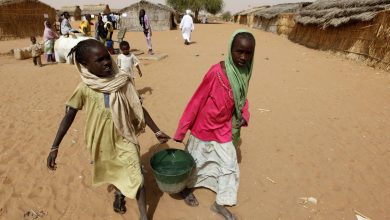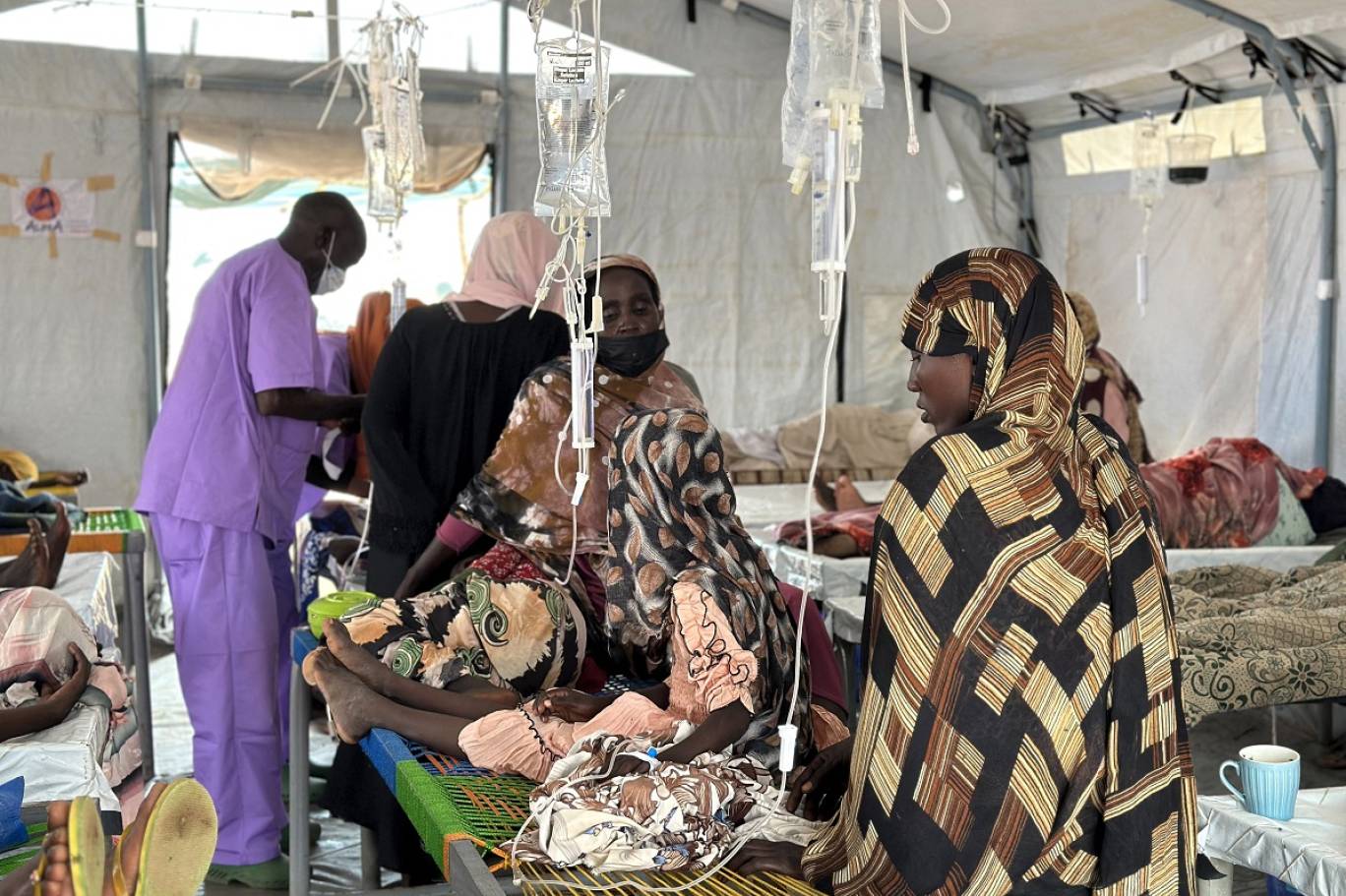
Al Jazirah State, south of Khartoum, is experiencing a worrying health situation in light of the increasing severity of deadly diseases and epidemics, especially Hepatitis, other viruses causing fever and measles among children, and monitored suspected cases of whooping cough. This comes at a time when healthcare is non-existent, warning of an imminent humanitarian catastrophe that is expanding at a frightening rate toward all cities and regions of the state, which has a population exceeding 5 million people, representing 13 percent of Sudan’s population.
According to official statistics, Hepatitis has become widespread in the districts and villages of the region, leading to the death of 35 pregnant women within one month, while the number of infections has exceeded the hundreds. This occurs as the war has exhausted medical treatment centers and disabled 90 percent of their capabilities.
Warnings and Dangers
For its part, the World Health Organization warned of a sharp outbreak of the Hepatitis E virus in Al Jazirah State, where 69.5 percent of infections and 96 percent of deaths were recorded among 3,826 cases and 52 deaths reported between January 2025 and the same month in 2026 across nine Sudanese states.
In turn, the Ministry of Health in Al Jazirah State pointed to high rates of Hepatitis infection, especially among pregnant women, calling for intensified environmental sanitation interventions to provide clean drinking water. It noted that Hepatitis has become a major concern for the Ministry of Health, requiring enhanced efforts to limit its spread and confront it to avoid further aggravation.
In cooperation with the Sudanese Association for Liver Transplant Care and Localization, the Ministry launched a national liver disease awareness campaign to reduce the spread of diseases affecting the liver through awareness-building theater and messaging.
Catastrophic Situation
In this context, Sudanese citizen Amer Mohammed Jalal, who lives in the Marangan area, says that the situation has become catastrophic, especially in light of the rising mortality rate among pregnant women, appealing to the central government and international organizations to intervene to help confront this humanitarian disaster and provide urgent support.
Jalal stressed the need to find a radical solution to the problem of drinking water sources, which is one of the greatest challenges, in addition to solving the environmental degradation crisis and supporting health programs as a top priority.
The speaker noted that the biggest challenge is working hard to control the outbreak, which cannot wait given the current status of hospitals and health centers, requiring the intervention of international organizations because the situation exceeds the capabilities of the Ministry of Health.
Environmental Pollution
On her part, Khadija Al-Sadiq, who lives in the Al-Haj Abdullah area, explained that the first signs of the Hepatitis outbreak began with reports from some health centers in neighboring villages about increasing deaths among pregnant mothers. These were investigated and reported to the Ministry of Health immediately, while cases have continued to rise until now.
The Sudanese woman pointed out that the contamination of pure water sources in a large number of villages poses the greatest danger to residents and exacerbates health conditions. The spread of the epidemic is concentrated in these areas due to its link to environmental health and pollution.
Al-Sadiq noted that the availability of conditions favorable to the spread of Hepatitis in Al Jazirah State contributes to the increase in rates amid a lack of health education and awareness among the majority of the population in districts and cities.
Campaigns and Interventions
In the same vein, the Secretary-General of the Sudanese Association for Liver Transplant Care and Localization, Moataz Ahmed Al-Bashir, said that Hepatitis has become widely spread in Al Jazirah State, requiring urgent intervention to save the situation and curb the continuous increase in infection rates.
Al-Bashir attributes the outbreak to the deterioration in environmental health and food contamination, as well as blood transfusions and unclean water, confirming that the national campaign launched in the state aims to raise citizens’ awareness of the danger of the disease and limit it.
For her part, the Director of the Health Promotion Department in Al Jazirah State, Asmaa Mohammed, pointed to the continuity of campaigns in the region’s districts that record the highest percentage of viral Hepatitis infections.
Awareness and Education
On the same level, epidemiology specialist Moaz Fadl called for an urgent step through a preventive environmental intervention coupled with health awareness and education campaigns to ensure commitment to food and water hygiene conditions and vector control—specifically the housefly in its various stages, as it is the primary and main carrier of Hepatitis.
The epidemiology specialist indicated that the deterioration of environmental health directly contributes to the increased speed of the disease’s spread, at a time when healthcare is non-existent due to the repercussions of the war, in addition to the lack of medicines and therapeutic means in hospitals and medical supplies.
Fadl explained that although Hepatitis is dangerous for all age groups, it is most lethal to pregnant women, as it often leads to the death of both the mother and the fetus.
Terrible Deterioration
In a related context, former health emergency committee member Amir Farouk explained that the current crisis in Al Jazirah State is not linked to traditional sanitation deficiencies, but rather to unprecedented contamination of water sources and a complete lack of sewage infrastructure, which has made the environment for spreading diseases ideal and dangerous to a terrifying extent.
The former member of the health emergency committee pointed out that the prevention and treatment of deadly epidemics are simple matters consisting of the availability of clean water, sanitation, and timely medical care, as well as disinfecting public places, closing popular markets, preventing the sale of uncovered food, and stopping the transport of water by primitive means that lack health standards.
Farouk noted that the deterioration of environmental health due to water pollution mixed with sewage, the accumulation of tons of garbage and waste, and the remnants of war are reasons that contributed to the Hepatitis outbreak in several cities and regions in the province.
The health emergency committee member acknowledged the existence of real challenges represented by widespread environmental degradation, countered by very weak therapeutic work, which intersects with the scarcity of capabilities and the resources crisis.
He warned of the consequences of delaying control over the terrible deterioration in environmental health, because the price will be high and will lead to a drift toward a major epidemic danger.
Infections and Deaths
In a related context, community activist Abdul Halim Makhawi said that the tendency of village residents in Al Jazirah State to drink from surface wells, as well as using various water sources, led to the spread of diseases, particularly Hepatitis.
He added that the residents’ lack of access to clean water, health services, and sanitation within the areas contributed to the spread of diseases, leaving hundreds infected and resulting in the death of dozens.
Makhawi continued, “The spread of these diseases is mostly due to drinking contaminated water and using it during food preparation and other tasks such as washing utensils.”
He added, “Dozens resort to bringing water directly from wells, despite the dangers of pollution and the deterioration of the environmental situation due to the accumulation of waste and remains of corpses and the mixing of water with sewage.”
The community activist explained that doctors have monitored several diseases, including Cholera and Hepatitis, at a time when hospitals and health centers suffer from an acute shortage of intravenous fluids and medicines and the absence of medical staff.
Population Density
The population of Al Jazirah State exceeds 5 million people, representing 13 percent of Sudan’s population according to the 2018 census, ranking second after Khartoum State in terms of population density.
The sudden fall of the state into the hands of the “Rapid Support Forces” in December 2023 was a shock to Sudanese and a major turning point in the conflict.
Several massacres were committed against the region’s residents, most notably the Wad Al-Nura village massacre, which claimed the lives of more than 400 people alongside acts of sexual violence, in addition to the Qawz Al-Naqa village massacre in which more than 40 civilians including women and children were killed and others injured, and Al-Adnab village where about 23 citizens were killed with dozens of injuries.
The retaliatory campaign launched by the “Rapid Support Forces” and the massacres that followed in eastern Al Jazirah after the defection of its commander, Abu Aqla Keikel, and his joining the ranks of the army, was one of the ugliest faces of the violations witnessed by the state.
مقالات ذات صلة
-
-

-
-