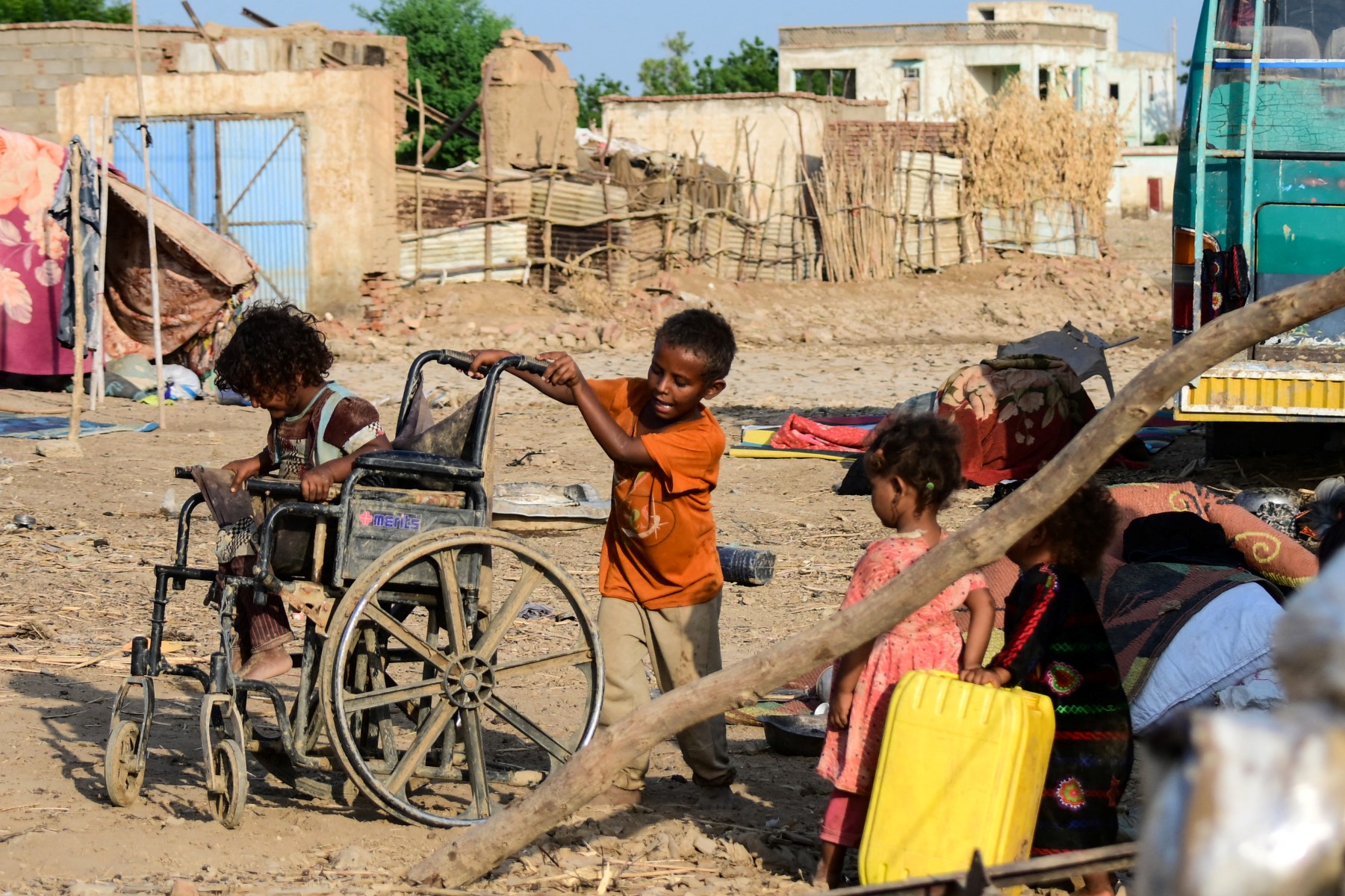
Inside a small kitchen in the Tawila area (64 kilometers from El Fasher), dozens of children and elderly people gather around large pots waiting to receive meals. Thousands are filling the gap through collective food and meal sharing, each according to the amount of food they possess. Women cut vegetables, young men light firewood, and elders distribute tasks with a smile that carries a mixture of fatigue and hope.
Since the early morning, every family in the displacement gathering areas brings what is available—a little flour, lentils, or oil. These are gathered into single pots to produce food that suffices for everyone. In these food gatherings, the displaced find a sense of belonging amidst a harsh reality that burdens those fleeing the hell of fighting.
Bridging the Gap
Sudanese citizen Siddig Al-Ghali said, “The collective food initiative has contributed to bridging the gap and fighting hunger, especially in light of the food shortage crisis in displacement areas and the absence of international and regional organizations to provide humanitarian aid.”
He added, “The initiative has succeeded in controlling the situation so far by securing simple meals such as beans, lentils, and balila for the residents of shelter camps, providing two meals a day, especially with the presence of hundreds of children and the elderly.”
Al-Ghali explained that food preparation is carried out through daily teams of men and women throughout the week. Meals are prepared from food items provided by families, in addition to aid distributed by local organizations.
The Children’s Takia
In a small room inside her house in the Mellit area (North Darfur), Zainab Zakaria established a charitable kitchen dedicated to preparing meals for those coming from El Fasher and surrounding areas. She works daily to cook several types of food, which she distributes for free to displaced children.
Zakaria noted that “the Takia provides food for about 100 children daily, and cannot provide more than that. It operates with a limited budget and targets youngsters, with each family receiving a small bowl of food.”
She pointed out that collective meals have contributed to reducing cases of malnutrition, especially among children, pregnant women, and breastfeeding mothers. Therefore, the biggest challenge is not just providing food, but ensuring the continued provision of free meals, particularly in light of the interruption of support and funding.
High Demand
In a related context, Omar Khamis, a volunteer at the Tawila Central Camp, explained that “on most days of the week, the matter is limited to providing only one type of meal at a time when demand is increasing and the rate of dependence on collective food services is rising among displaced families.”
He noted that “families have begun participating in cooking food, each according to the food items they possess, to solve the crisis for the time being, especially after the weak response from local authorities and the failure of international organizations to reach North Darfur State.”
Khamis called on neighborhood residents to “make efforts to provide assistance given the arrival of thousands of displaced people to the locality and adjacent areas, which requires diligent and collective work and doubling the sacrifices made by citizens and initiative owners during the recent period.”
Community Solidarity
On the same level, Awad Bishara, an activist in free kitchen initiatives in the Jebel Marra area, said that “youth in the shelter camps make bread using traditional wood-fired ovens, which has contributed to ensuring the provision of two meals a day despite the increasing number of displaced people.”
He added, “Free collective food initiatives have proven that popular solidarity is capable of overcoming difficulties. They do not only provide food but also give the displaced a sense of dignity and safety, and restore their sense of humanity amidst difficult circumstances.”
Bishara noted that “these initiatives reflect the ability of local communities to find innovative solutions and enhance the spirit of cooperation and collective action to be the first line of defense against hunger before any official intervention.”
The community activist continued, “In light of the scarcity of resources, collective food gatherings remain a bright sign of the community’s ability to face crises, so that a single meal remains sufficient to change the lives of hundreds of families daily.”
Temporary Solutions
Similarly, Nahed Youssef, a volunteer in the collective food project in Tawila locality, indicated that she “works with a group of women to distribute food to the residents of shelter camps by providing two meals a day.”
She added, “We have a budget from donations from benevolent people to buy grocery items including sugar, oil, flour, milk, and others to distribute to families who have children and elderly members.”
She pointed out that “despite the daily flow of displacement waves and the absence of humanitarian aid, collective food initiatives still constitute one of the temporary solutions to fight hunger in displacement gathering areas.”
She continued, “Community initiatives have been able to cover part of the deficit, but the support was not enough to cover the actual needs of the displaced amidst the worsening crisis and its repercussions.”
مقالات ذات صلة
-

-

-

-