While the Sudanese scene remains characterized by severe entanglement and stagnation in light of the war raging for nearly three years and a worsening political crisis—which has left bloody marks and deep wounds on society and the state, with ongoing repercussions.
Amidst this atmosphere, there is a political movement taking place with factions, groups, and alliances of a revolutionary nature and history, led by what is known as the Revolutionary Forces Alliance for National Accord, alongside the Revolutionary Forces for National Issues (Watan), amid great keenness on the part of the military to revive dialogue with revolutionary forces. All of this is accompanied by the announcement of the President of the Transitional Sovereignty Council and Commander of the Sudanese Army, Abdel Fattah al-Burhan, welcoming the return of politicians whom he said chose the path of truth and cooperation with the army, in order to form a civilian bloc to build the state, complete its institutions, and lay sound foundations for completing the normalization of civilian life and establishing the principle of the peaceful transfer of power. What is the significance of these dialogues, and are they attempts to restore civil-military dialogue once again?
A Memorandum for Consensus
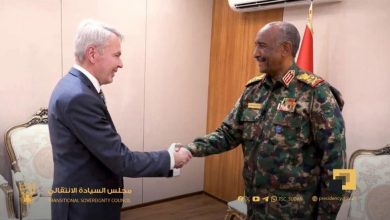
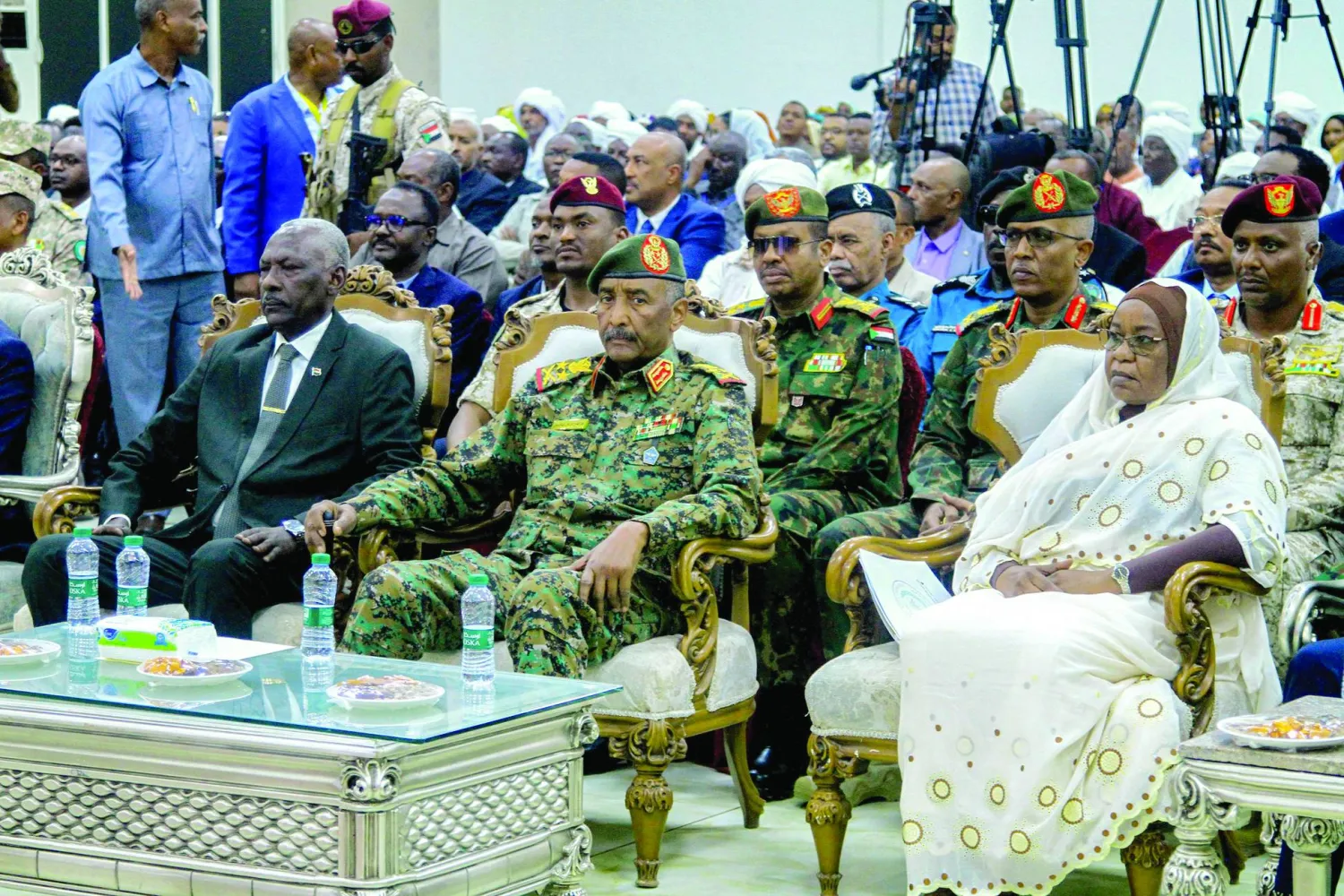
During his meeting with a delegation from the Revolutionary Forces Alliance for National Issues, al-Burhan received a “National Consensus” memorandum, in the presence of Sovereignty Council member and Assistant Commander-in-Chief Lieutenant General Yasir al-Atta, and the Director of the General Intelligence Service, Lieutenant General Ahmed Ibrahim Mufaddal.
Noureddine Salah El-Din, a member of the alliance’s political committee, explained in a press statement that the alliance presented a memorandum to the President of the Sovereignty Council expressing its desire to initiate a dialogue with the army as part of a comprehensive dialogue process aimed at building the largest possible political and social bloc. He stressed that dialogue is the only and ideal way to achieve national consensus, which represents the bridge for Sudan to overcome its current crisis.
Civilian Transition
Salah El-Din revealed that the memorandum includes several core pillars, most notably how to end the war in favor of a state of law and institutions, regulating the relationship between civilian and military institutions, and initiating a path toward a democratic civilian transition, in addition to issues of military development and transitional justice.
The alliance member pointed out that the delegation received a response from the army leadership, which will be followed by arrangements by technical committees to discuss political issues, while conducting a parallel dialogue with civilian and societal forces. This is part of the alliance’s contribution to leading the country toward a foundational national consensus, noting that the alliance is working to adopt a discourse calling for a purely Sudanese political process away from foreign interference that may impose forced solutions.
Advisor and Implications
In a related context, al-Burhan appointed Amgad Fareid Eltayeb as an advisor for political affairs and foreign relations.
Observers believe that the choice of Fareid for this task at this time carries several political and strategic implications in the context of attracting and recruiting civilian figures and cadres who were previously counted among the revolution camp and the civilian forces in the former Forces of Freedom and Change. This is part of the army’s attempts to break the political isolation and the estrangement that occurred following the October 25, 2021 coup between the army and revolutionary civilian camps.
No Neutrality or Retreat
In his first statement after accepting the assignment, al-Burhan’s political advisor emphasized the necessity of prioritizing the public interest and unifying efforts at this critical stage. He called for a broad national alignment to protect the country and preserve its institutions, after the April 2023 war revealed the nature of the ongoing conflict in Sudan, directly targeting the state and its basic components.
Fareid said that the current stage does not tolerate neutrality or retreat, emphasizing the necessity of fighting national battles in defense of the Sudanese state and its institutions, and protecting its unity and sovereignty. He stressed that his alignment will remain with the people and their interests, indicating that national responsibility requires joint action to cross the current crisis and put the country on the path to stability.
Internal and External Movement
For its part, the Revolutionary Forces Alliance for National Issues (Watan) announced the commencement of a national dialogue process to address the roots of Sudan’s accumulated crises and build a national consensus to re-establish the Sudanese state, with the participation of civil society organizations, resistance committees, traditional administration leaders, and the army.
Following meetings held in Britain and Addis Ababa, the alliance confirmed the continuation of its political and diplomatic movements with regional and international parties to push toward ending the ongoing war in Sudan through a political path that preserves the unity of the state and its institutions, while preventing the legalization of violence or the consolidation of a “militia-based” reality.
Parallel Paths
According to the statement, the “Watan” delegation reviewed its efforts to address the crisis through two parallel paths: pushing for civilian dialogue among various political and societal forces to build common ground that allows for the reunification of national ranks around a comprehensive political project on one hand, and opening dialogue channels with the army to address complexities related to the nature of the conflict and work to create conditions that allow the country to transition to a new political phase based on national consensus on the other.
Priority of the War
The alliance stressed that ending the war represents a top national priority, affirming its commitment to continuing its political and diplomatic efforts to reach a settlement that guarantees Sudan’s unity and stability and opens the way for a democratic civilian future.
“Watan” represents an emerging alliance that surfaced in March 2026, comprising a group of political and civil organizations, most notably the Unionist Gathering, the Center Current for Change, the National Current, the Arab Socialist Ba’ath Party (Sudan Region Leadership), the National Will Party, and the so-called Youth Rights Movement. It works to formulate a civilian vision to end the war through direct dialogue with the military institution.
“A New Political Incubator”
In this context, political science professor Mohamed Abdel Rahman Radi considered the new alliances leading the current movement under the banner of “Revolutionary Forces” as fronts backed by the army and its allies in the Islamic Movement. The military seeks to attract factions that were part of the December Revolution (such as the Unionist Gathering and some nationalist parties) but now adopt a supportive stance for the army in its war against the Rapid Support Forces (RSF).
Radi believes that the goal of these movements is to create a new political incubator as a political alternative to the “Tagadum” coordination—previously the “Somoud” (Steadfastness) alliance—currently led by former Prime Minister Abdalla Hamdok. The aim is to isolate the external opposition, especially after al-Burhan linked dialogue to returning inside the country, as the military seeks to pull the rug out from under political forces located abroad and portray them as beholden forces.
The academic asks, “Why does the military component in Sudan seek dialogue with political and civilian forces, sometimes through artificial or alternative fronts, when it could go directly to a dialogue with ‘Somoud,’ for example, which has not taken up arms, unlike the ‘Ta’asees’ (Foundation) alliance and its parallel government led by the RSF?”
He adds, “It is clear that the current political scene in Sudan is witnessing a struggle over the definition of the revolutionary forces and who represents them. While the military works to politically isolate the ‘Somoud’ alliance headed by Abdalla Hamdok and its associated civilian forces—stripping them of the ‘representation of the revolution’ title and portraying them as a political backdrop for the rebellion—the modern revolutionary alliances try to present themselves as an alternative revolutionary path to create a political scene that includes revolutionary faces compatible with the army remaining as the sole guarantor of the transitional phase.”
In light of all this, the communication between the army and the new revolutionary alliances, according to Radi, represents an attempt to break the stagnation of the political arena through new and close fronts and faces. However, these alliances find themselves facing a challenge related to their ability to create opportunities for true national political consensus away from partnership with the military under the umbrella of the “Battle of Dignity” as the army desires, which puts them in confrontation with other revolutionary forces that insist on the full civilian nature of the state and see in these new alliances “another coup” by political means.
Regarding the impact of the unilateral announcement of the return of the Committee for Dismantling the June 30, 1989 Regime on ongoing understandings with revolutionary forces, the political science professor believes that the announcement of the return of this committee—known as the “Empowerment Removal Committee”—is closely linked to the path of dialogue and the political process in Sudan. This committee is viewed as the spirit of the revolution and its primary tool for achieving the goals of the true revolutionary forces, and one of the basic conditions for protecting the democratic transition and completing the tasks of the transitional period in liquidating the influence of the former regime.
Amid legal controversy over the legality of the measure after General al-Burhan’s decision to dissolve it on October 25, 2021, the Dismantling Committee announced the resumption of its work in pursuing the networks of the former regime and recovering looted funds, in light of the continued war and deteriorating conditions in the country.
A statement by the committee, headed by Mohamed al-Faki Suleiman, a former member of the Sovereignty Council, said it would resume dismantling the structure of the National Congress Party and the Islamic Movement, and track their financial and organizational resources inside and outside Sudan, noting its rejection of the previous dissolution decision for its lack of legitimacy.
Meanwhile, some analysts and political actors believe that reviving the committee at this time reinforces the state of confrontation and polarization and thus reduces the chances of starting a comprehensive national political dialogue.
“A Feeble Play”
In a related vein, the official spokesperson for the Civil Democratic Alliance of Revolutionary Forces (Somoud), Bakry el-Jak, doubts the seriousness of any dialogue or anything serious regarding a political process without addressing the requirement of stopping the war.
El-Jak believes that what he described as all this noise is merely “political clamor to stage a feeble play suggesting there is an authority with legitimacy other than the (torn) document that was overturned, by summoning revolutionary forces.”
Al-Burhan had called for a comprehensive national alignment to build the state and complete its institutions, stressing that any peace process will not be complete without ending the rebellion and ensuring that weapons are confined to the hands of the state. He expressed his hope that mediators would respond to help implement the peace initiatives presented by the government aimed at achieving the Sudanese people’s desire to dismantle and end any role for the rebel militias.
In a speech two days ago on the occasion of Eid al-Fitr, al-Burhan affirmed the government’s keenness to engage positively with all peace initiatives that meet security requirements and do not restore the causes of war again. He stressed that any truce or ceasefire must be integrated and accompanied by a time program that ends in a lasting peace and does not keep any body carrying weapons outside official frameworks.
مقالات ذات صلة
-
-
-
-