Sudanese Bear the Cost of War in the Middle East as Food Prices Surge
فMashawir – Report by Minhaj Hamdi
The war that erupted in the Arab region involving Israel and the United States against Iran has worsened the economic suffering of Sudanese citizens. The resulting oil and gas crisis has driven food prices to record highs, exceeding the ability of in Khartoum and several other states to cope.
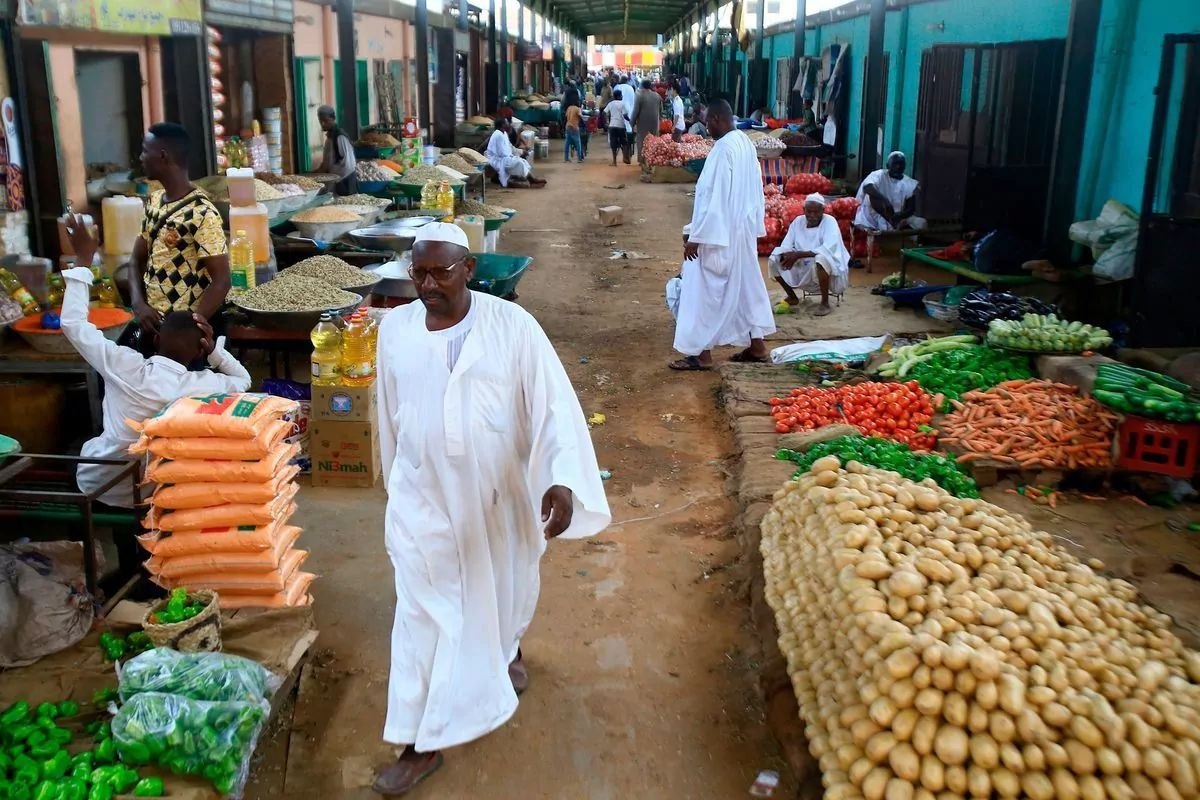
Markets in the capital and other cities have experienced a noticeable slowdown due to the sharp rise in prices of sugar, cooking oil, meat, vegetables, and various Transport stations have also seen widespread frustration after fares increased by 50% across all routes.
Gas Crisis and Black Market
Hamid Al-Nour, a gas agency office owner, told Mashawir: “Markets in the three cities of the capital—Khartoum, Bahri, and Omdurman—are now sinking into a new crisis, particularly with cooking gas. The price of a gas cylinder has reached 90,000 Sudanese pounds, alongside disruptions in the prices of other commodities, especially consumer goods. Brokers have also contributed to pushing gas into the black market.”
He added: “The Iran war has significantly worsened economic conditions, especially in the energy sector. Many citizens have resorted to cutting trees for firewood as an alternative cooking fuel, as well as selling it to bakeries or using it to produce charcoal, which has become a booming trade due to rising prices.”
He noted that this crisis has created increasing livelihood pressures on families already struggling with worsening economic conditions.
An Inflationary Environment
Trader Hossam Ibrahim, who works in the Gedaref market, said: “Markets in the states have recently witnessed a new wave of sharp price increases in consumer goods due to rising fuel prices and shortages, alongside declining purchasing power and the continued rapid These increases are occurring within an extremely fragile economic context.”
He added that price pressures are not limited to Khartoum State but extend to key production regions such as Gezira (grains and oils), Gedaref (sesame and sorghum), and Sennar (crops and vegetables).
Ibrahim pointed out that “markets have become an open inflationary environment, where prices exceed the actual purchasing power of most citizens who have lost their jobs and savings, deepening economic stagnation and increasing vulnerability in both the capital and the states.”
Local Market Fluctuations
In the same context, Hussein Al-Basha, a butcher in the Martyrs area of Omdurman, said: “Exports have nearly come to a halt, leading to the loss of one of the country’s key sources of foreign currency and shifting part of trade to informal border markets.”
He added: “This shift has created sharp local price fluctuations and increased meat costs due to a contraction in official supply.”
Al-Basha further explained that while exported goods have seen price volatility or reduced production levels, locally produced goods—such as flour, fuel, and medicines—have faced recurring shortages, causing significant increases in the overall cost of living.
Economic Impacts
Economic analyst Ammar Al-Shazli predicted that developments in the Middle East would have complex effects on Sudan, particularly economically, including rising inflation and noticeable increases in prices of goods and services due to constraints on external trade, especially fuel. Gulf countries and Iran account for a significant share of global oil production.
He explained that while the economic impact will affect prices, it may not appear immediately, as products are still available in Sudanese markets.
He concluded that if the war continues or leads to disruptions in ports, supply chains, and shipping costs, imports will be significantly affected, with the severity of the impact depending on the duration of the crisis.