One in Every 140 Newborns in Egypt Is Sudanese: Reading the Figures the Wrong Way Around!
Mashawir – Report: Magdy Ali
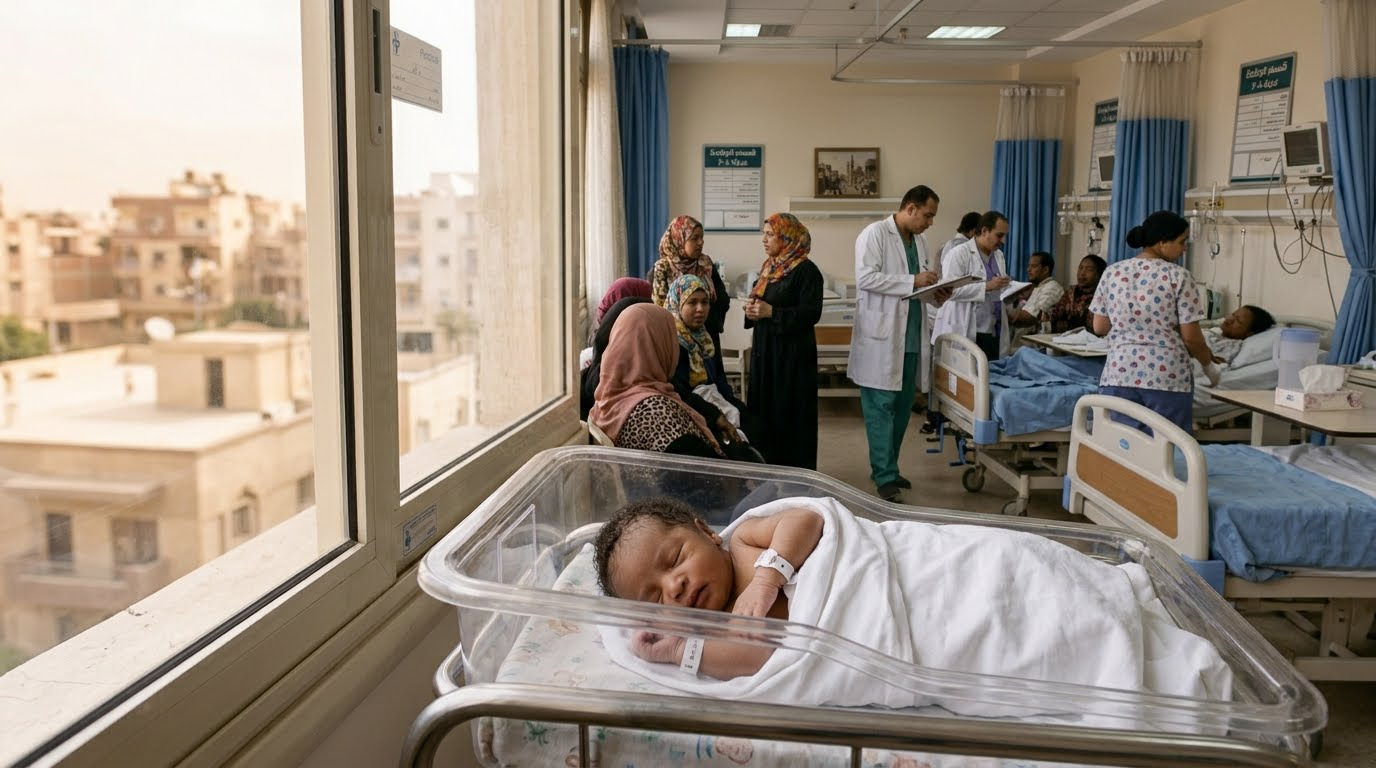
The debate lies in the space between one figure and another. When Egypt’s Central Agency for Public Mobilization and Statistics (CAPMAS) released its Annual Bulletin of Birth and Death Statistics, its data sparked widespread controversy across news websites and social media platforms. Headlines focused on one figure: 13,992 Sudanese newborns, the highest number among babies born to non-Egyptian nationals.
However, the figure that received little attention, and which arguably carries greater significance in understanding the scale of the phenomenon, is that approximately one in every 140 babies registered in Egypt in 2025 was Sudanese. When the figures are placed in their proper context, the picture changes, revealing that what appeared to be a storm was little more than a tempest in a teacup, and that a battle had been fought on the wrong front.
Leading the Numbers, but What Is the Proportion?
The significance of a figure changes depending on the total against which it is measured. Egypt recorded 31,158 births to non-Egyptian nationals, an increase of 22% compared with the previous year. Arab nationals accounted for 22,743 of these births, representing 73%.
Sudanese nationals topped the list of foreign-born children, accounting for 44.9% of all births to non-Egyptians and 61.5% of births to Arab nationals, placing them ahead of every other nationality individually.
However, this leading position, significant as it may be, remains confined to the category of births to non-Egyptians. Total births in Egypt reached 1,952,128, with Sudanese newborns accounting for approximately 0.72% of the total, while all foreign nationals combined accounted for no more than 1.6%.
Thus, the picture looks quite different when we move from comparing foreign nationalities with one another to measuring their share of the country’s total births.
Two Sides of the Same Figure
Each side of the debate has focused on a particular aspect of the statistics, interpreting them through the lens of its own concerns or expectations.
On the Egyptian side, some social media users linked the figures to growing pressure on healthcare and education services, as well as concerns about demographic change. They called for the regularisation of residency status to be accelerated.
Others, however, argued that the leading position of Sudanese newborns reflects the large Sudanese presence in Egypt following the outbreak of war, and that birth numbers are naturally linked to the size of the population of each nationality.
On the Sudanese side, many viewed the birth of nearly 14,000 children as a sign of life continuing despite war and displacement, and as the beginning of a new generation growing up outside its homeland.
However, this perspective raises practical questions concerning birth registration documents, nationality, passports and educational opportunities, alongside concerns that sensationalist media coverage could negatively affect relations between Sudanese people and their host community.
In both cases, the two sides appeared to be competing on a battlefield that was never meant for such a contest. Concerns about “demographic change” would require figures far greater than what a proportion of less than one per cent suggests, while celebrating a “new generation” calls for serious attention to the consequences of war and the challenges surrounding documentation and legal rights, rather than slogans and applause.
The Limits of the Statistics
The bulletin has certain limitations that must be considered when interpreting its data. It classifies births according to the newborn’s nationality, but does not distinguish between Sudanese refugees, asylum seekers, students or people residing for other reasons. Nor does it provide the total size of the Sudanese community, clarify the residency status of parents, or offer fertility rates specific to this population.
Furthermore, the data cover officially registered births and do not necessarily reflect all births for which registration procedures have not been completed.
Specialists in legal and migration affairs point out that some families may face difficulties registering their children because of documents or marriage certificates lost during displacement, or difficulties renewing passports and residency permits.
Therefore, these figures alone cannot be used to draw conclusions about the scale of displacement, economic burdens or birth rates.
Beyond the Numbers
The significance of the percentage becomes clearer when we examine the denominator against which it was calculated. Sudanese nationals account for the largest share of births among non-Egyptian nationalities, but represent less than one per cent of all births in Egypt.
The difference between these two percentages is fundamental. Presenting the first without the second can create an exaggerated impression of the phenomenon’s scale, turning a statistical lead within a limited category into a broader conclusion that the figures do not support.
These statistics come more than three years after the outbreak of war in April 2023, at a time when Egypt has become one of the major destinations for Sudanese displaced by the conflict.
They document one aspect of the reality facing families forced to continue their lives outside their homeland. However, they are insufficient to determine the size of the Sudanese community or establish fertility rates among refugees.
In conclusion, the controversy sparked by these figures diminishes when they are examined in their proper context, revealing the limitations of the conclusions drawn from them.
The real battleground, however, lies elsewhere: in the war itself and its far-reaching consequences for children’s lives and futures, beginning with the registration of their births and the issuance of identity documents, and extending to safeguarding their legal rights and access to education.
These issues require coordinated consular and humanitarian efforts and deserve attention that goes far beyond a controversy arising from interpreting a number in isolation from its actual significance and limitations.