West Kordofan: An Endless Displacement Journey for Thousands of Residents
Abu Zabad – Report: Mashawir Team
Across the three states of the Kordofan region, the displacement crisis continues to engulf hundreds of thousands of people. While the number of displaced people across the region has exceeded 383,000 within a year, South Kordofan faces a blockade and the looming threat of famine in Kadugli and Dilling. Meanwhile, North Kordofan is struggling with overcrowding, with more than one million displaced people in El Obeid, alongside worsening food insecurity. In November 2026, West Kordofan has emerged as a major hotspot of rapidly escalating displacement.
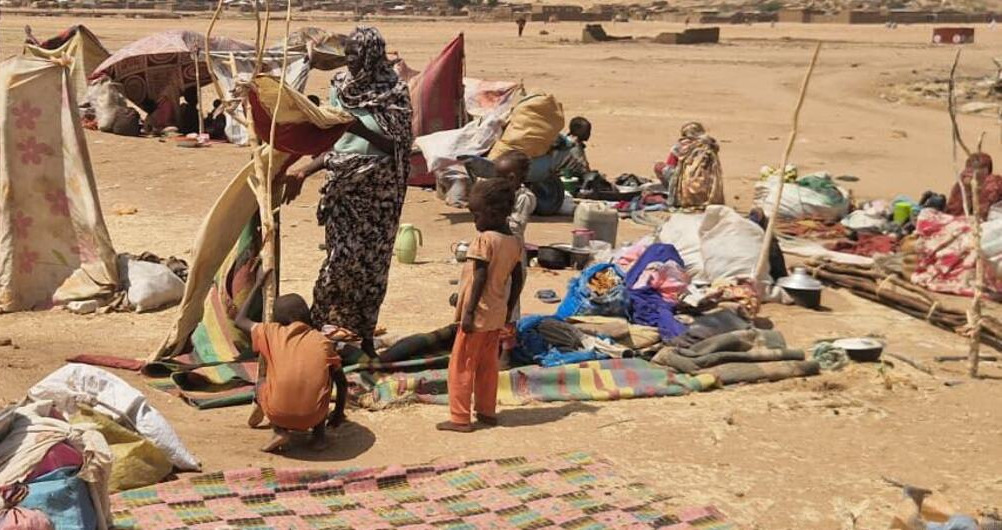
In the state, fleeing does not end with leaving one’s village. Families who escape bombardment must search for shelter, food and medical care, only to face the possibility of being displaced again as fighting approaches. Since early November, airstrikes and drone attacks have intensified, leaving civilians with impossible choices: remain under fire, take dangerous escape routes, or seek refuge in areas already overwhelmed by displacement and market looting.
Successive Waves of Displacement
Fighting has intensified along the Abu Zabad, Al-Khuwai, Al-Nuhud and Ghubaysh fronts, following the recapture of Al-Khuwai and the Al-Sa’atat area by the Sudanese Armed Forces.
West Kordofan connects Darfur with central Sudan and North Kordofan and is home to oil fields and major livestock and gum arabic trading centres.
According to the International Organization for Migration’s Displacement Tracking Matrix (DTM), more than 10,280 people fled Abu Zabad locality between 14 and 22 November. This included 2,740 people in the first wave, 5,215 during 20 and 21 November from Abu Zabad, Abu Qalb and six neighbouring villages, and another 2,325 on 22 November.
Abu Al-Maali Mohamed Saleh, who was displaced from Abu Qalb to Al-Khuwai, told Mashawir that most families fled without their belongings. Some of their neighbours escaped on foot, while others were unable to leave because of the lack of transportation and continued bombardment. After surviving the attacks, they were confronted with the struggle to secure food, shelter and medical treatment.
Families were dispersed across Keilak, Al-Sunut, Al-Salam and Lagawa, as well as North and South Kordofan and routes leading towards Abyei.
On 19 November, residents of Abu Qalb reported that approximately 7,000 civilians remained trapped after four days of bombardment, amid severe shortages of food, medicine and fuel. They called for a three-day humanitarian truce to facilitate their evacuation and the delivery of relief assistance.
The Journey Does Not End Upon Arrival
Al-Safi Mohamed Al-Baqari, who reached Al-Khuwai from Abu Qalb, told Mashawir that families arrived exhausted, particularly children, elderly people and patients. Their needs had exceeded the capacity of the humanitarian response, while continuing their journey towards El Obeid had become difficult because of high transportation costs and the lack of available transport.
In Al-Fula, Huwai da Abdelrahman Saleh, Executive Director of the Muzna Charitable Organisation, warned of repeated or circular displacement. She reported that 190 families had arrived within one week and settled at two sites, while it remained difficult to account for those staying with relatives.
Emptied Villages and Absent Essential Services
Suleiman Abu Humaida, spokesperson for the Central Al-Nuhud Emergency Response Room, told Mashawir that the Rapid Support Forces (RSF) had displaced residents from 20 villages in the Abu Qalb administrative area. Approximately seven civilians, including traders, had been killed.
He added that attacks in Al-Sa’atat had triggered displacement and market looting. He also pointed to the absence of essential services in Al-Nuhud and Wad Banda, continued looting and the lack of humanitarian organisations. By contrast, conditions in Al-Khuwai had improved relatively, with the reopening of Al-Bakhit and Umm Lahaik markets.
Tariq Al-Atta, a volunteer with the Al-Nuhud Emergency Response Room, added to Mashawir that local initiatives were struggling to meet needs that far exceeded their available resources.
The Sudan Doctors Network documented the destruction of Al-Khuwai Hospital as a result of the fighting, warning that thousands of residents and displaced people had been deprived of medical care.
In Abu Qalb, the Kordofan Human Rights Observatory and the Emergency Lawyers Group documented the deaths of between 15 and 17 civilians, including women and children, and nine people suffering amputation injuries. The casualties reportedly resulted from an airstrike involving barrel bombs and drone attacks targeting an area that included a children’s playground. The attacks also caused houses to catch fire and livestock to perish.
The Observatory further accused the RSF of killing three additional civilians, amid reports of violations with an ethnic dimension.
Livelihoods Lost
The displacement coincided with the harvest season for groundnuts, sorghum and millet, as well as the beginning of colder nighttime temperatures. This has compounded the losses suffered by families forced to abandon their crops and livestock, while increasing the hardship of those sleeping outdoors without blankets.
Communication outages and disruptions to money transfers have further limited the ability of families and local initiatives to meet basic needs.
Civil society activist Hatem Hassan Al-Taj told Mashawir that addressing the crisis requires urgent coordination to secure evacuation routes, deliver humanitarian assistance, restore essential services and support families who have lost their sources of livelihood.
To No Avail
In mid-November, the Sudanese Armed Forces and the Joint Force announced that they had recaptured Al-Khuwai, Al-Sa’atat and eight neighbouring areas.
Sudanese media outlets quoted a military source as saying that protecting civilians was a priority, although no mechanisms were announced for providing relief to displaced people from Abu Zabad and Al-Fula.
In North Kordofan, Humanitarian Aid Commissioner Mohamed Al-Fateh Omar announced, following meetings with Governor Abdel Khaliq Abdel Latif and international organisations, that the number of displaced people had exceeded 1.3 million. He called for expanded interventions in water, healthcare and community kitchens.
While the two warring parties remain preoccupied with territorial control, strategic positions and declarations of victory, the lives of civilians in West Kordofan appear to have been left out of their calculations.
The Sudanese Armed Forces continue to emphasise that civilian protection is a priority, but have not commented on the allegations concerning the bombardment or responded to residents’ appeals to evacuate those trapped.
Meanwhile, the Rapid Support Forces remain silent over the displacement crisis and accusations that they forcibly displaced villagers and looted markets.
Caught between silence and political rhetoric, displaced people have found nothing to stop the repeated uprooting of their communities.
Their suffering appears to have become a secondary detail in a war whose consequences they are left to confront alone. For citizens who have lost their homes and livelihoods, declarations of territorial control mean little compared with the need for a safe place to live.
Displacement cannot be stopped by declarations of military advances, just as hunger cannot be relieved by silence.