Displaced Women in Blue Nile Face Rape and Abduction with Impunity
Mashawir – Report by: Minhaj Hamdi
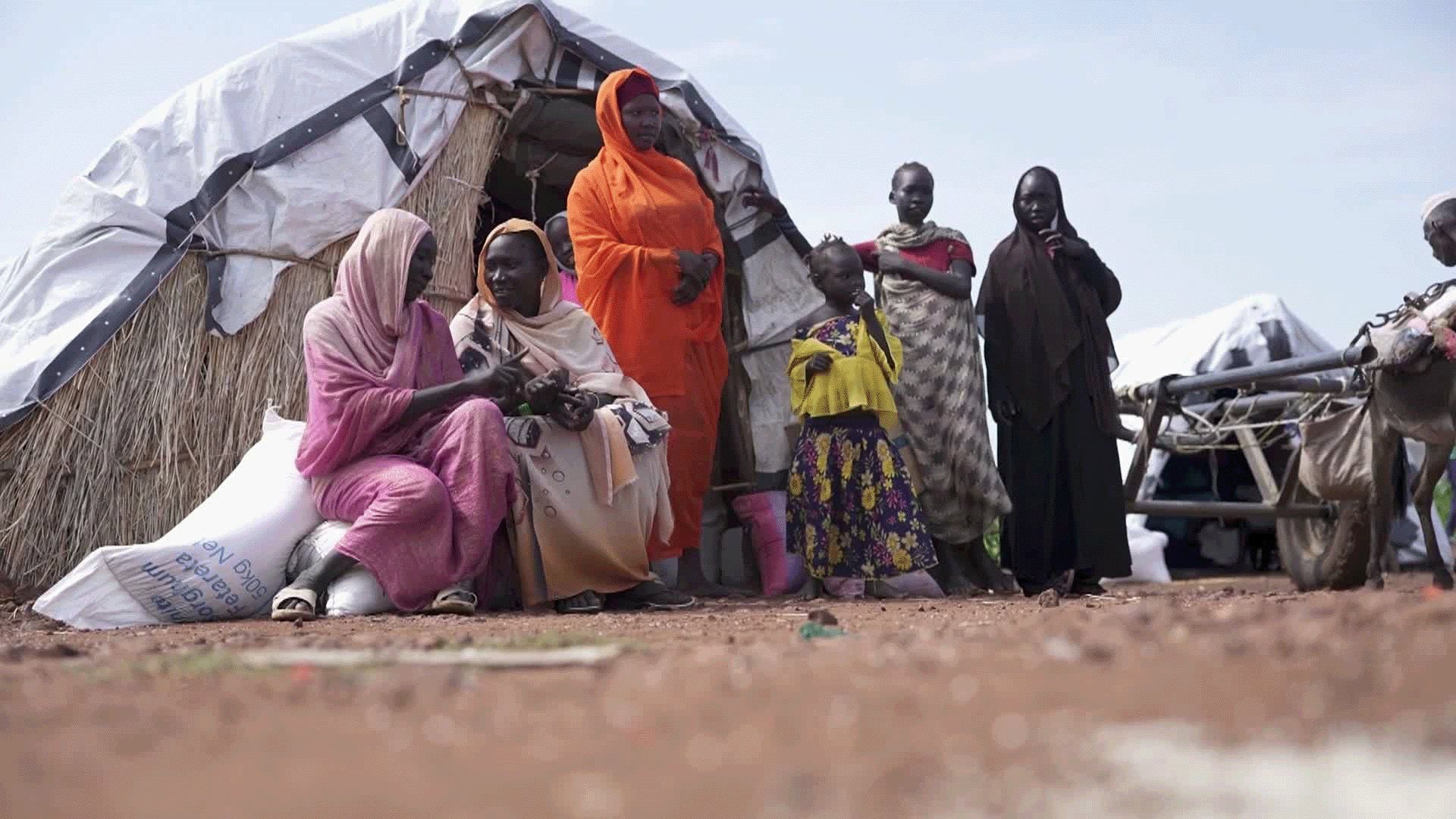
Women and girls displaced from Sudan’s Blue Nile Region are facing additional dangers as they flee their homes amid escalating fighting, rising rates of serious violations, and a worsening humanitarian situation that has exceeded the capacity of local authorities to respond to growing needs.
Dozens of women and girls have reportedly been subjected to grave violations, including rape and abduction, along the routes from localities across the region to displacement gathering sites. Armed groups and criminal gangs have exploited the security vacuum to commit horrific crimes and violations against civilians, including abductions and sexual assaults.
Violence and Rape
In this context, the Horn of Africa Women’s Network confirmed that it had received reports of 15 cases of conflict-related sexual violence against girls under the age of 18 in Blue Nile State. It also reported the abduction of 28 underage girls and women as they attempted to flee the fighting.
The network warned that conditions for women and girls are deteriorating as military confrontations continue to spread across the state.
In a statement, the network said that “the 15 cases were reported over the past three days and attributed to armed men wearing Rapid Support Forces (RSF) uniforms near the villages of Al-Yas and Armadolo in Geissan Locality, based on information received from trusted local partners.”
The statement added that “the network had also received reports that fighters from the group and affiliated forces abducted 28 girls and women as they fled the city of Damazin.”
It noted that one of the abducted women had managed to contact her family and inform them that she was being held alongside other women in a courtyard in the Balqwa area, which is under RSF control.
The statement further highlighted that a shortage of transportation is preventing new mothers, mothers travelling with their children, and elderly women from reaching safe areas and accessing essential services. This is happening while roads remain dangerous and threats of abduction targeting women and girls continue to increase.
The network called on the United Nations and international and local organisations to take urgent measures to protect women, girls, and children from conflict-related sexual violence. It also urged them to support local groups working on the ground to provide food, water, and healthcare.
A Devastating Trauma
In a similar account, Khamisa, a pseudonym, who fled Bau Locality following the escalation of fighting and armed clashes, said she had been “raped by masked soldiers. She was taken, along with several other women, to a remote area, where the attackers assaulted them after a struggle until they lost consciousness.”
Speaking to Mashawir, she added: “Five hours later, we found ourselves on the road between Damazin and Kurmuk. Volunteers transported us to the camps. At the hospital, I underwent medical examinations and received treatment, but I have been suffering from severe trauma and psychological distress ever since that day.”
She explained that “the documented cases of sexual assault are inaccurate and may be far higher, particularly because many women and girls who have been raped choose to remain silent and not report what happened to them for fear of disgrace.”
A Weapon of War
For her part, reproductive health specialist Halima Jar Al-Nabi acknowledged that sexual violence had been used as one of the weapons of this war, through some of the most degrading and brutal forms of exploitation.
She said current statistics reflect only reported cases, while the actual number of unreported incidents is far higher.
Speaking to Mashawir, she explained: “There are several cultural and social factors that prevent survivors from reporting incidents and accessing the relevant authorities. One of the most significant is the fear of social stigma, which remains one of the greatest challenges.”
Jar Al-Nabi pointed out that many survivors’ families do not know how to reach the appropriate authorities to obtain treatment for survivors and secure their rights. This, she said, makes it necessary to intensify assistance and advocacy efforts on such issues.
She also stressed the importance of raising awareness through various media outlets to inform families and communities about where survivors of rape can access services and the procedures available through state health ministries, government healthcare institutions, and some private centres.
These facilities provide medical treatment as well as psychological and social support through qualified personnel trained to handle such cases, in coordination with specialised judicial authorities and trained police units, with the aim of reporting incidents and referring survivors to healthcare institutions.
Dire Conditions
In the same context, social psychology specialist Hamed Suleiman told Mashawir that “displaced survivors in the Blue Nile Region who have experienced rape and sexual violence are living in extremely difficult conditions as a result of trauma, depression, and fear of an uncertain future marked by stigma.”
He stressed the need to find ways to combat negative societal attitudes towards survivors and encourage them to seek psychological support and medical treatment at centres located in displacement gathering areas.
Suleiman expressed his belief that the actual figures could be far higher than the statistics circulated so far, owing to the absence of field teams conducting follow-up work on the ground, as well as the sensitivity surrounding rape itself.
He explained that most survivors do not report the abuses they experienced while in conflict areas, for fear of facing even more violent repercussions.
The psychology specialist noted that fear of social stigma accounts for much of the difficulty in obtaining accurate statistics on cases of rape committed during the war.
This is particularly true in Sudan’s traditionally conservative and reserved society, where virginity is regarded as one of the most important conditions for marriage, and honour and chastity are celebrated as indicators of a family’s and tribe’s social standing. Such attitudes further compound the psychological burden borne by survivors.