Sudanese Displaced People in the Northern State: Caught Between the Flames of the Camp and the Harshness of the Desert
Al-Affad – Report: Mashawir Team
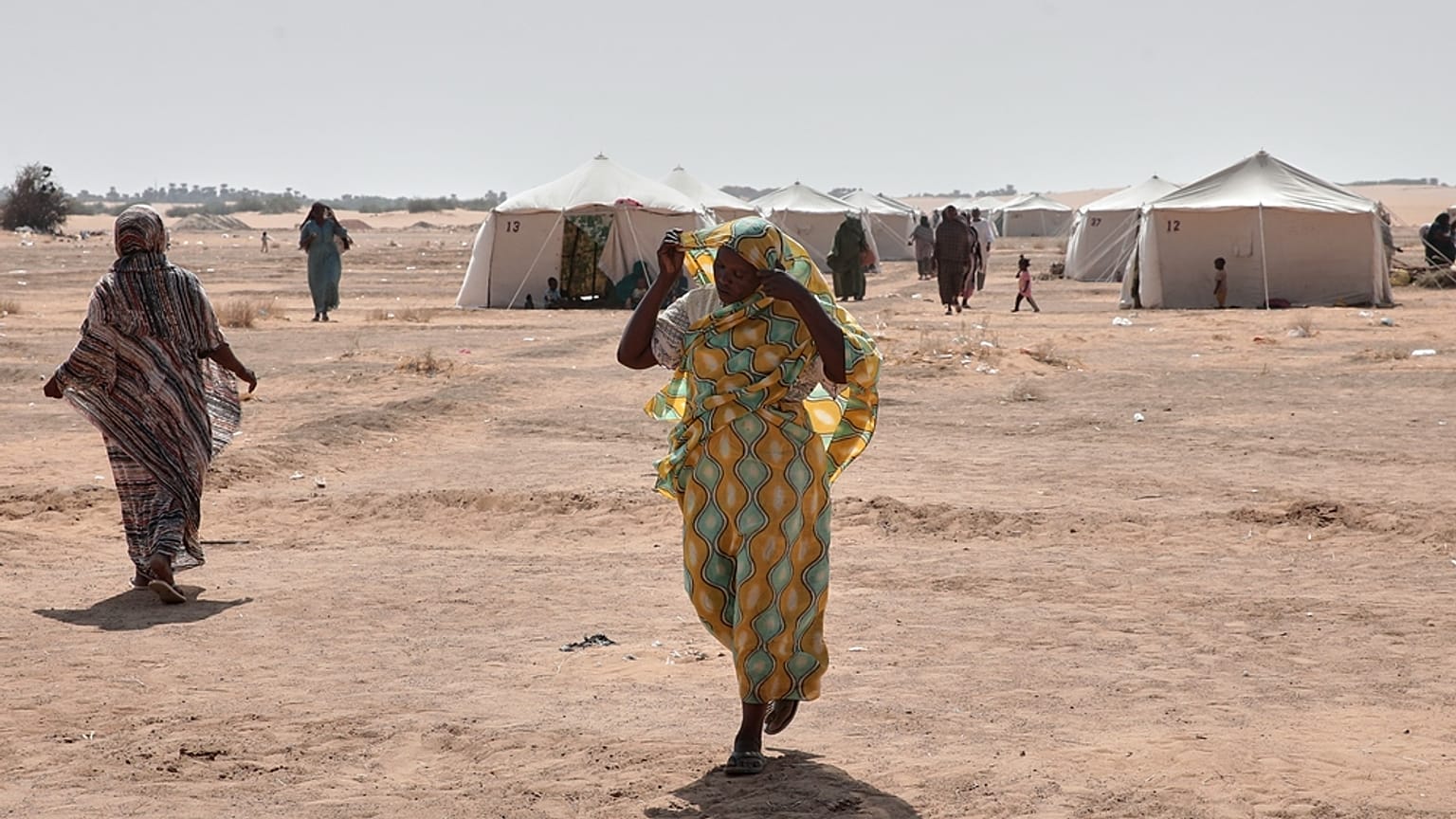
On the outskirts of Al-Dabba, in Suden Northern State, approximately 350 kilometres from Khartoum, the tents of Al-Affad Camp appear as scattered white patches across a vast sea of sand.
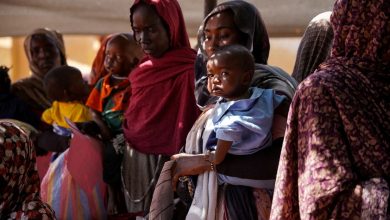
Here, between 22,000 and 25,000 displaced people, approximately 75% of them women and children, are engaged in a silent struggle for survival against the combined threats of nature and fire. They fled the horrors of war and massacres in Darfur and Kordofan, particularly following the fall of El Fasher in October 2025. These survivors travelled more than 1,200 kilometres, leaving behind the savannah environment and their mud-brick homes, only to find themselves in an exposed desert wilderness, scorched by the blazing daytime sun and pierced by freezing nighttime temperatures. Meanwhile, powerful Haboob winds tear away the stakes holding their fragile shelters in place.
A Deadly Equation
The camp, which was originally established to accommodate just 180 people, has far exceeded its maximum capacity, estimated by the United Nations at 3,000 families, according to UN Humanitarian Coordinator Denise Brown.
In a statement to Mashawir, Nader Al-Atta, a member of the Local Emergency Committee, confirmed that the number of displaced families has risen to approximately 4,500, with between 25 and 30 new families arriving every day.
This overcrowding has transformed the camp into an extremely dangerous environment. Shelters made of straw and highly flammable plastic sheeting stand close together, while residents are forced to use open wood and charcoal fires for cooking amid strong winds.
Warning about the dangers arising from the combination of fragile shelters and harsh weather conditions, the Sudanese American Medical Association (SAMA) highlighted the risks posed by “closely packed tents made of straw and plastic tarpaulins, surrounded by strong winds and open cooking fires.”
These risks soon turned into disasters. Two separate fires, which broke out in early June and late September, destroyed a total of 147 tents and injured several women and children, leaving dozens of families homeless once again and exposed to the elements. This was according to a statement by Abdel-Baqi Mohamed Hamid, Humanitarian Aid Commissioner for the Darfur Region.
In response to the repeated fires that reduce tents to ashes, Ahmed Abdullah, spokesperson for the organisation MASHAD, told Mashawir that urgent intervention was needed to provide safe, fire-resistant shelters that would protect the lives and dignity of displaced people.
Under Siege by Nature
The dangers facing residents of Al-Affad are not limited to fires. They also include the harsh desert climate and its extreme fluctuations in northern Sudan. The area is frequently hit by dust storms and powerful winds that tear down tents, exposing women and children to scorching daytime temperatures and bitterly cold nights. Rainfall and flash floods pose additional threats, as the fragile shelters are unable to withstand such conditions.
The exposed desert environment further aggravates residents’ suffering, particularly with the presence of scorpions and venomous reptiles. The overcrowded tents and lack of nighttime lighting create favourable conditions for these dangerous creatures to enter sleeping areas.
As a result, nighttime becomes a period of constant vigilance, with residents fearing potentially fatal bites and stings, especially given the shortage of antivenom and the limited availability of medical and emergency services inside the camp.
From the Heart of the Ordeal
Despite the harsh conditions surrounding them in Al-Affad, many displaced people still consider life there less terrible than the horrors of the war that forced them to flee.
Testimonies given by displaced residents to Mashawir reveal the painful choices they have had to make.
Fakhr al-Din Mohamed Rajab recounts his arduous displacement journey, during which armed men looted everything he owned. He says:
“I saw children, mothers and bloodshed. Now I have arrived here, but I have not found any of my children, and I do not know whether they are alive or dead.”
Another displaced woman, Ishraqa Al-Tom, whose husband was killed in front of her by an artillery shell before she fled, says that life in Al-Affad’s tents, despite its hardships and dangers, remains preferable to dying under bombardment.
“We fled under gunfire, and sometimes we could not even find anything to eat. Here, we are given a few basic things. The current situation is better than the hell of bombardment, despite how difficult life in the tents is.”
In response to these conditions, local committees and community initiatives in Al-Dabba and neighbouring villages have joined efforts to support displaced families, establish communal kitchens (Takaaya), and organise health and other essential services. However, the gap between available humanitarian funding and the growing needs of the displaced population continues to widen.
Thus, the suffering of Al-Affad’s displaced population remains suspended between two fires: they have escaped the bullets of war, but are still waiting for a safe roof to protect them from the harshness of the desert, one that will neither be swept away by the wind nor reduced to ashes by fire.