Omdurman’s Community Kitchens Defy High Prices and Funding Shortages to Feed Displaced People
Khartoum – Report by: Mashawir Team
The humanitarian crisis facing displaced people stranded in Sudan’s capital, Khartoum, is worsening. Amid ongoing fighting, displaced families are struggling with severe shortages of food and medicine, while local Emergency Response Rooms continue providing relief despite extremely difficult security and financial conditions.
Large parts of Khartoum are witnessing harsh living conditions for residents who have been unable to flee, as a result of disrupted supplies of essential commodities and the deterioration of healthcare services.
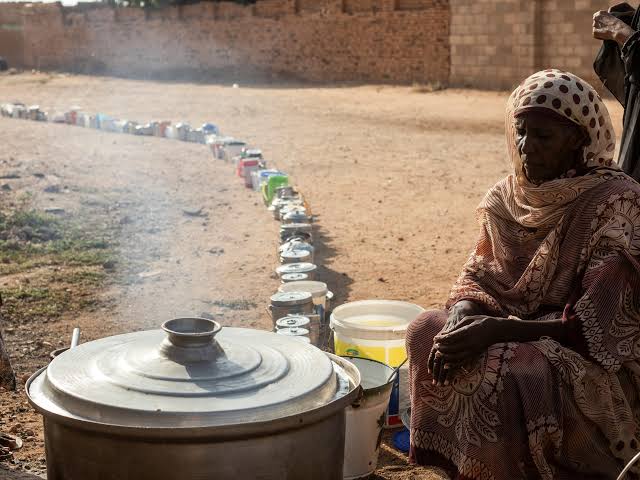
In Omdurman, the Ombada Emergency Response Room continues to operate community kitchens, providing free meals across neighbourhoods throughout the area. This grassroots initiative is being sustained despite an almost complete lack of logistical and financial resources.
Meanwhile, male and female volunteers face severe challenges on the ground as they struggle to ensure the continued provision of free meals to residents.
These initiatives rely primarily on local solidarity. Consequently, the Emergency Response Room has launched an urgent appeal for donations and funding to keep the community kitchens operating before they are forced to shut down.
Worsening Living Conditions and Increasing Displacement
The pressure on community kitchens in Ombada is mounting due to a combination of economic and humanitarian factors.
On the one hand, markets across Omdurman are experiencing sharp increases in the prices of bread, flour and other essential commodities.
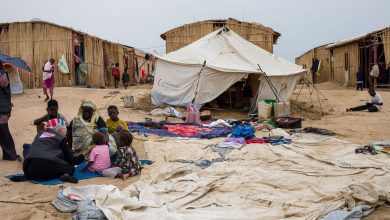
On the other hand, the area is receiving growing waves of displaced people fleeing conflicts in Blue Nile and West Kordofan states. As a result, daily demand for free meals has risen to levels that exceed the kitchens’ current operational capacity.
Voices from the Ground: Residents Speak Out
For displaced people in the area, these kitchens represent the only lifeline for thousands of families who have lost their sources of income.
Fatima Abdullah, a displaced woman in Ombada, told Mashawir:
“Without the daily meal provided by the Emergency Response Room’s young volunteers, my family would have been without food for weeks. Flour prices have become completely unaffordable for us.”
Newly displaced arrivals also stress that youth-led initiatives have filled a major gap amid the absence of adequate official humanitarian assistance.
Adam Ismail, a displaced person in the area, told Mashawir:
“We arrived from West Kordofan without any savings, and the volunteers in Ombada welcomed us with food and shelter. But the numbers are increasing every day, while resources are dwindling at an alarming rate.”
Humanitarian Experts Assess the Situation
Voluntary work and economic experts warn that the closure of these community kitchens could trigger an imminent food crisis in Omdurman.
Dr Tarek Al-Mahdi, a researcher specialising in humanitarian affairs, explains that reliance on individual donations is no longer sufficient.
Speaking to Mashawir, he added that rising costs of food production inputs require direct intervention by international organisations to support local Emergency Response Rooms.
Nutrition specialist Sarah Osman points out that community meals help protect children and older people from acute malnutrition.
However, shortages of protein and vegetables resulting from inadequate funding threaten the nutritional value of the meals being provided.
Behind the Scenes of Voluntary Work: Testimony from Inside the Kitchens
Volunteers work under extremely challenging logistical conditions to secure firewood, cooking gas and food supplies on a daily basis.
Despite these difficulties, young volunteers remain determined to continue their work without interruption, aiming to reach all neighbourhood sectors across Ombada locality.
Mona Al-Tijani, a volunteer at the central Ombada kitchen, told Mashawir:
“We start working at dawn to prepare the meals. Sometimes, we have to collect personal contributions to buy firewood and flour. The greatest challenge is facing the families’ eyes when the food runs out before everyone has received a meal.”
The Economic Impact of Rising Flour and Bread Prices
Sudan’s ongoing economic crisis is eroding people’s purchasing power at an unprecedented rate.
Consequently, community kitchens have evolved from temporary emergency initiatives into an essential pillar of household survival for residents of Omdurman.
Economic analyst Khalid Al-Nour confirms that the continued rise in bread and flour prices is increasing the operating costs of community kitchens every week.
He therefore stresses the need to establish a sustainable support fund that directly connects Sudanese communities abroad with local Emergency Response Rooms, helping prevent the complete collapse of these vital services.