40 Seconds Before Resilience Runs Out: Adré’s Mobile Phones Tell the Story of Sudanese Refugees’ Suffering
Adré – Report by: Mashawir Team
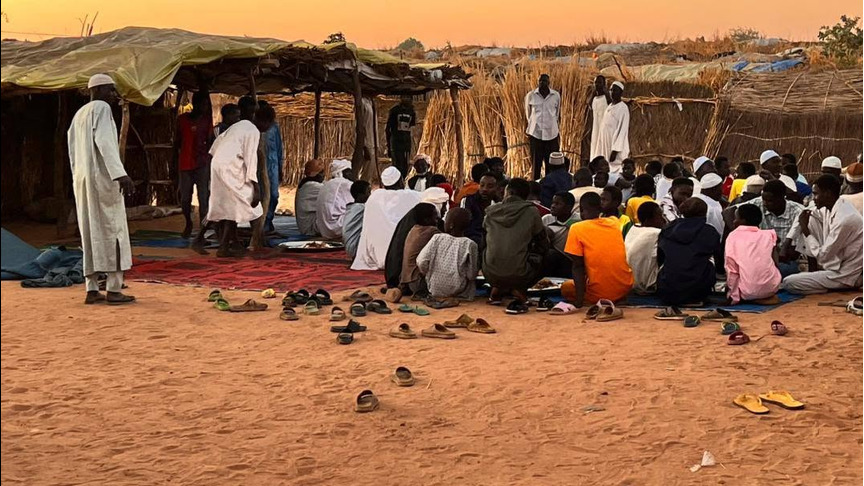
In a cramped corner of a dilapidated tent in Sector Four of the Adré refugee camp, 24-year-old Al-Waleed Abdelrahman stares at the cracked screen of his mobile phone, waiting for the weak network signal to become strong enough to upload a 40-second video. He has no television camera, only a second-hand mobile phone that he has just charged at the market for 100 Central African CFA francs. Yet this short clip could become a lifeline for dozens of families if the world gets to see the endless queues of people struggling to access drinking water along Chad’s eastern border.
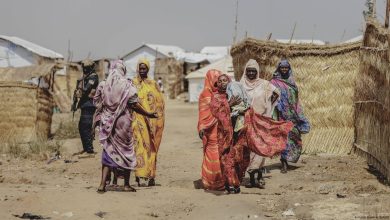
Al-Waleed’s story is just one thread in the daily lives of more than 150,000 Sudanese refugees in Adré, a once-quiet border town with a population of no more than 25,000 before waves of people fleeing the horrors of war overwhelmed it.
Here, shelter is no longer the only concern. Daily life has become a battle against a harsh combination of water shortages, soaring market prices and declining international funding. In response, a generation of young people has decided to fight back using two tools: community self-organisation and mobile-phone cameras.
Dawn Queues and the Cost of Survival
The struggle begins before dawn, when Halima Adam, 38, a displaced woman from El Geneina, leaves her tent carrying two water containers to secure a place in the queue at the well.
She tells Mashawir:
“Honestly, we wake up before dawn just to secure a place in the queue. Many times, we return at midday with only one container, which is not enough for drinking or washing. If we are forced to buy water from the market, it can cost us around 300 francs. And we have no income at all.
Our food rations have been cut in half, and they do not last even ten days. The price of a kilogram of sorghum has jumped from 250 francs to around 500. If it were not for the young people in the neighbourhood who organise the queues and collect small contributions for widows and elderly people, our situation would be much worse.”
The pressure has not been limited to refugees. The host Chadian community has also been affected, sharing its already scarce resources with remarkable solidarity. However, the scale of the crisis has exceeded everyone’s capacity.
The solar-powered wells established by the International Committee of the Red Cross produce 140,000 litres of water daily, enough for only 10,000 people. The remaining population faces a daily allocation of no more than three litres per person.
The situation has been made even worse by the World Food Programme’s decision to halve its assistance following a funding shortfall of $428 million. The United Nations has warned of life-threatening aid cuts affecting more than one million refugees in Chad, while outbreaks of dengue fever and malaria continue to spread through the camps.
A Beehive of Community Action
Amid this darkness, young people have refused to stand by and watch their camp descend into chaos.
In one corner of the camp, 27-year-old Muhannad Al-Tayeb, leader of the Adré Youth Solidarity Initiative, reviews handwritten lists containing the names of widows and elderly people.
He tells Mashawir:
“When we saw the chaos around the water points and the delays in humanitarian organisations’ response, we realised that we could not just sit back and watch. We divided the camp into zones and prepared detailed lists of the most vulnerable families. We started organising the water queues fairly and conducting cleaning campaigns to reduce mosquitoes and fight disease. We also established small community kitchens supported by contributions from Sudanese living abroad.”
These efforts have extended to saving lives through voluntary medical initiatives, including the For Your Sake initiative. Its volunteers told Mashawir that they receive more than 300 cases every week, helping to fill a significant gap in healthcare services.
The Battle for the Power of Images
However, the young people’s biggest bet has been on breaking the wall of silence. They understand that a tragedy that remains unseen is unlikely to attract a response.
Their mobile phones have therefore become mobile newsrooms, documenting water queues, market prices and the conditions of sick people through Facebook and TikTok.
Some of their videos have succeeded in attracting emergency donations from Sudanese communities abroad, as well as associations and humanitarian organisations. These contributions have been transformed into water tankers and food baskets, helping save dozens of families.
But reporting the truth from a volatile border region is no easy task.
Al-Waleed says, his eyes cautiously scanning his surroundings:
“This phone has become our only weapon for making our voices heard, but working here is not easy. The network is extremely weak, and charging our phones using solar power at the market is expensive. On top of that, we face security and administrative challenges because this is a sensitive border area. Any movement with a camera can sometimes expose us to questioning or restrictions.
That is why we film very carefully. These videos are what show people outside the camp the true scale of the water shortages and rising prices. And, in fact, they have brought us direct assistance that has saved many families.”
Finally, the upload symbol appears on the cracked screen as the sun sets over the tents of Adré and the evening queues begin to form once again.
Here, the batteries of mobile phones and the determination of young people remain a fragile lifeline, preventing tens of thousands of refugees from sinking into oblivion, while they wait for the world to wake up to the scale of the catastrophe — before the battery of resilience finally runs out.