Sudanese Women: Safety Remains Deferred Along the Roads of Displacement
Damazin – Report: Mashawir Team
War does not end at the frontlines, and safety does not begin simply by escaping bombardment. For millions of Sudanese women and girls, leaving conflict zones may mark the beginning of another ordeal, during which family and community protection networks break down, while the risks of violence and exploitation increase along displacement routes and inside shelters.
As the 16 Days of Activism Against Gender-Based Violence campaign (25 November – 10 December) gets underway, and the conflict enters its fourth year, calls are being renewed to protect women and girls from physical, sexual and psychological violations, as well as exploitation and denial of access to essential services.
In this context, the World Health Organization (WHO) warns that more than 12.7 million women and girls in Sudan are at risk of gender-based violence, nearly four times the level recorded before the war.
No Escape … The Road Becomes a Trap
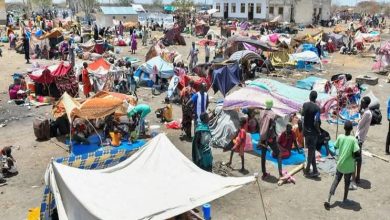
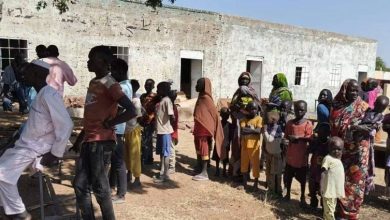
Military operations have forced millions of families to flee their homes, travelling long distances on foot in search of safe refuge. Along the way, women and girls face threats at crossing points, while overcrowding and the lack of privacy in shelters further intensify their sense of insecurity.
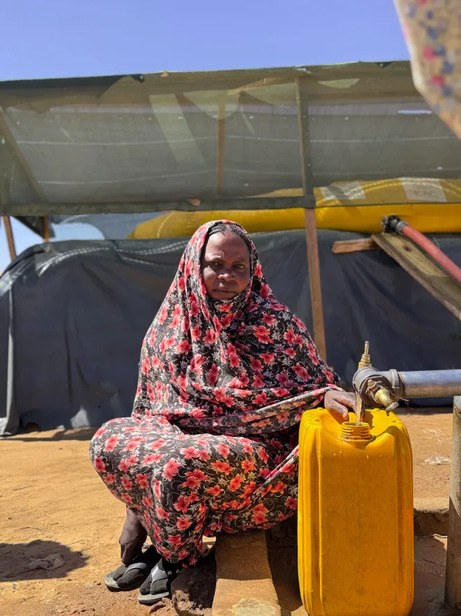
The testimony of Noura Abdel Majeed, a mother of four who was displaced from Bao Locality in Blue Nile Region following the spread of attacks to the outskirts of Damazin and Roseires, reveals some of these dangers.
The Mashawir team met her at a shelter centre in Damazin after she endured an exhausting journey along difficult roads and through a series of military checkpoints. She said:
“We fled under a hail of bullets with nothing. During the displacement journey, our fear was not limited to hunger and thirst; we were also afraid of the dangers facing women and girls at every crossing point. Even inside the shelter centre, the lack of privacy and security leaves us living in constant fear for our daughters.”
These concerns arise amid a deepening humanitarian crisis that is narrowing opportunities to access essential services. According to the United Nations and the United Nations Population Fund (UNFPA), approximately 34 million people will need humanitarian assistance in 2026, including more than seven million women of reproductive age and nearly one million pregnant women.
Doors Closing
The deterioration of the healthcare sector has made it increasingly difficult to address the consequences of violence. Hospital closures, shortages of medicines and insecurity along roads prevent many survivors from accessing emergency and confidential care.
Field doctor Dr Tareq Al-Samani says:
“We receive cases involving women who have suffered serious violations, but they delay seeking medical care because of the lack of transportation and the dangers along the roads, even though timely intervention is crucial to saving lives.”
The protection gap is widening further as funding declines and safe spaces, which enable survivors to access specialised support and services, are forced to close.
The United Nations High Commissioner for Refugees (UNHCR) revealed that 171 safe spaces were closed during 2025 across 14 countries, including Sudan.
Edem Wosornu, Assistant High Commissioner, warned that the closure of these spaces limits survivors’ ability to seek assistance, emphasising:
“We must not confuse silence with safety.”
In addition to these barriers, social stigma, fear of retaliation and the absence of safe legal pathways force many women to remain silent about the violations they have experienced.
Psychological support specialist Salma Abdel-Sayed explains:
“Survivors fear how society will perceive them. Our role therefore begins with reassuring them and ensuring complete confidentiality to help them regain their emotional balance and dignity.”
The Road to Justice
Under these circumstances, the World Health Organization is working with healthcare personnel to train workers in providing clinical care for survivors and improving referral pathways.
At the community level, women’s Emergency Response Rooms and Sudanese civil society initiatives continue their efforts to manage response centres and community kitchens and provide safe referral pathways, despite security risks and funding shortages.
Sustaining these efforts requires expanding shelters that protect privacy, providing separate facilities and adequate lighting, increasing the number of mobile clinics, and directing funding towards local women’s organisations. This must go hand in hand with supporting economic empowerment and ensuring access to justice.
In this regard, the Regional Platform for Supporting Women-Led Organisations for Sudan, under the slogan “Unite to End Violence Against Women and Girls: Ensure Justice, Protect Survivors and End Impunity”, stressed the need to ensure that no woman suffers violence in silence.
Ending the war remains the fundamental starting point for bringing this tragedy to an end. However, this does not remove the urgent need to restore healthcare services and safe spaces, provide access to justice and hold perpetrators of violations accountable.
Only then can escaping bombardment cease to mark the beginning of another journey defined by fear.