Mashaweer News
The Game That Became a Homeland: Why Are Sudanese Running After the Dream Amid the Ashes؟
Mashaweer - Report by: Mohammed Fadlallah Khalil
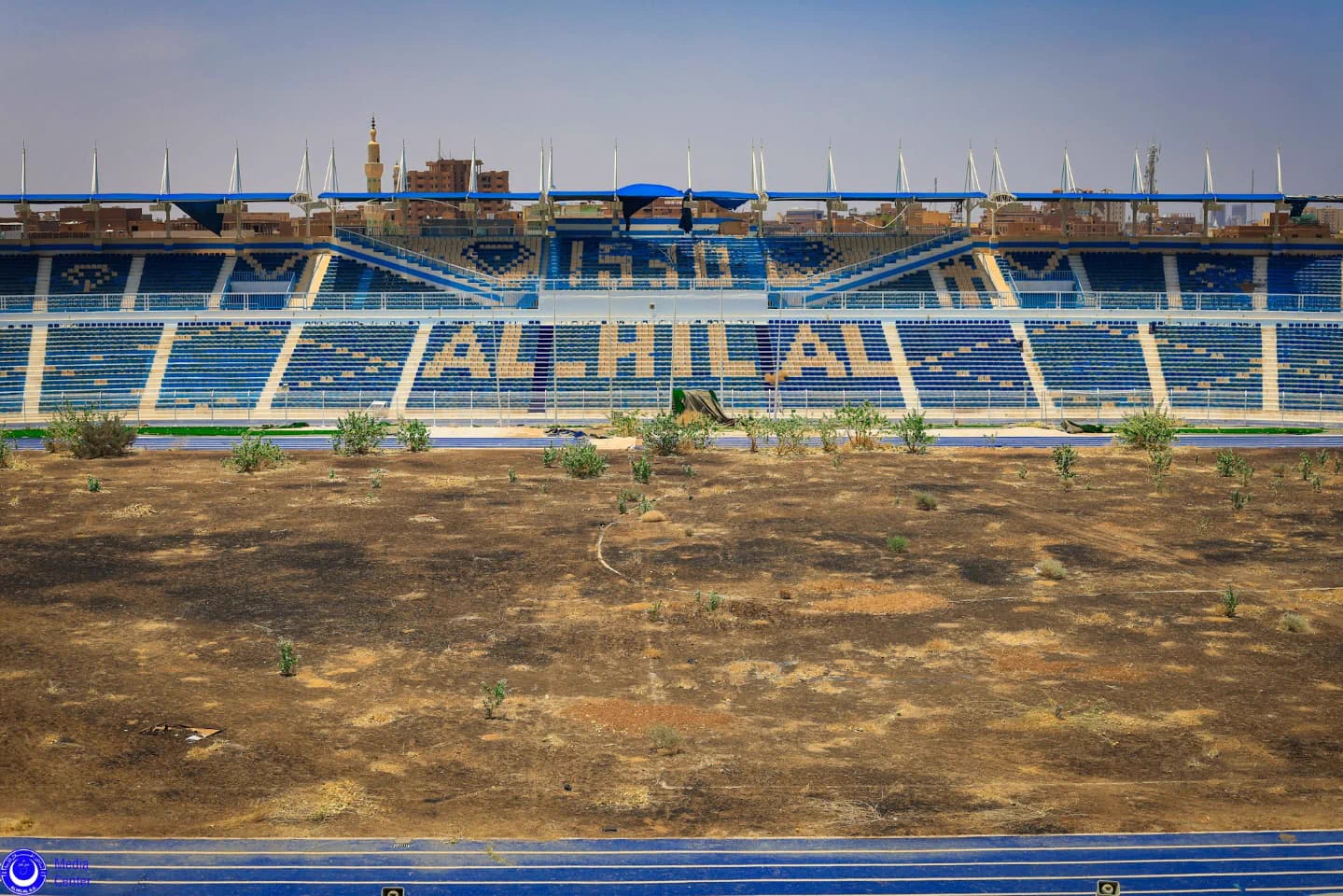
Sudanese football has faced an unprecedented existential tragedy under the weight of the war that consumed the game’s lifeblood, leaving behind massive initial losses estimated at around $14 million USD. Al-Hilal FC, the country’s largest football powerhouse, absorbed the lion’s share of these losses at $4 million USD, according to a BBC report in April 2024.
The ongoing conflict in Sudan that broke out on 15th April, 2023, following a violent armed struggle for power between the Sudanese Armed Forces (SAF), led by Abdel Fattah al-Burhan, and the Rapid Support Forces (RSF), led by Mohamed Hamdan Dagalo (Hemedti), specifically over disagreement regarding the plan to integrate the RSF into the official national army.
This harsh price paid by Sudanese football was not confined to money and infrastructure; it extended to claim the lives and futures of those who make the game possible. Over 100 players, administrators, and sports journalists were killed, and no fewer than 2,000 administrators were displaced across the country. Meanwhile, the nation’s sporting pulse was entirely paralyzed as operations ceased across 47 local associations affiliated with the Sudan Football Association (SFA).
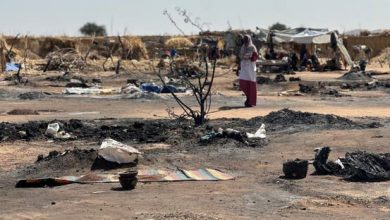
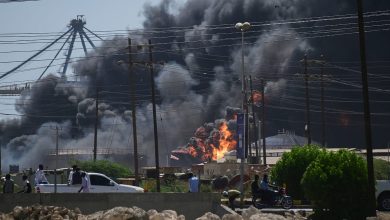
Complete destruction manifested as headquarters and stadiums were reduced to rubble due to partial and total shelling. The resulting fires destroyed administrative archives and documents, accompanied by widespread looting of sports equipment. Natural grass withered into barren, ruined fields due to complete drought and a lack of maintenance.
Severed Dreams and Abandoned Pitch
In late February 2025, the young boy Omar Dafalla, famously known on the pitch as “Luka”, was taking firm steps toward embracing his biggest dream. The transfer window for Khartoum NC was about to open, and Luka’s name was atop the supplementary registration lists. The young player returned to his home in Khartoum filled with hope, after battles there had subsided and the army secured control. With enthusiasm, he began dusting off the remnants of war from his home to forge a new beginning.
However, the war did not depart peacefully. Amid the rubble of his home, Omar found an unexploded ordnance, a 23mm shell. In one treacherous second, the shell detonated in his hands; its shrapnel pierced his body, tearing apart all his dreams and aspirations alongside it.
The dream evaporated in a tragic moment that ended in the amputation of his hand and foot. His life path shifted instantly from a player chasing glory on the green pitch to a young man facing a lifelong permanent disability.
Luka’s tragedy was merely one chapter in a larger catastrophe that befell Sudanese sports, as stadiums transformed from spaces of joy into abandoned arenas, and the ambitions of an entire generation of athletes were assassinated.
Execution of a Generation
The disaster began in the uncompleted 2023 season, where more than 480 professional players in the Premier League woke up to a bitter reality: losing their sole employment and primary passion. The suffering did not stop at professionals; the scope of war expanded to swallow the dreams of 17,280 players by the end of 2024, signaling the total paralysis of all local leagues across Sudan’s 18 states.
Two-thirds of these players were unable to touch a football again. Some were consumed by shells and lost their lives; others were scattered by internal displacement or cast across borders by the fortunes of asylum; and others were forced by the cruelty of life to abandon their beloved game to search for any grueling labor to support their families.
Even the few who clung to the remnants of hope ran into a wall of harsh reality, failing physical fitness tests due to the prolonged hiatus. Neighborhoods offered no safe haven either, as maintenance was absent and pitches turned into dusty, barren fields without grass, fraught with insecurity.
The greatest risk in professional football lies in its short and critical lifespan, time waits for no one. A multi-year disruption in an environment devoid of qualified and safe training was not merely a temporary break; it was a definitive death sentence for the careers of an entire golden generation.
The Tragedy of Captain Ibrahim
With features drowned in tears that he hid behind his hands from sheer sorrow, in a heart-wrenching scene embodying a human tragedy, Captain Ibrahim Mortada Kabeer looked as if expressing his broken soul through the verse: “Do not pick at the old wound, for I have bidden farewell to a dark and heavy night… I carried my soul in a bleeding heart that still carries half of itself paralyzed.” The Mashweer platform documented the ugliest face of the war in Sudan through the story of Captain Kabeer, a former Sudanese Premier League star who went from platforms of athletic excellence to one of dozens of athletes whose dreams and stability were crushed by the crisis.
In his breathless interview with the platform, Captain Ibrahim could not hold back his tears before the camera as he recounted how his family paid the ultimate price for the conflict. He lost his wife and his two children in a single moment that stole their lives. The tragedy did not stop at human loss; he also tasted the bitterness of physical disability after the war robbed him of his eyesight and one of his kidneys. The painful path of asylum eventually led him to live as a stranger in the Bweyale refugee camps in Uganda, leaving behind a sports career slaughtered by the machine of war.
سرقوا أطفاله وجسده.. لكن لم يسرقوا حلمه! قصة الكابتن مرتضى كبير الملهِمة
The Pitch Defeats the War
From the heart of a tent buffeted by winds in the Kiryandongo camp in far northwestern Uganda, 2,020 kilometers by land from his home in Omdurman, Sudanese refugee Omar Al-Sadiq sits transfixed in front of a small phone screen. Through it, he pursues a new chapter of resilience, watching his national team play against Togo in the 2026 World Cup qualifiers.
Omar, whom the war robbed of everything, embodies the condition of thousands of stranded refugees who refused to abandon their passion for football. They practice it like a sacred national ritual they haven’t forgotten, even if the geography of their homeland has abandoned them.
In his moving interview with Mashweer, Omar encapsulates this sense of belonging: “Football is the last beautiful thing left for us after this war. We love it, and we loved football as a way to stay close to our country… For we do not merely inhabit homelands; homelands inhabit us and run through our veins.”
Yet the astonishing paradox, in stark contrast to the reality of displacement and destruction, is that football in Sudan rose from under the rubble to achieve a miraculous surge unmatched even during times of peace. Virtual platforms and host countries for Sudanese clubs and national teams turned into arenas for sporting battles in which they emerged victorious.
The senior national team soared high by qualifying for the finals of the African Nations Championship (CHAN 2024), the Africa Cup of Nations (AFCON 2025), and the Arab Cup 2025, alongside occupying third place in the African qualifiers for the 2026 World Cup.
Meanwhile, the rising generation made headlines as the U-17 national team qualified for the 2026 U-17 World Cup in Azerbaijan, and the U-20 team qualified for the 2027 Africa U-20 Cup of Nations in Ghana after being crowned champions of the 2026 CECAFA Tournament.
In a global first, Al-Hilal FC established itself as a trans-regional phenomenon: crowning itself champion of the Mauritanian League in 2025 (participating as a guest alongside Al-Merrikh), before snatching the Rwandan League title in 2026, also as a guest. This made it the first club in football history to win top-flight league titles in three different countries, prompting the club’s management to initiate procedures to register this achievement in the Guinness World Records.
Healing Through the Beautiful Game
In a step aimed at healing the wounds of war, building bridges of peace, and defying the bitterness of asylum and trauma, a group of young Sudanese refugee athletes in Uganda launched the “Sports for Peace” initiative. They adopted football as a vehicle for psychological and social recovery and for confronting the hardships of displacement.
In exclusive statements to Mashweer, the leader of the initiative, Musa Idriss, nicknamed “Adebayor”, revealed the strategic goals of the project. He stressed that the initiative is not limited to technical sports aspects; rather, it seeks to utilize the beautiful game as a tool for peacebuilding, relieving psychological stress, and reintegrating youth into their new host communities.
Idriss added that the initiative’s ambition extends beyond Ugandan borders, prioritizing regional expansion to reach all Sudanese refugees scattered across East African countries with sports and awareness projects, converting youthful energy from the pains of exile into hopes for construction and peace.
http://الرياضة تجمعنا والسلام هدفنا