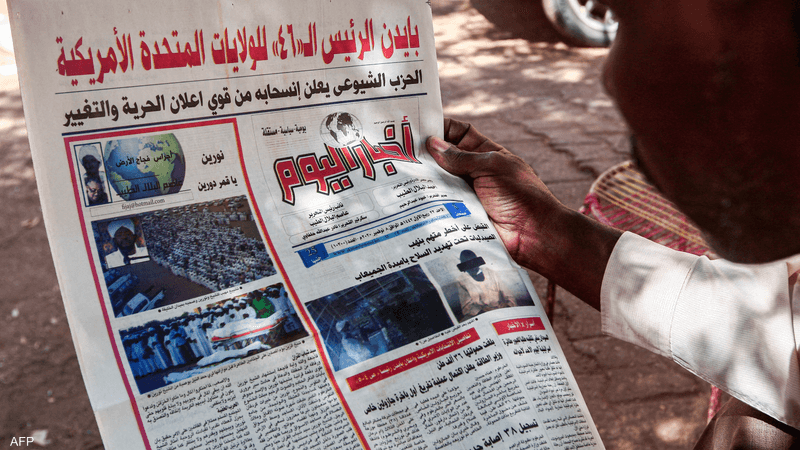
The flames of war have reached the pages of Sudan’s once-prominent newspapers, drying up the ink and silencing the pens. Newsstands and bookstores—where readers once gathered eagerly to scan bold headlines—have been reduced to rubble by shelling and gunfire.
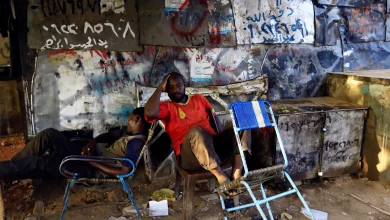
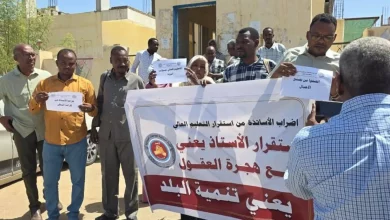
As the war enters its fourth year, print newspaper offices remain shuttered after suffering destruction, looting, and vandalism. Printing presses and distribution centers have also been severely damaged. The collapse of journalism in Sudan has gone beyond the shutdown of newspapers and their disconnection from readers—it has deeply affected hundreds of journalists, many of whom now face unemployment. Some have been forced to seek work outside the profession, while others are scattered as internally displaced persons or refugees.
Crises and hardship
The head of the Sudanese Journalists Syndicate, Abdelmonim Abu Idris, said that, according to the union’s monitoring, all print newspapers have ceased publication. Journalists across institutions are living in dire conditions due to the suspension of salaries, compounded by displacement and refugee crises.
He added that many media institutions are likely to shut down permanently, further increasing unemployment among journalists—already at high levels.
Negative impacts
Writer and journalist Aljameel Alfadil noted that all newspapers previously published in the capital, Khartoum—despite limited circulation—have stopped. He expects the future of print journalism to be deeply affected by the war, much like all other sectors in the country.
Complete shutdown
Sudanese journalist Ammar Suleiman said the war has halted print newspapers and created consequences that are difficult to predict. He described the conflict as delivering the “final blow” to Sudan’s newspapers—especially print—adding that journalism in the country can only thrive in conditions of peace and stability.
An uncertain future
Former Secretary-General of the National Council for Press and Publications, Hossam El-Din Haidar, stated that the armed conflict has led to the complete cessation of all print newspapers in Sudan. Even if the war ends and stability returns, he believes there will be no future for print media due to economic deterioration and the prolonged absence of newspapers from readers over the past three years.
He also pointed out that most Sudanese people have increasingly turned to social media platforms and digital outlets—including websites and YouTube channels—as their primary sources of news and information.