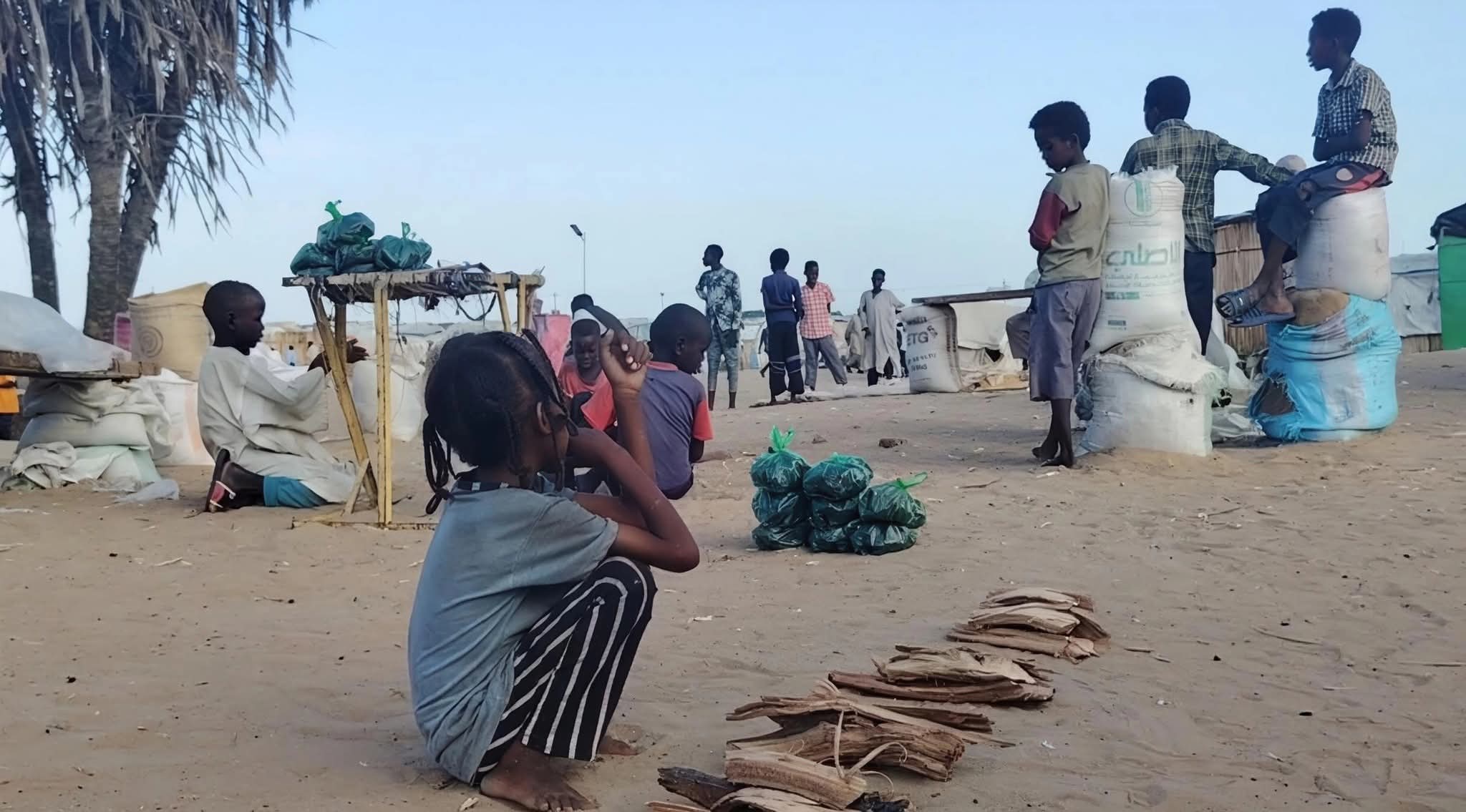
In El Obeid, the capital of North Kordofan State in central Sudan, hunger requires little explanation. Its symptoms have become visible on the bodies of dozens of children inside displacement camps, where families who fled conflict areas now face a new battle defined by food shortages and malnutrition.
Inside one of the camps, a mother tries to understand what has happened to her child, but the answer seems elusive as his health deteriorates.
“From what? Maybe because of weaning, or how? I don’t know,” she says, expressing the confusion shared by many mothers who find themselves unable to determine the causes of their children’s illnesses amid displacement, poverty, and food shortages.
The family of Abu Bakr, one of the affected children, arrived in El Obeid from Dilling about two months ago and settled in a shelter center before his mother noticed his deteriorating health.
“We came from Dilling two months ago and stayed here in the hangar. I brought this boy to the clinic here after I noticed that he was sick. They examined him and told me that he was malnourished and needed nutritional support so that his health could return to normal,” his mother says.
Hunger Amid Displacement
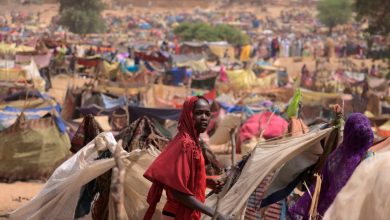
In El Obeid’s displacement camps, food shortages appear to be among the most significant consequences of the war, after fighting forced thousands of families to leave their homes in search of safety, only to arrive in the city often lacking the most basic necessities of life.
At the Humanitarian Aid Commission center in the city, efforts to respond to the crisis continue through humanitarian assistance provided to around 150,000 families, alongside mobile clinics that travel to displacement camps to address the effects of malnutrition and provide medical care to those affected.
Mohamed Ismail, Humanitarian Aid Commissioner in North Kordofan, says clinics are operating in all displacement camps and receive full support from humanitarian organizations.
He adds that services include free meals, as well as weekly financial assistance to cover transportation costs under the referral system, in addition to ongoing medical care provided by the Ministry of Health with support from humanitarian organizations and the Patients’ Aid Fund.
However, the number of cases arriving at health facilities shows that needs are exceeding the current response capacity.
At the emergency department of El Obeid Children’s Hospital, medical teams have received dozens of children suffering from malnutrition, including more than 50 children, most of them displaced people living in the city’s neighborhoods and shelter centers.
Saba Abdelbasit Mohamed, a pediatrician at El Obeid Children’s Hospital, says most cases arrive from the bus station area, where displaced people live under difficult conditions, noting that many arrive suffering from severe and acute malnutrition.
She explains that acute malnutrition is divided into cases accompanied by nutritional edema and cases without edema, while medical teams face significant challenges in treating these conditions.
The doctor points to a deeper reason behind the growing number of patients, saying that the deteriorating economic situation has become the primary factor pushing most children into malnutrition.
A Daily Battle for Food
The consequences of the war in North Kordofan do not stop at destruction and displacement. They extend to the bodies of children, who are paying a heavy price for a worsening economic and humanitarian crisis.
Families displaced from conflict areas, children unable to obtain sufficient food, and mothers confronting illness without knowing its causes are all part of a crisis in which clinics and humanitarian centers are trying to bridge the gap between the needs of displaced people and the assistance available.
In El Obeid, children’s bodies tell part of the story. Amid displacement and food shortages, dozens of children find themselves facing malnutrition, while government agencies, humanitarian organizations, and medical teams work to contain the consequences of the crisis before food insecurity develops into a broader health catastrophe.
From this city, the story remains open to a larger question: How many children need food and medical care before hunger itself becomes one of the most dangerous faces of war?