After more than three years of war, Sudan appears to be facing a different political and humanitarian moment. Not because the fighting has stopped, or because either side has achieved military victory, but because the cost of continuing the war has become unbearable for everyone — domestically, regionally, and internationally.
With mounting international pressure, intensified regional movements, and rapidly worsening humanitarian conditions, the same questions continue to dominate political and media circles: Is the war approaching a settlement? Or is Sudan, long plagued by conflict, heading toward another prolonged war similar to its previous ones?
Sudanese history offers little reassurance. Most major wars in the country lasted for decades: the first southern civil war continued for 17 years (1955–1972), the second for 22 years (1983–2005), while the Darfur war lasted nearly 17 years (2003–2020).
All of them were ultimately resolved through dialogue, understanding, and peace agreements. Therefore, Sudanese people fear that the current war could become another chapter in the country’s long history of open-ended conflicts.
However, some observers believe this war is different.
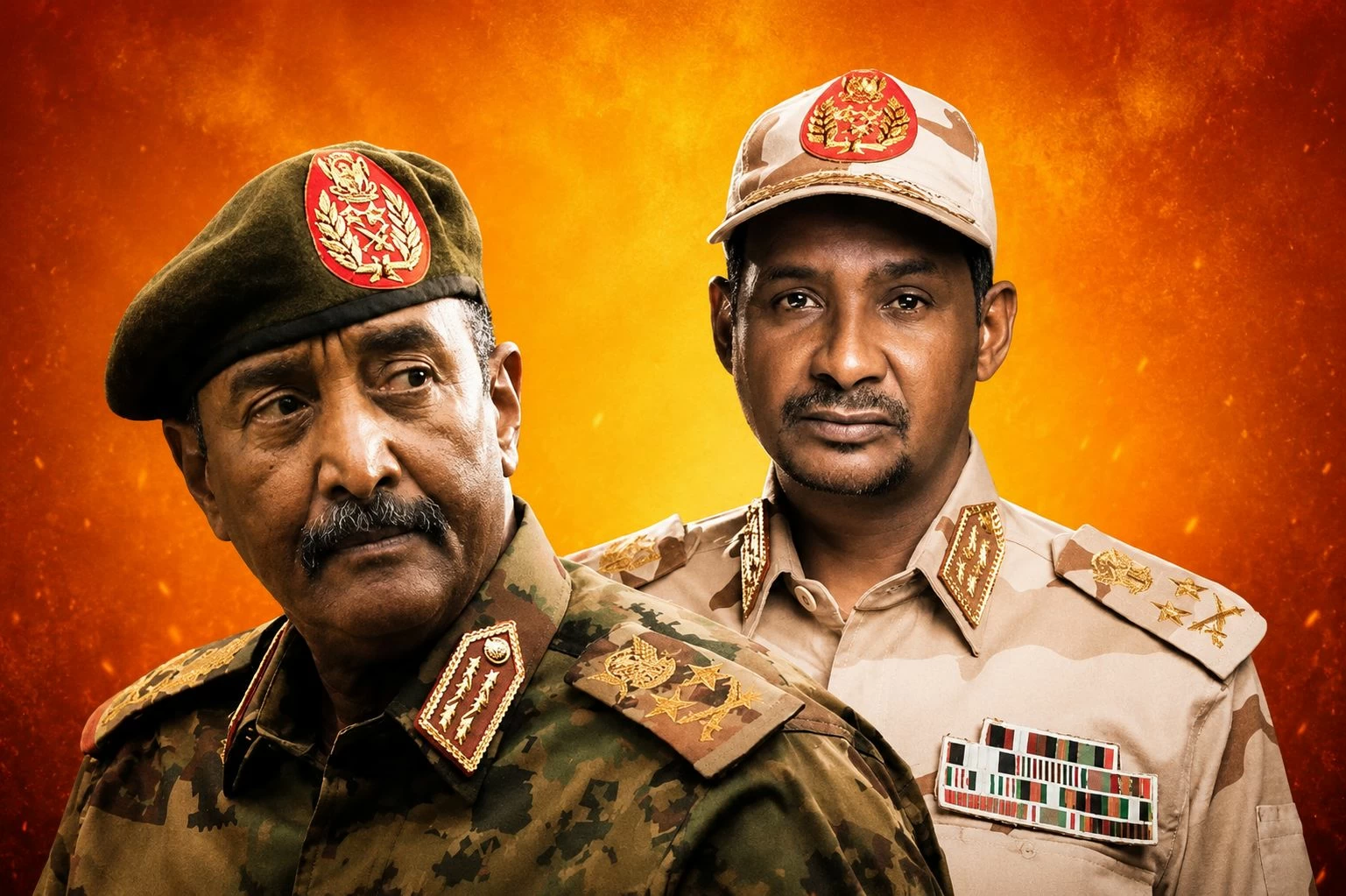
Since fighting erupted between the Sudanese Armed Forces and the Rapid Support Forces (RSF) in April 2023, both sides bet on a quick military victory. But as the war entered its fourth year, the limits of that strategy became clear. Battles that spread from Khartoum to Port Sudan, Darfur, Kordofan, and Blue Nile produced no decisive victory for either side, while pushing the country into one of the world’s worst humanitarian crises.
As the battlefield became increasingly complicated, the international community began viewing the Sudanese war as a threat extending beyond Sudan’s borders. Rising tensions in the Red Sea, fears of escalating instability in the Horn of Africa, and increasing displacement and irregular migration have all pushed Western and regional capitals to intensify pressure for a political settlement.
In this context, the recent Berlin Conference represented an important milestone, as dozens of countries and international organizations agreed that the Sudanese crisis cannot be resolved militarily and expressed clear support for a comprehensive negotiation process.
The United States and the European Union also intensified diplomatic efforts to push for a ceasefire, especially amid growing concerns about expanding regional instability.
One of the clearest signs of this shift came in remarks by Massad Boulos, advisor to the U.S. president on Arab and African affairs, who stated that “there is no military solution to the conflict in Sudan.”
He pointed to an
international consensus aimed at pushing the parties toward negotiations and a ceasefire, and also spoke of U.S. efforts to support humanitarian truces that could pave the way for a permanent cessation of hostilities.
While this international shift does not necessarily mean that a settlement is imminent, it reflects growing conviction among influential powers that the continuation of the war could lead to the total collapse of the Sudanese state — a scenario feared by many regional and international actors, especially neighboring countries.
Recent months have witnessed more active regional engagement compared to the early years of the conflict, when the war was described as “forgotten.” There is now increasing coordination between the African Union, IGAD, and the Arab League, alongside Gulf, Egyptian, and African initiatives aimed at preventing Sudan’s fragmentation or transformation into an open arena for regional conflict.
These actors realize that continuing the war threatens not only Sudan, but also the security of the Red Sea, international trade routes, and the stability of neighboring states, making a political settlement a regional necessity rather than merely a domestic Sudanese demand.
Inside Sudan, although the Sudanese army continues to maintain rhetoric supporting ongoing military operations, it has also left the door slightly open for political solutions. In remarks carrying political significance, General Abdel Fattah al-Burhan recently said: “Anyone who becomes convinced and lays down their weapon will find the ’s embrace open to them.”
Observers interpreted this as an attempt to open the door for possible settlements or encourage defections within the RSF by offering implicit guarantees for those willing to return and integrate into new arrangements.
At the same time, Al-Burhan has repeatedly emphasized that the army is “moving forward in restoring the state and its institutions,” reflecting the military establishment’s commitment to maintaining its political and military position in any future negotiations. This indicates that the path toward a comprehensive settlement remains highly complicated despite growing pressure to end the war.
Humanitarian Pressure
Perhaps the strongest pressure on all parties is no longer military or political, but humanitarian.
The United Nations and international food organizations have warned that Sudan is currently facing one of the world’s largest hunger crises. According to the Integrated Food Security Phase Classification (IPC) report issued in May 2026, around 20 million Sudanese are suffering from acute food insecurity, while tens of thousands face the risk of famine, with several areas threatened by humanitarian catastrophe if the war continues.
World Food Programme Executive Director Cindy McCain said that “hunger and malnutrition threaten the lives of millions,” calling for urgent action to prevent the crisis from turning into “a major tragedy.”
Meanwhile, UNICEF Executive Director Catherine Russell described the humanitarian situation as having reached a catastrophic stage, noting that children are arriving at health facilities “too weak to cry.”
Within Sudanese society, calls for ending the war are growing despite continuing disagreements over the shape of a possible settlement. Some analysts close to the military believe that declining public support for the war does not necessarily mean acceptance of the RSF remaining as a parallel force to the state, making any future settlement dependent on rebuilding a unified military institution.
Observers also believe that growing international pressure, combined with military exhaustion and humanitarian deterioration, could push the warring parties toward accepting a political settlement in the coming period.
In this context, Sharif Mohamed Osman, political secretary of the Sudanese Congress Party, stated that “there is no military solution and no peace without genuine civilian leadership,” indicating that ending the war requires a comprehensive settlement capable of rebuilding the state and its institutions.
Other analysts believe Sudan currently stands at a complex balance point between the possibilities of peace and the continuation of war.
Political analyst Mohamed Latif said that international conditions, external pressure, and the suffering of citizens make peace “closer than ever before.” However, he also pointed out that the opening of new battlefronts and the complexities of the regional scene continue to prolong the conflict, keeping all possibilities open.
From a security and strategic perspective, military expert Brigadier General Dr. Jamal Al-Shaheed believes Sudan stands at a highly dangerous crossroads between a political settlement imposed by military exhaustion and international pressure, and a slide into a model of “protracted war,” where neither side achieves decisive victory while state institutions gradually erode under the burden of military, economic, and humanitarian attrition.
Al-Shaheed warned that time is no longer on Sudan’s side and that every additional day of war increases the future cost of peace.
Despite all these indicators, the major questions remain unanswered: Has the war truly reached the exhaustion stage that precedes settlements? Or is Sudan still at the beginning of a long conflict whose final shape has yet to emerge?