The city of Ed Damazin, the capital of Blue Nile State, is facing a worsening humanitarian crisis as the rainy season begins, coinciding with ongoing military operations around the town of Kurmuk. The situation threatens the lives of thousands of displaced people living in worn-out shelters that are unable to withstand heavy rain and strong winds.
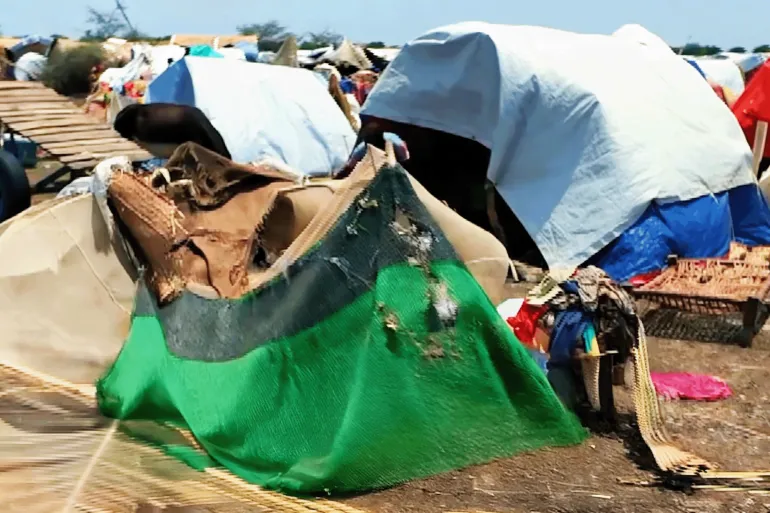
Al Karama Camp III is home to approximately 3,000 families displaced from Kurmuk, Geissan, Bout, Roro, and surrounding areas. The families are suffering from severe shortages of food, clothing, clean water, and medicine—conditions that are expected to deteriorate further during the rainy season.
Displaced residents fear the onset of heavy seasonal rains, particularly because their makeshift shelters, constructed from sugar and flour sacks, woven mats, and plastic sheets, are incapable of withstanding the strong winds and intense rainfall that characterize the rainy season in Ed Damazin.
In an effort to protect their children, the displaced families have appealed to local authorities, the Humanitarian Aid Commission, and humanitarian organizations to provide plastic sheeting and other shelter materials that would enable them to build more durable structures capable of protecting them from rain, wind, and extreme heat amid worsening living conditions and the absence of even the most basic necessities.
The International Organization for Migration (IOM) announced in a statement that 329 families had been displaced from Geissan in Blue Nile State due to the worsening security situation.
According to civil society organizations and volunteer groups, more than 20,000 people displaced from Kurmuk and Geissan are currently scattered across the towns of Ed Damazin, Ar Roseires, and Wad Al Mahi.
The Sudan Doctors Network has called on national and international humanitarian organizations to urgently provide assistance to more than 10,000 displaced people who fled from Geissan to Ar Roseires, including women, children, and elderly people. The network warned that they are living in “extremely dire humanitarian conditions,” facing severe shortages of food and medicine and lacking the most basic necessities of life.