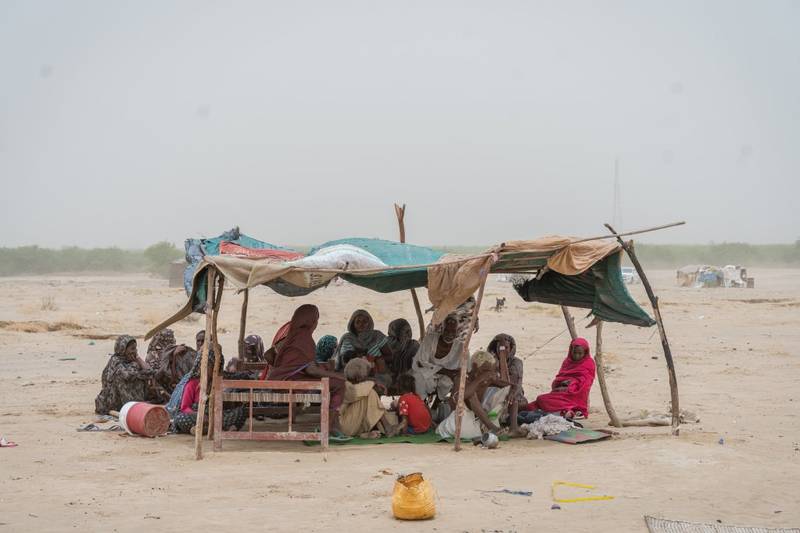
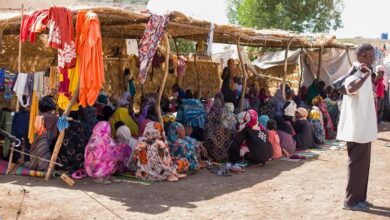
Displaced families living in Goz Al-Salam Camp in Kosti locality, White Nile State, are facing worsening humanitarian conditions as essential needs continue to increase with the arrival of new waves of displaced people during 2026.
As part of efforts to strengthen coordination and support food security initiatives, a delegation from the World Food Programme (WFP) visited the camp to assess the humanitarian situation and identify priority response needs.
Speaking to Mashaweer, the camp’s field doctor, Saleh Farouq, said that the meeting focused on the major challenges facing displaced families, particularly the growing demand for food assistance due to the continued influx of households into the camp, highlighting the need for an urgent and sustainable humanitarian response.
He explained that the WFP delegation reaffirmed its commitment to ensuring that all displaced families are included in future food distribution operations.
He added that the next food distribution will target households that arrived at the camp during the first part of 2026.
Meanwhile, Tariq Al-Mahjoub, a volunteer activist with the Sudanese Red Crescent Society in White Nile State, told Mashaweer that the meeting also emphasized the importance of expanding livelihood support programmes through productive income-generating projects that empower displaced families and strengthen their self-reliance.
He noted that such initiatives would help reduce complete dependence on humanitarian assistance, particularly as food distributions have become irregular due to the funding challenges currently facing the World Food Programme.