The Sudanese economy is facing an unprecedented collapse since the outbreak of war in April 2023. The conflict is no longer measured only by the destruction and casualties it has caused; the economy itself has become one of its largest battlegrounds.
The economy continues to contract amid declining production, a deteriorating currency, and disruptions to industry, agriculture, trade, and transportation. The war has also expanded the scope of poverty, displacement, and food insecurity, while gold has become one of the most prominent components of the war economy, accumulating economic and humanitarian costs that Sudan may have to bear for decades.
Persistent Pressures
According to the latest data from the Central Bureau of Statistics, the inflation rate stood at 41.61% in July, down from 51.28% in June.
The data indicated that the cost of food and beverages—items that account for more than half of Sudanese household spending—continues to rise, placing additional pressure on purchasing power and deepening families’ struggles to secure their basic needs.
Although inflation appears to be declining “on paper,” prices continue to weigh heavily on Sudanese households, who are no longer asking when the war will end, but rather how they can face another day as soaring costs consume their ability to afford even the most basic necessities.
Al Jazeera correspondent Al-Taher Al-Mardi said that a decline in inflation does not necessarily mean a reduction in the cost of living, explaining that inflation measures the rate at which prices change, rather than the price level itself or the standard of living.
He added that when prices of more than 600 commodities rise, the situation cannot be considered a low-cost environment. Prices remain high or continue to increase, directly affecting citizens’ purchasing power, particularly those on low incomes.
The Rural Economy
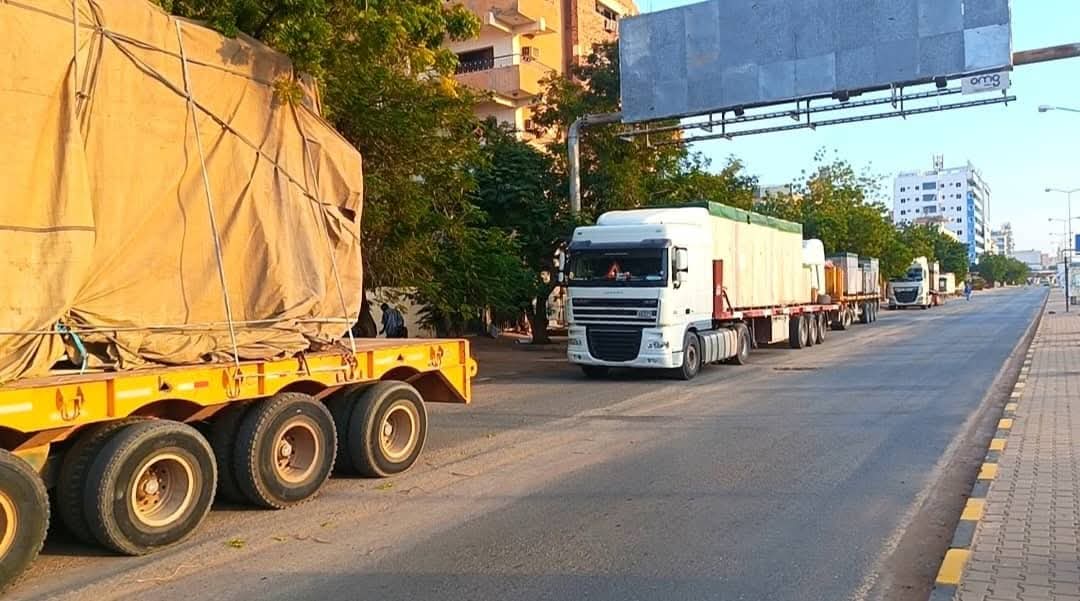
The Al Jazeera correspondent explained that the rural economy, which is attempting to recover, is unable to withstand the difficult conditions created by the war. Goods produced in many areas face major challenges because of high transportation and fuel costs.
He stressed that “citizens are suffering under extremely difficult economic conditions at a time when their salaries are insufficient to meet their basic needs,” while questions remain over the methodology used by the Central Bureau of Statistics to measure inflation amid persistently high prices and their impact on purchasing power.
Meanwhile, a report prepared by Al Jazeera’s Amin Al-Faqih revealed alarming economic figures. Sudan’s gross domestic product contracted by approximately 30% in 2023, followed by a further 14% contraction in 2024, according to the World Bank. The report estimated that Sudan’s economy lost around $6.5 billion in GDP in 2023 alone, representing one of the sharpest economic contractions in modern history, according to estimates by the United Nations Development Programme.
The war pushed approximately 7 million people into extreme poverty within one year, while average per-capita income fell to levels last seen in 1992. The destruction affected factories, electricity and water networks, agriculture, trade, and transportation.
Meanwhile, gold—one of the country’s most important sources of foreign currency—has increasingly become part of a war economy in which formal trade overlaps with smuggling, further complicating the economic landscape.
Displacement and Refuge
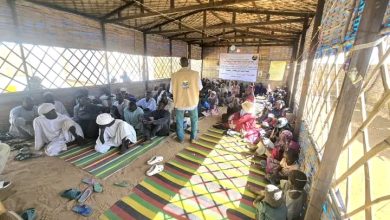
The report also notes that the number of internally displaced people and refugees linked to the war exceeded 11 million by August 2024, according to UN data.
The food crisis represents an even heavier burden. More than 19 million Sudanese are facing acute food insecurity, while an estimated 825,000 children under the age of five are expected to suffer from acute malnutrition during the current year, in a humanitarian crisis that threatens the country’s future as a whole.
A Deceptive Decline in Inflation
In line with this analysis, former Dean of the Faculty of Economic Studies at Al-Neelain University, Dr. Awad Ahmed Suleiman, said that celebrating a decline in inflation could be misleading and may not reflect a genuine improvement.
He explained that inflation measures the pace at which prices rise rather than the overall level of prices. Prices remain high, and a slowdown in the rate of increase does not mean that the actual cost of living has fallen.
Suleiman attributed the fact that food and beverages account for the largest share of Sudanese household spending—around 50% of income—to the country’s heavy dependence on imports of consumer goods and production inputs.
He noted that the war, rising costs, and the sharp depreciation of the national currency against the US dollar are all driving prices upward in the absence of sufficient domestic production capable of slowing the economic deterioration.
The economic analyst stressed that “the fundamental solution lies in improving the exchange rate of the Sudanese pound,” arguing that any decline in inflation without addressing the crisis of the local currency does not represent a genuine improvement in economic conditions. Rather, it reflects declining purchasing power and the forced adaptation of citizens to a harsh economic reality in which they are increasingly forced to deprioritize the purchase of essential needs.
The report concludes that the war is not merely destroying Sudan’s present; it is consuming the country’s human capital and pushing its economy years backward. The cost of the war today is being transformed into a development bill that Sudanese people may have to pay for decades to come.
The economic outlook therefore presents existential challenges, ranging from currency collapse and soaring prices to the erosion of purchasing power, while official figures may fail to fully reflect the scale of the crisis on the ground.