Thousands of Sudanese families are facing an exhausting struggle and arduous searches to officially establish the deaths of their loved ones. The war that erupted between the army and the Rapid Support Forces (RSF) in mid-April 2023 disrupted civil and health institutions and weakened records and eyewitness accounts, making it increasingly difficult to obtain death certificates. In many cases, bodies were buried without documentation, leaving a critical gap in establishing a person’s death.
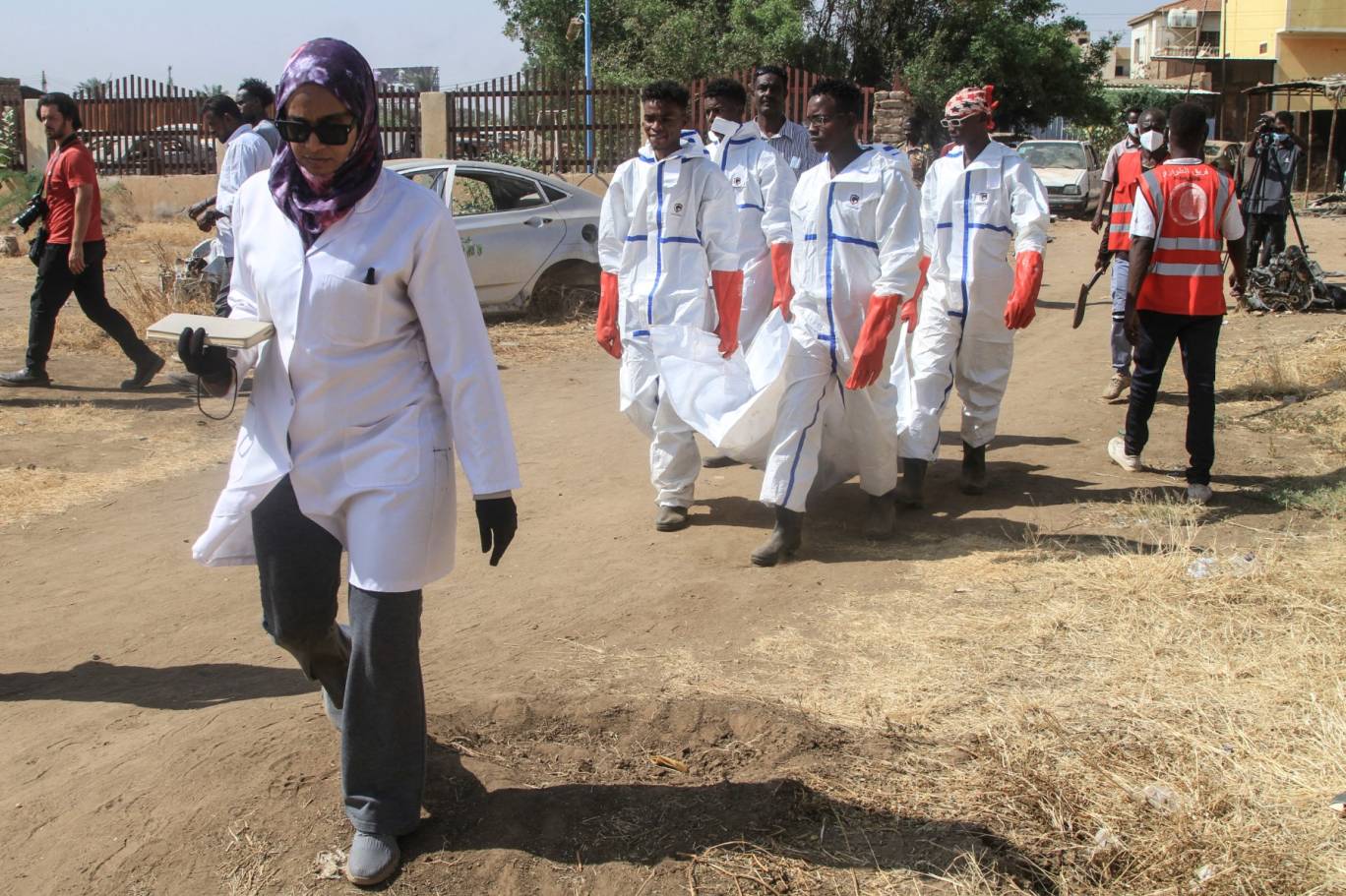
The war has turned neighborhoods in Khartoum and Al-Jazira, as well as cities in Darfur, Kordofan and Blue Nile, along with conflict and displacement areas, into burial grounds where people were buried without their names, photographs or burial locations being recorded. As a result, the fate of many people who disappeared remains unknown, leaving their families unable to determine whether they are alive or dead.
Estimates indicate that more than 61,000 people were killed in Khartoum State during the first 14 months of the war, including around 26,000 who died from severe injuries sustained as a result of violence during military operations, according to the United Nations. Researchers have also reported that estimates of deaths from all causes in Khartoum State were 50 percent higher than the national average recorded before the outbreak of the war, which has now entered its fourth year.
A Series of Obstacles
Maryam Abdelrahim, who lives in Khartoum Bahri, said the outbreak of the war caused her to lose her elder brother, who refused to flee with the family during the fighting.
“We received news of his death by phone. When we returned to our home, we began an exhausting search for his grave or for anyone who could tell us how he died and where he was buried, but without success. We went everywhere we could, yet he ended up being considered missing, making it difficult to obtain a death certificate because we lack information confirming his death,” she said.
She added that “establishing a death in state records is constantly obstructed when the relevant authorities request witnesses or the location of the burial as important procedures for the Public Prosecution. Unfortunately, most families lose contact with the people who initially inform them of the death of one of their relatives.”
She continued: “My brother’s case is not isolated. It is widespread because of the expansion of the conflict across the country. There are many deaths that families are struggling to establish because bodies were buried in fields, schools, conflict zones or during displacement without names or documentation.”
She noted that “thousands of families are waiting to learn the fate of their relatives amid a series of obstacles caused by the disruption of state institutions, hospitals and morgues, as well as limited access to designated burial sites. As a result, the death certificate has become a missing link in establishing death, with serious consequences for people’s rights.”
A Documentation Gap
Abdelkarim Mohamed, a resident of the Al-Kalakla district in southern Khartoum, explained that most residents of southern Khartoum’s neighborhoods remained trapped for months during the war because they could not afford to flee. This left them exposed to death from illness, shell fragments and hunger, while burials were carried out randomly because there were no official bodies responsible for handling the deceased.
“Residents found themselves facing bodies scattered inside homes and on public roads. As decomposition began, identification became increasingly difficult. The odors also posed a threat to public health as diseases and epidemics spread, forcing residents to bury the bodies quickly without identifying them,” Mohamed said.
He added that “it was difficult to wait for the relevant authorities to arrive and deal with the bodies because of the prolonged war, which created a vacuum after civil and health institutions were destroyed. As the death rate increased with the intensification of fighting and access to official cemeteries became more difficult, burials took place in every available space. Among the victims were soldiers and unidentified civilians.”
He further explained that “as concerns grew over bodies remaining among residential areas, initiatives emerged through various neighborhood committees to bury the dead. Identifying their identities was not a priority compared with burying them because of decomposition and the difficulty of moving the bodies. We would place the bodies in sacks, dig graves in the same location and bury them.”
“This reality continued in areas where active fighting took place. The primary objective was to bury the bodies and give them a dignified resting place. Unfortunately, in many cases, we failed to record names, take photographs or document burial locations—something that would have been crucial for families now searching for their missing relatives,” he said.
Complicated Procedures
The situation in Omdurman was different because of the relative calm the city experienced. Bodies arriving at Al-Naw Hospital were documented by volunteers and activists immediately upon reaching the morgue.
A humanitarian volunteer, Amin Yahya, said: “A group of humanitarian volunteers became active in documenting bodies arriving at the unidentified persons’ section of Al-Naw Hospital, as it was the only hospital making significant efforts to provide services during the war. They preserved information in hospital records, including where the body was found, the circumstances of death, the burial location and the deceased’s personal belongings.”
“In my view, what the volunteers did was a major effort in anticipation of this moment, particularly when someone comes looking for a missing relative and needs to obtain a death certificate,” Yahya said.
He added that “as morgue services stabilized in hospitals that resumed operations and burial permits began to be issued, these documents concerning the deceased were added to the initiatives organized by volunteers amid the limited capacity of security agencies and hospitals. This meticulous work has become known to the Public Prosecution, and when information about the deceased is available, it becomes easier to complete burial procedures and obtain a death certificate.”
The volunteer noted that “this system covered Omdurman only. Families in other cities of the capital and in the states where intense fighting took place face complicated procedures, as many people were buried without documentation or records that can be consulted.”
Loss of Rights
Sudanese lawyer Haider Rahmatallah pointed out that “the lack of clear information about the deceased creates obstacles for families seeking to safeguard their rights, including pensions, personal property and real estate registered in the deceased’s name, as well as procedures concerning children. The absence of a death certificate is not merely the absence of an official document; it can amount to the complete loss of their rights.”
Rahmatallah explained: “When a death has occurred in a known location, the family may rely on witnesses, members of community initiatives or neighborhood committees that documented deaths, or people who participated in the burial, and present them before the courts to establish the death, as they may be the only available evidence.”
“However, given the complexities of the current situation, such testimony may not be sufficient to establish the death before institutions and banks,” he said.
He noted that “there are also cases in which no body is found at all. The legal procedures differ depending on whether the missing person is a civilian or a serving soldier. The procedures remain pending until evidence is found proving the death or establishing the burial location. In addition, the deceased’s assets cannot be disposed of, even when the deceased was the sole provider for a family.”