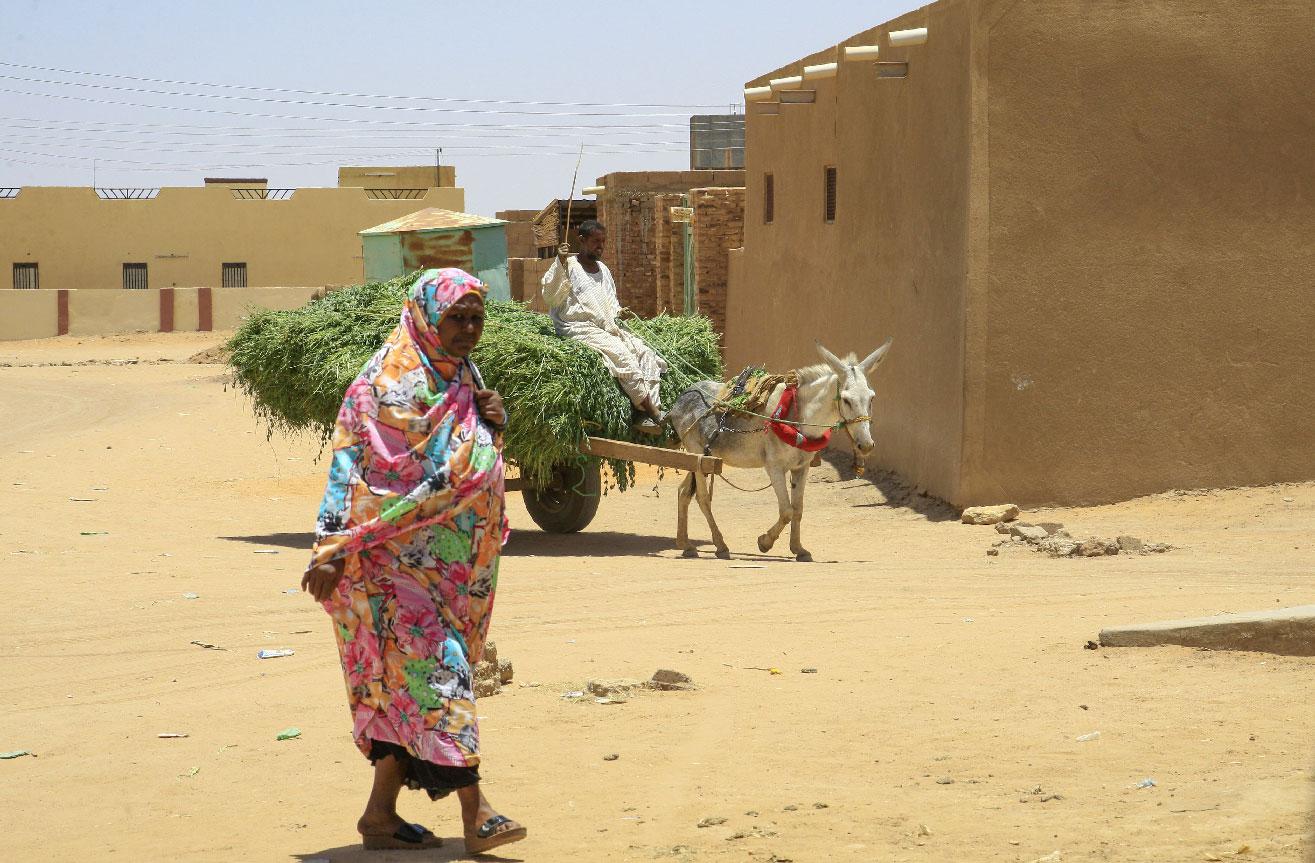
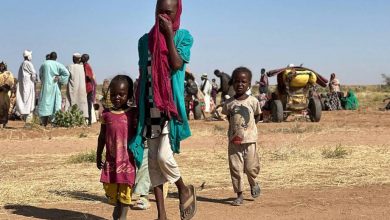
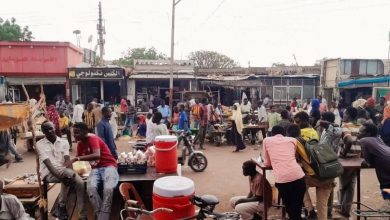
The escalation of fighting and the rising rate of violations against civilians in the villages of the three Kordofan states, and various cities and regions in the Darfur region, has forced thousands of families from the impoverished classes, desert dwellers, and nomads to displace from Sudan’s countryside to the cities for the first time. This “reverse migration” is a flight from complex security conditions in search of safety and a life under different circumstances in urban areas, despite the stark differences in environment and the details of daily life.
For months, the theater of military operations and fierce battles between the Sudan Armed Forces (SAF) and the Rapid Support Forces (RSF) has shifted from major cities like Khartoum, Wad Madani, and Sennar to the Kordofan region and North Darfur state. Following the escalation of RSF attacks on civilians, these forces have committed additional massacres against village and rural inhabitants, leading to an increase in killings recently; human rights organizations and activists have documented hundreds of deaths.
Incidents of Killing
The recent period has witnessed violent attacks by the RSF on several villages in North and South Kordofan, as well as the rural areas of the Darfur region, resulting in hundreds of deaths and dozens of injuries.
Abandoning Herding and Agriculture
Due to these conditions, thousands of rural residents have been forced to abandon the professions of farming and herding for the first time in their lives, displacing toward cities. This threatens the traditional agricultural season in Sudan and has led to the loss of livestock due to repeated looting of hundreds of heads of sheep and goats. Furthermore, many herders have been killed while resisting thieves and armed groups during their seasonal movements to pastures.
Herders represent symbols of wealth and social status in the deserts of Kordofan and Darfur. Approximately 26 million Sudanese benefit directly from the livestock sector according to World Bank data, and professions related to this sector, primarily breeding and herding, are core crafts for many Sudanese. Over 80% of village residents rely on the agricultural and livestock sectors to meet their needs.
Differences and Restrictions
Omar Idris, who displaced from the village of Umm Kureidim in North Kordofan to the city of Kosti, said: “The violent RSF attacks on the state’s villages and countryside forced thousands to displace to urban cities, despite the difference in environment and daily life details.”
He added that his children face several difficulties in social adaptation, alongside the restrictions and exhaustion of the city, the feeling of loneliness, and a sense of suffocation from the narrow spaces of city houses. Idris explained that he has worked in agriculture for nearly 30 years, but after moving to the city, he is forced to look for new work to provide for his family’s daily needs, especially after losing his savings and having his crops looted.
Lost Advantages
Al-Tayeb Hussein, who displaced from the village of Umm Uwaisah near Al-Nuhud in West Kordofan to the city of El-Obeid, believes that “giving up life in the villages is impossible for several reasons, including the city’s lack of rural social behavior and easy coexistence, as well as the lack of psychological comfort and sufficient support from those around you.”
He noted that in just six months, he grew weary of city noise and crowding, especially since it did not provide the psychological stability he found in his village, nor was he able to “form deep social relationships.” Hussein mentioned that he suffered heavy losses after a herd of 60 female camels and 30 male camels was stolen by gunmen. This led to the loss of his primary profession, and he now works washing cars to earn money for his family. He added: “Armed groups committed widespread violations and heinous crimes in West Kordofan villages, including murder, kidnapping, and looting of property.”
An “Ideal” Choice
On the other hand, Al-Rasheed Abdullah, a displaced person from the Al-Dibaibat area in South Kordofan to the city of Singa, described the choice of moving to cities as “ideal,” given the availability of basic services such as health, education, and entertainment programs, alongside agricultural projects.
Abdullah noted that after deep thought, he decided to stay in Singa with his family and settle until the crisis clears and the armed conflict stops. He emphasized the importance of adapting to city life given the changing circumstances in the country. He continued: “The countryside will remain a ‘repelling’ environment as long as there are no real development projects; therefore, people’s perceptions of cities will change, and several transformations will occur after the war stops.”
Difficulty of Integration
Tahani Ibrahim, who displaced from the Al-Khuwi area in West Kordofan to Kassala, indicated that her family could not integrate into city society and that their living conditions were not good there, citing restrictions and a lack of job opportunities.
She added: “The majority of village and rural residents do not have experience in fields other than agriculture or herding, or marginal professions, which made the task of adapting to a new lifestyle difficult.” Tahani justifies the preference for village life due to a “healthy, safe environment in terms of fresh air and fresh food, and the strengthening of social ties, as well as the low cost of living and lack of temptations, which allows for financial savings.”
A New Experience
Similarly, social researcher Lubna Farouk considered that “displacement is a natural and inevitable movement in times of war, but for rural residents, it is a new experience that hasn’t happened like this before in Sudan, it is closer to an adventure.”
Responding to a question about class differences and their impact on integration, Farouk said: “Living a new life under different conditions in major cities is an extremely difficult experience, especially the fast-paced lifestyle, noise, and cost of living. This increases rates of depression and anxiety, particularly given the war conditions and deteriorating situation.”
She pointed out that “disasters and crises are capable of changing a human being; they can open new horizons in life. Some Sudanese cities have seen a boom after the influx of displaced people, particularly regarding economic movement. This helped activate commercial activities, and some small projects like fast food and hot/cold beverages have become active.”