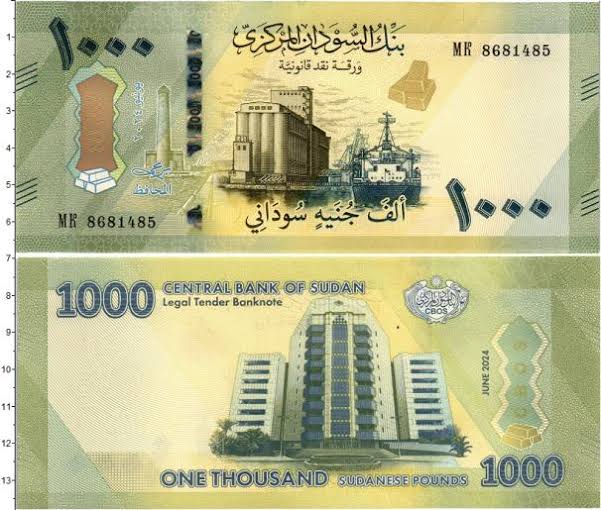
The Sudanese pound continues its alarming decline, having recently suffered a sharp depreciation amid the ongoing war between the Sudanese Armed Forces and the Rapid Support Forces, which has now lasted for more than three years. During the conflict, the currency has effectively become a prize shared by shadow-economy networks and crisis profiteers, who have tightened their grip on the foreign exchange market. Taking advantage of disrupted banking channels, the consequences of the conflict, and the effects of tensions around the Strait of Hormuz, these actors have pushed exchange rates beyond SDG 4,300 per US dollar in the parallel market.
This deterioration comes despite a series of emergency measures recently introduced by the Sudanese government, including restrictions on the importation of certain consumer goods and ongoing efforts to replace the national currency.
Recent international estimates indicate that Sudan is facing a severe shortage of foreign exchange reserves, alongside declining exports, reduced productive activity, and the near-total reliance of importers on the black market to secure foreign currency. As a result, demand for hard currency remains high despite the broader economic slowdown.
Economists describe the apparent stability of the pound against the dollar as merely “stability at the level of collapse,” noting that there are no signs of a near-term recovery in the value of the Sudanese currency in the absence of effective official intervention capable of providing stable alternatives to the parallel market.
Economic Roadmap
Meanwhile, banking and financial experts participating in a recent Economic and Finance Forum in Khartoum proposed a comprehensive economic roadmap and reform plan to address exchange-rate distortions, regulate Sudan’s gold trade, activate a commodities exchange, and adopt flexible policies to attract exports and foreign currency inflows.
The experts argued that the crisis extends beyond a shortage of resources, reflecting weak state control over foreign exchange, a widening gap between official and parallel markets, and deficit financing that has undermined the value of the national currency.
They stressed that successful reform requires a gradual, multi-pronged approach focused on halting monetary and fiscal losses, restoring official channels for gold exports and remittances, establishing modern market institutions such as a gold exchange and bond market, enforcing fiscal and monetary discipline, and redirecting imports toward productive inputs rather than luxury goods.
According to the experts, currency stability can only be achieved through a more flexible exchange-rate regime that narrows the gap with the parallel market, strengthens oversight of export proceeds, and ensures prompt payments to producers. They warned that continued money printing or import bans without adequate support for domestic production would undermine any reform efforts.
They further emphasized that a sustainable solution requires reducing excessive dependence on gold by strengthening agricultural and industrial production, reforming the tax system, and providing direct support to vulnerable groups. They noted that establishing a gold exchange would require accurate pricing mechanisms and effective banking settlements to ensure the sector contributes meaningfully to the national economy.
Impact of the War
Economic researcher Mohamed Al-Nair said that the decline of Sudan’s currency amid a prolonged war is not surprising, but the key challenge is preventing a complete collapse.
He explained that the depreciation of the pound has been driven not only by domestic factors but also by developments in the Middle East conflict, rising fuel prices, and disruptions around the Strait of Hormuz, all of which have increased demand for foreign currency to cover transportation costs.
Al-Nair argued that Sudan must strengthen control over the mining sector and combat gold smuggling, which he considers essential to stabilizing the exchange rate. He praised recent policies adopted by the Central Bank of Sudan and called for the establishment of a gold exchange to create an organized market and encourage mining companies to participate voluntarily under attractive pricing mechanisms.
He also proposed building national gold reserves by retaining a percentage of annual production within the Central Bank. At the same time, he stressed the importance of expanding non-gold exports, reducing the trade deficit, rationalizing imports, curbing speculation, controlling public spending, and increasing state revenues without undermining citizens’ livelihoods.
State Authority and Currency Stability
Banking analyst Walid Dalil argued that the Sudanese pound is more than just a currency; it reflects the authority and credibility of the state.
According to Dalil, the pound has entered a phase of freefall after losing more than half of its value over the past two years. While the official exchange rate before the war stood at around SDG 600 per US dollar, rates in the parallel market have risen dramatically, creating a massive gap that has disrupted official transactions.
He noted that inflation exceeding 300 percent has weakened the role of cash as a medium of exchange, with digital transfer applications increasingly functioning as the de facto currency in everyday transactions. He added that shadow-state networks and informal economic structures now exert significant influence over the currency, as wartime commerce has shifted into informal and unregulated channels.
Dalil further stated that official gold exports fell to US$1.54 billion in 2025, compared with more than US$2 billion previously, with much of the difference allegedly lost to smuggling networks that finance the war and deprive the state treasury of foreign currency revenues.
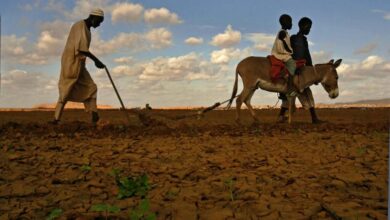
He also highlighted widespread destruction in the agricultural and industrial sectors. Agricultural losses, he said, have reached approximately US$100 billion, while about 72 percent of irrigated farmland has gone out of production. Exports of gum arabic, sesame, and cotton have fallen significantly, while damage to the Al-Jaili refinery has transformed Sudan from an oil-producing country into a full importer, increasing demand for dollars.
Dalil warned that unless a ceasefire is achieved and international support secured, Sudan could face a scenario in which the national currency loses its practical value and the economy becomes increasingly dollarized.
Proposed Solutions
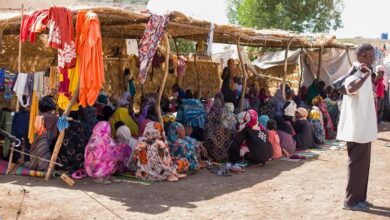
Economist Haitham Fathi said that since the outbreak of the conflict, the Sudanese pound has experienced a steep decline alongside record increases in the prices of essential goods, driven by infrastructure destruction and mass displacement.
Fathi argued that stabilizing the pound depends on the government’s ability to implement fundamental reforms, including restructuring the Central Bank, strengthening its independence, adopting balanced monetary policies, avoiding excessive money creation, and launching reconstruction projects to stimulate production.
He also cautioned that restrictions on imported goods could have negative consequences if domestic alternatives are unavailable, especially given the current difficulties facing Sudanese factories and national capital. In his view, these challenges highlight the limited capacity of the Sudanese economy to achieve self-sufficiency under current conditions.