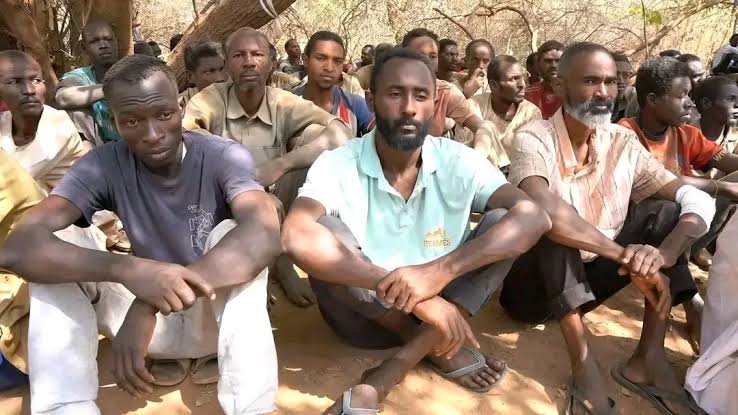
Legal experts have warned of what they describe as a growing and dangerous pattern of sending fabricated images to the families of forcibly disappeared individuals, as relatives increasingly demand information about the fate and whereabouts of their loved ones. They argue that such practices constitute deliberate misinformation and obstruct efforts to uncover the truth.
The Emergency Lawyers group stated that sending false images to the families of forcibly disappeared persons is “a systematic attempt to mislead families, conceal the truth, and evade responsibility for the crime of enforced disappearance.” The group warned that deceptive methods are increasingly being used to distort the facts surrounding the victims’ fate.
Lawyer Tarek Bakhit told Mashaweer that several cases have been documented in which families received photographs allegedly showing their missing relatives, accompanied by claims that they were being held at Dagrees Prison in Nyala and had been arrested by the Rapid Support Forces (RSF).
He added that, according to the group, these narratives exploit well-documented reports about Dagrees Prison and the violations committed there in order to lend credibility to what it describes as fabricated accounts.
Bakhit further noted that the information documented by the group indicates that the individuals in question were originally arrested by security authorities in areas that were fully under the control of the Sudanese Armed Forces at the time of their detention. No official announcement has since been made indicating that they were transferred or handed over to any other party.
Meanwhile, digital media researcher Ahmed Abdallah told Mashaweer that sending fake images to the families of forcibly disappeared persons is not merely an act of misinformation but an extension of the crime of enforced disappearance itself. He said the practice deepens the suffering of families, obscures the truth, hinders accountability efforts, and seeks to evade legal responsibility for the victims’ fate.
He warned that failing to address such practices could encourage the wider use of deception and manipulation of evidence in enforced disappearance cases, undermining victims’ and their families’ right to know the truth while further complicating efforts to document violations and hold those responsible accountable.