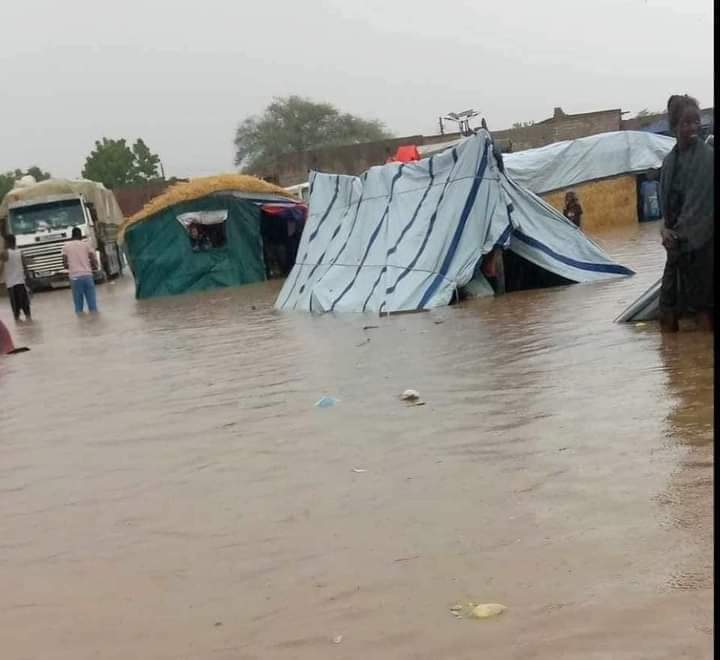
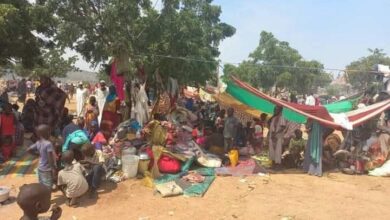
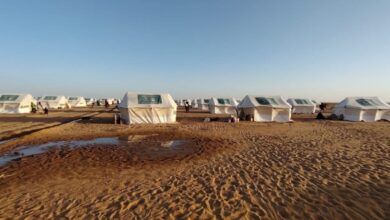
Thousands of internally displaced people (IDPs) in Sudan’s Blue Nile region have entered the rainy season under extremely difficult conditions, with families living in temporary shelters such as traditional grass huts (qatati), makeshift tents, and other fragile structures that cannot withstand harsh weather. These shelters are repeatedly damaged during heavy rains, while displaced communities continue to face severe shortages of food, medicine, and basic heating supplies.
Speaking to Mashaweer, Nader Al-Sheikh, a displaced resident of Al-Karama Camp, said, “We have managed to cope with ordinary hardships despite the worsening crises. However, with the onset of the rainy season and the expected increase in rainfall, everything is now on the brink of disaster, especially since our shelters cannot withstand additional flooding. Most of them are built from burlap sacks, cloth, plastic sheets, and tents that have become worn out and torn after being battered by strong winds, some of which have ripped entire shelters from the ground.”
Al-Sheikh noted that cases of fever-related illnesses, malnutrition, and malaria have increased significantly, in addition to waterborne infectious diseases and respiratory infections affecting both children and adults, all amid the absence of adequate healthcare services.
Another displaced resident, Hatem Saad, described the severe impact of the rainy season on those who fled the war, particularly families living in shelters that cannot drain rainwater, provide protection from the summer heat or winter cold, or shield residents from strong winds carrying sand and dust.
He told Mashaweer that “most shelters are constructed from temporary materials, including traditional grass huts (qatati), tents, burlap sack structures, and tree branches. As a result, they are unable to withstand harsh weather conditions for long and often collapse with the first heavy rainstorms.”
Saad added that “the humanitarian situation has deteriorated to an unprecedented level, particularly following the heavy rainfall. Living conditions have worsened to the point where people are facing a slow death from deprivation, especially the elderly, people with disabilities, and other vulnerable groups, including children and women.”